Nepal wants to resolve the border row with India through diplomacy as no problem is too large if both sides sit across with an "open heart", Nepalese foreign minister Shishir Khanal said on Sunday.
Khanal said the new government in Kathmandu refuses to look at India through the "distorted, hyper-sensitive lens of 21st century geopolitics" and instead wants to build a mutually beneficial relationship for overall prosperity of both the nations.
No problem is too large and no boundary too complex when we sit down with an open heart, Khanal said "We look at India with an open heart, clear eyes, and with a single, transparent agenda: the economic transformation of Nepal," he said.
"Rather than engaging in hyper-nationalistic grandstanding, we are pursuing calm, data-driven approach to resolve issues," Khanal said.
He also lauded India's economic growth.
"When we look across the border, we see a Rising India - an India that has fundamentally and beautifully redefined itself on the global stage as a dynamic, fast-growing tech and economic powerhouse," he said.
"We want to engage with this India of intense aspiration and cutting-edge technology. In turn, we bring the energy of an Aspiring Nepal," he added.
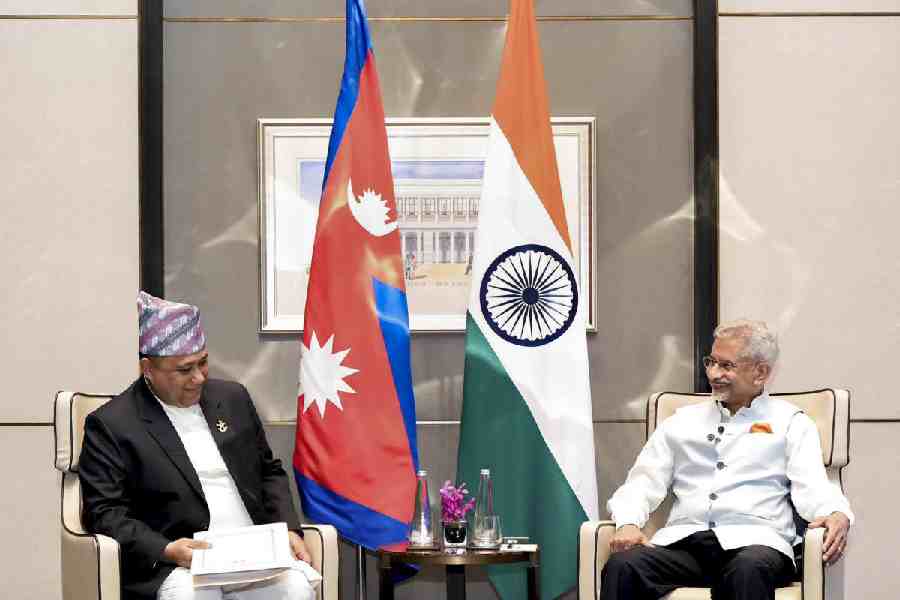
The Nepalese foreign minister's remarks at a media interaction came a day after he held wide-ranging talks with external affairs minister S Jaishankar.
Khanal kicked off a three-day trip to New Delhi on Friday to strengthen bilateral ties, a visit overshadowed by a raging controversy triggered by Nepalese Prime Minister Balendra Shah's recent remarks on the boundary row between the two sides.
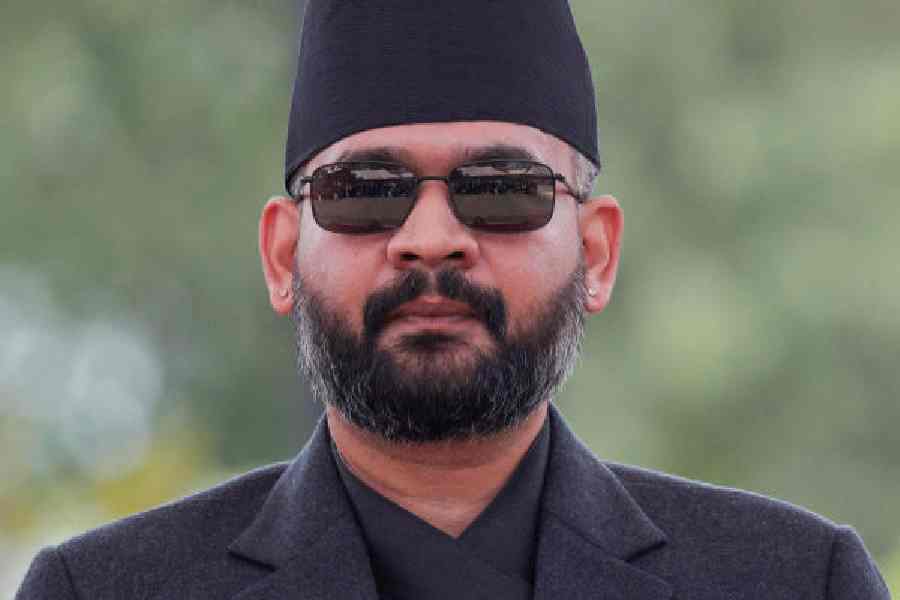
In a statement made a few days ago, he said that territorial encroachments were not one-sided along the India-Nepal border, and both countries have continued to occupy each other's land.
"You will be surprised to know about a fact, which I have learnt recently, only after becoming the Prime Minister. It is not only India that has encroached on Nepalese territories, but Nepal has also encroached on India's territories in many places," the prime minister had said in a parliament session, reported Hindustan Times.
India and Nepal continue to remain divided over the status of Lipulekh, Limpiyadhura and Kalapani, a stretch of territory both sides claim as their own, and the dispute originally made it's way from the 1816 Treaty of Sugauli, which defined the Kali (Mahakali) River as the western boundary of Nepal but left its exact origin undefined.
The 335 to 372 square kilometre area at the strategic tri-junction of India, Nepal, and Tibet heads this dispute between the two countries because while India says the river originated from a spring below Lipulekh, while Nepal says it originates from a point further northwest at Limpiyadhura stream.
India had ruled out mediation through a third party and said should be addressed through bilateral dialogue.