Lessons forgotten
Sir — In November 1973, after the Arab-Israeli war caused a global oil crisis, the Indian government increased petrol prices
by 7 paise. In protest against the pressure that the hike put on ordinary citizens, Atal Bihari Vajpayee and other Opposition leaders travelled to Parliament House in a bullock cart. Today, fuel prices have risen manifold, yet Opposition leaders seem uninterested in drawing inspiration from that example and taking up the issue. If a 7-paise hike warranted a bullock cart protest back then, today’s soaring prices should perhaps compel politicians to walk to work.
Adarsh Gupta,
Agra
Unfair evaluation
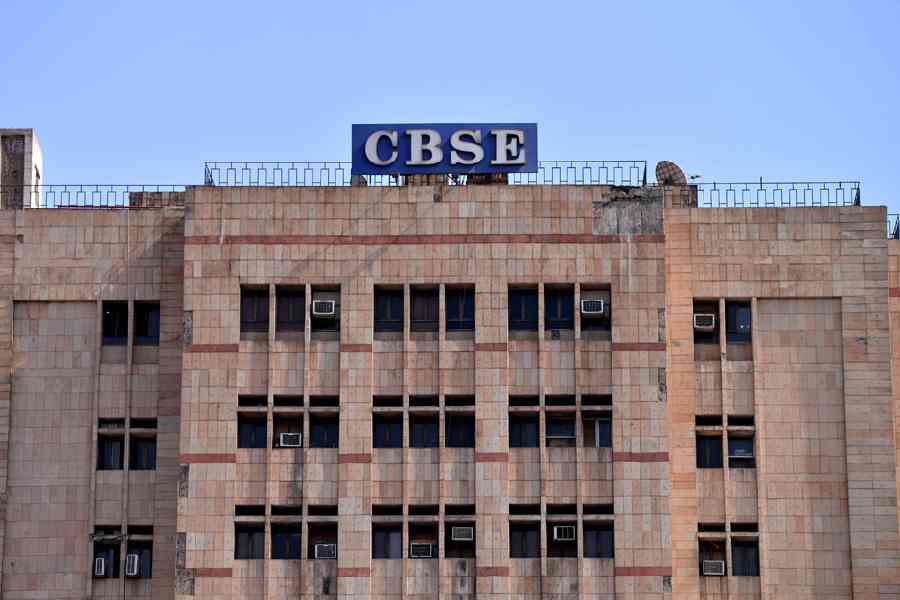
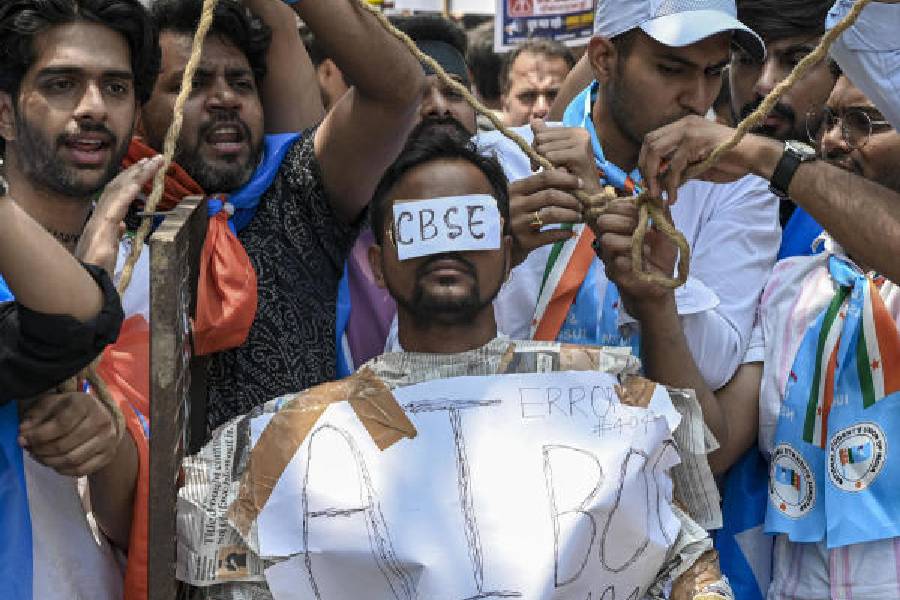
Sir — The Union government’s decision to transfer the chairman and the secretary of the Central Board of Secondary Education and order an inquiry into the failures of its on-screen marking system is a rare acknowledgement that something went seriously wrong on a large scale (“Poor marks”, Jun 4). Repeated warnings were ignored and students ended up paying the price. Despite concerns raised after a flawed trial run in January, malfunctions in the digital evaluation system led to altered grades and technical failures that compromised the integrity of the examination process. If students cannot be confident that their answer scripts are being evaluated fairly, the credibility of the entire process comes under a cloud.
Khokan Das,
Calcutta
Sir — The lack of accountability of the Bharatiya Janata Party government at the Centre is evident in successive fiascos like the National Eligibility cum Entrance Test-Undergraduate paper leaks and the CBSE evaluation failure. Instead of the Union education minister, Dharmendra Pradhan, taking responsibility, the CBSE’s chairman and secretary have been made scapegoats. Time and again, major failures occur without ministers facing any consequences.
S. Kamat,
Mysuru
Sir — The Centre is evaluating a high-security proposal to deploy Indian air force aircraft to transport question papers for the NEET-UG retest. Instead of resorting to such theatrics, emphasis must be placed on stronger software security, rigorous testing, prevention of unauthorised access, and accountability. Large-scale technological reforms need safeguards. The CBSE should adopt procedures followed by the Union Public Service Commission for future examinations.
R.S. Narula,
Patiala
Sir — The government transferred the CBSE’s chairman and secretary comes amid growing anger among students and parents over alleged irregularities in the evaluation process. Under the new system, evaluators assessed digitally scanned copies of answer sheets on computer screens instead of physical booklets. Meanwhile, responding to mounting criticism, the CBSE opened a re-evaluation and verification portal for Class XII students dissatisfied with their results. For verification of marks, students are required to pay 500 rupees per answer book, while the fee for re-evaluation is Rs 100 per question.
Dimple Wadhawan,
Kanpur
Sir — The trio of Sarthak Sidhant, Vedant Shrivastava, and Nisarga Adhikary demonstrated remarkable initiative in exposing the glaring flaws in the CBSE’s much-touted OSM system. These tech-savvy teenagers have shown that the government should not feel embarrassed to involve students in shaping future policies that impact their careers.
Combining administrative experience with youthful insight can prevent system glitches that cause anxiety among students but go unaddressed by authorities. As the young American actress, Rowan Blanchard, observed, teenagers have a legitimate voice and deserve a seat at the table because they are affected by these systems.
Avinash Godboley,
Dewas, Madhya Pradesh