As war clouds darken the horizon, India cannot afford to forget that it is not for backward third world republics whose principal export is manpower to indulge in heroics on the world’s battlefields. Nearly two million Indians enlisted in 1914, and more than 74,000 of them lost their lives. They signed up because the army was the only employer and because Mahatma Gandhi urged Indians to fight for Britain, believing that it would earn them self-government when peace came. Today’s peasantry would laugh at anyone who tells them to fight for Israel because India recognised the Zionist state on September 17, 1950, which was Narendra
Modi’s birthday.
But Pakistan’s declaration of “open war” against the Taliban has made the United States of America an active participant in a South Asian conflict that is both futile and — from India’s point of view — dangerous. Unlike Pakistan, India is not an ally of either major contestant. It’s just-concluded formal membership of Pax Silica suggests an attempt to make the best of all possible worlds by clinging on to America’s coattails, but the US flagship alliance on Artificial Intelligence supply chain security does not give Americans any special right to Indian facilities.
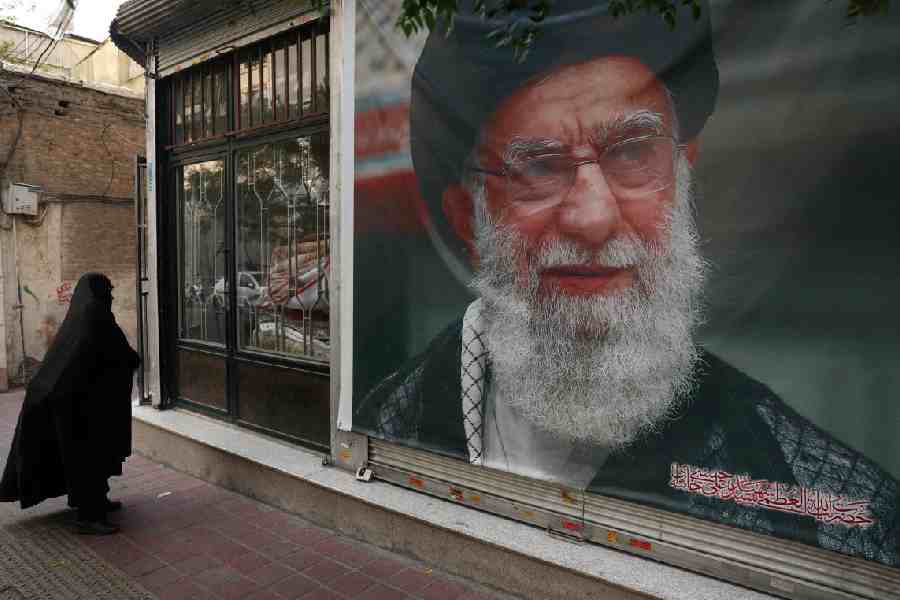
Donald Trump’s bumbling braggadocio is another matter. He threatens in one breath to abolish the 5,000-year-old Persian state and warns in the next that the sweeping military campaign of Operation Epic Fury (Israelis call it Operation Roaring Lion, which sounds just as vengeful) will only dismantle Iran’s security apparatus and neutralise the imminent threats Americans claim to fear. Common sense suggests that as Ayatollah Ali Khamenei’s second son, Mojtaba, takes over his murdered father’s mantle, 93 million Iranian bazaaris are more interested (like third world folk the world over) in the basic elements of stability than in restoring either Pahlavi glory or rekindling the ayatollah’s brand of fanaticism.
Western bafflement over Iran isn’t new. Globally isolated, and failing to impress even Canadians or Greenlanders, Trump was desperate for the applause of at least the world’s most reckless swashbuckling belligerent. The timing of Narendra Modi’s ill-advised pilgrimage to the Knesset and the lavish praise he piled on the buccaneering Benjamin Netanyahu against whom the International Criminal Court has issued several arrest warrants suggest a not dissimilar mix of personal admiration and ideological purpose in the Indian prime minister’s anxiety to court the Israeli leader.
Israel certainly merits admiration. America is worth emulation. But India, with its religious blinkers and Muslim fixation, its poor education and high unemployment, can never be a copybook version of either. Also, while oil is essential for India’s growth, oil interests do not drive India as they do America, which treats the world’s biggest oil producers with greed and envy. Hence the close eye America has kept on Iran in particular since the late 1940s, when in one of the 20th century’s most sensational coups, the American Central Intelligence Agency helped Britain overthrow Mohammed Mossadegh, the stroppy Iranian prime minister who nationalised British Petroleum. In 1954, the CIA sabotaged Saudi plans for a national tanker fleet that would have struck at the monopoly right to “transport, deal with, carry away and export petroleum” enjoyed by Aramco, the Arabian-American Oil Company. In 1969, Henry Kissinger, Richard Nixon’s national security adviser, tried to activate the top-secret US inter-agency authority for covert operations, the 40 Committee, against Muammar Gaddafi when he toppled Libya’s pro-Western King Idris to become ruler of the world’s eighth-largest oil exporting country.
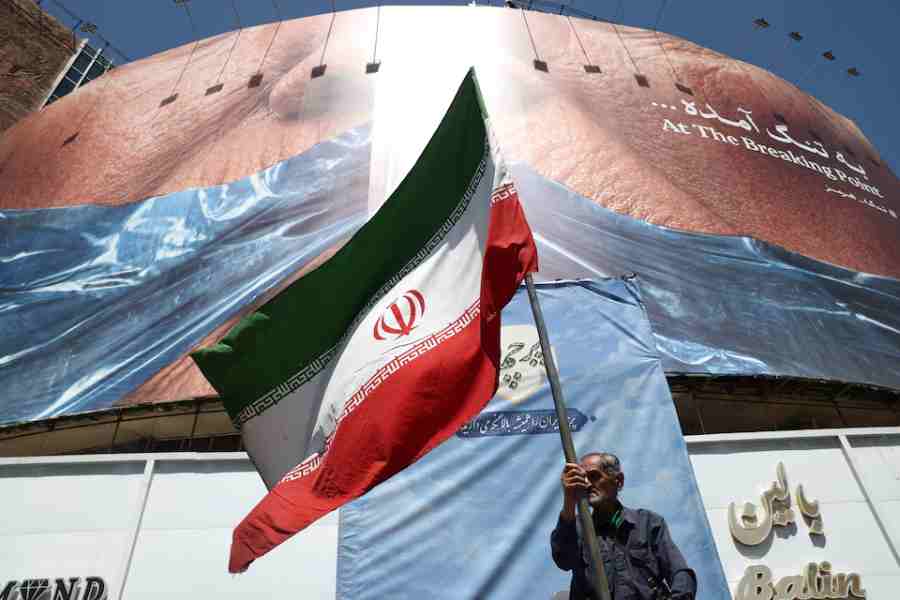
Having just formed the Board of Peace, the US and Israel have begun the board’s first war on Iran. The US-Israel attack has already caused devastation, including the deaths of at least 150 little girls from an elementary school in Hormozgan province, and dozens of others across the country with the latest estimates putting the death toll at about 1,300. In fact, the February 28 attack was not the first. Israel and the US have been in a state of war against Iran for decades, either through direct military strikes (as recently as June 2025) or through the long hybrid war (including punitive US sanctions) that began in 1996. It’s been clear to everyone that neither Israel nor the US places the least value on the United Nations Charter, whose Article 2 both routinely violate, with neither facing the least condemnation in the UN Security Council. For decades now, the US and its allies in the Global North have demonised Iran, treating its politics as terrorism and its government as illegitimate and encouraging attempts to overthrow it.
The theatre shifted in the Nineties to Central Asia, which Zbigniew Brzezinski, Jimmy Carter’s national security adviser, called the Eurasian Balkans. Russia needed petroleum. China’s phenomenally high growth demanded energy. The new Central Asian republics hoped that revenue from their oil and gas deposits and transit fees for pipelines would reduce their dependence on Moscow. Iran and Turkey sought influence, and Islamic fundamentalists operating out of Pakistan and Afghanistan sought unity with co-religionists in a universal jihad.
In a key speech in July 1997, Bill Clinton’s deputy secretary of state, Nelson Strobridge (Strobe) Talbott III, warned these other players to keep out. “It has been fashionable to proclaim, or at least to predict, a replay of the ‘Great Game’ in the Caucasus and Central Asia. The implication is that the driving dynamic of the region, fuelled and lubricated by oil, will be the competition of the great powers. Our goal is to avoid,
and actively to discourage, that atavistic outcome. Let’s leave Rudyard Kipling and George McDonald Fraser where they belong — on the shelves of history. The Great Game which starred Kipling’s Kim and Fraser’s Flashman was very much of the zero-sum variety.” In short, leave Eurasia to the US.
Some of the world’s biggest hydrocarbon deposits lie under the Caspian Sea, straddling the frontiers of Kazakhstan, Turkmenistan and Uzbekistan. The US Heritage Foundation estimates reserves of more than 25 billion barrels in the Caspian basin alone. According to Unocal’s John J. Maresca, Central Asia has more than 236 trillion cubic feet of proven natural gas reserves and more than 60 billion barrels of crude. Some estimates place the latter at more than 200 billion barrels.
That maximalist endgame was driven by the US-Israeli demand that Iran end an illusionary nuclear weapons programme. Iran has, for decades, said that it is not interested in nuclear weapons, with the foreign minister, Abbas Araghchi, reiterating that Iran will never develop such weapons although it is willing to discuss its nuclear programme. Hours before the February 2026 attack, the Iran-US negotiations seemed close to agreement. Oman’s foreign minister, Sayyid Badr bin Hamad al-Busaidi, said that a “peace deal is within our reach” and that Iran agreed to zero stockpiling. In other words, Iran had been ready to accept most of the demands imposed against its nuclear energy programme. The fact that the US and Israel attacked in this context shows that Iran’s nuclear project is not the real issue for Washington and Tel Aviv. They are committed to regime change.
This was the terrain through which Inder Gujral rushed to Moscow and New York in 1990 when Saddam Hussein’s troops marched into Kuwait. American publicity painted Saddam as an ogre but he was the least bigoted ruler in a region whose obscurantist regimes rallied to the call of religion on every issue involving Pakistan. But when Washington cut off aid to Yemen for not supporting the anti-Iraq coalition at the UN, Gujral knew that near-bankrupt India would have to toe the line because “whereas world opinion was all for the liberation of Kuwait, Washington was more keen to destroy Iraq and eliminate any autonomous power in the Gulf.” As Colin Powell said famously of the Iraqi armed forces, “First, we’re going to cut it off, and then we’re going to kill it.” Replace Iraq with Iran, the aim remains the same.