In these troubled and disquieting times dominated by figures like Donald Trump who has pushed the United States of America towards the unsettling posture of a rogue State, upending global norms more brazenly than even those nations it once sought to discipline, one is compelled to rethink what ‘America’ signifies to the world. No longer a stable idea, it fractures into multiple interpretations: a nation of democratic promise, certainly, but also one of intervention, overreach, and disruption.
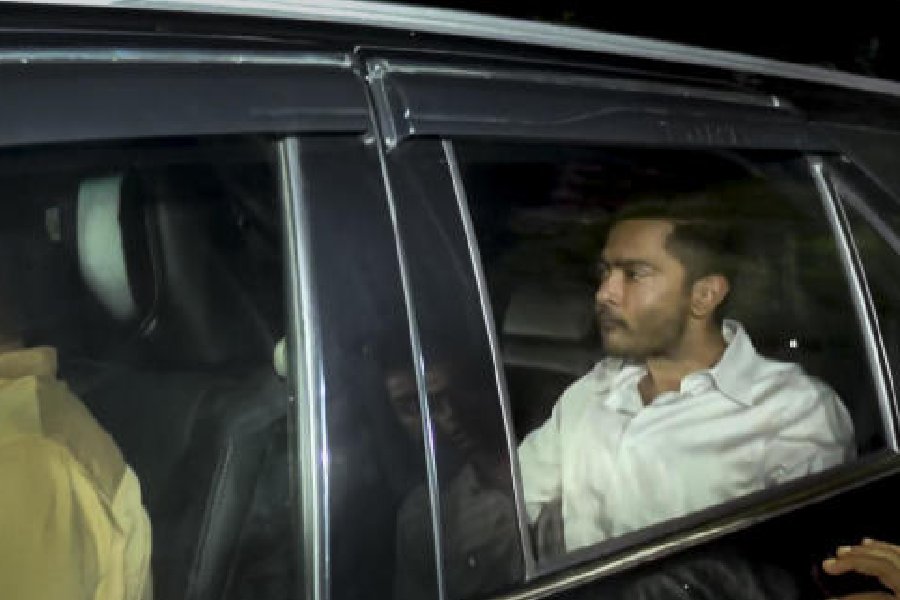
It is in this atmosphere of unease that I am reminded of an incident, or rather a literary imagining, drawn from the sensibility of Ariel Dorfman (picture), a writer from Chile of immense moral authority whose work on war, exile, and trauma has become indispensable to understanding Latin America’s turbulent history. The history of that continent, scarred by coups, civil strife, and foreign intervention, feels in many ways incomplete without his voice.
What stays with me about Dorfman is not merely what he writes but the way his imagination trains us to see and to read the ordinary as if it were already inscribed with the hieroglyphs of power. I recall, perhaps imperfectly but not inaccurately in spirit, a scene that feels entirely his — of an afternoon by the Pacific, somewhere along the Chilean coast, the air tempered by a wind that has travelled across the Andes. It is a moment of stillness, almost deceptive in its calm. Dorfman himself lies resting, half-asleep, the world suspended in that fragile interval between consciousness and dream. Nearby, an American woman reclines on a chaise lounge, her small child, no more than three, restless, exploratory, edging toward the pool.
Nothing happens, and yet everything does. The child, in that innocent way children have of testing the limits of the world, begins to play with the water, dipping his hands, leaning further than he should. There is a hesitation in Dorfman, a pause that stretches beyond the ethical into the political. The child slips, or seems about to slip, into danger. And in that instant, the question arises: should he intervene?
But this is not simply a moral dilemma. It is something more troubling, more disquieting. The child’s cries, sharp, insistent, are in English, not Spanish. And suddenly, the entire scene is transformed. What might have been a universal moment of human vulnerability becomes charged with history, with memory, with the long shadow of intervention. The pool is no longer just a pool; it is an arena in which languages, cultures, and empires intersect. The hesitation, more than being merely personal, is civilisational. Dorfman seems to be saying, ‘the child is human but history stands between us, and I cannot pretend otherwise.’
This is how I read Dorfman, both as a recorder of events as well as a cartographer of consciousness. The scene, whether literally his or refracted through my own recollection, becomes an allegory of the US’s presence in Latin America. Symbolically, the child becomes the embodiment of a power that arrives uninvited, that assumes its right to be present, that speaks in a language that demands recognition even as it displaces others. Dorfman’s reluctance to intervene is not malice but the exhaustion of a history in which intervention has so often flowed in only one direction.
For Latin America, and for Chile in particular, this is not an abstraction. The memory of the 1973 Chilean coup d’état lingers as a wound that has never fully healed. Dorfman, who lived through that rupture, understands that the violence of intervention is not always visible in the moment it occurs. It can arrive quietly, disguised as assistance, as protection, as the benign presence of a foreign language echoing across a tranquil afternoon. But beneath that surface lies a deeper structure of domination, one that reshapes societies, erases possibilities, and leaves behind a silence that is anything but innocent.
What strikes me most is the way this small, almost trivial, incident opens onto a global landscape of power. The US’s interventions are not confined to the past, nor to Latin America alone. They are inscribed across the world, in a network of military bases and strategic outposts that stretch from one hemisphere to another. In the Middle East, installations such as the Al Udeid Air Base and the Al Dhafra Air Base, stand as reminders of a presence that is at once permanent and contested. In the waters of the Gulf, the Naval Support Activity Bahrain anchors a fleet that projects power far beyond its immediate surroundings. And in Latin America itself, security agreements and military cooperation have tied countries like Colombia into a broader architecture of influence.
These are strategic locations that seem to resemble contemporary equivalents of that child at the pool’s edge. They signify a presence that is justified in the language of security and stability, but which carries with it the weight of historical asymmetry. Just as the child’s English disrupts the linguistic and the cultural equilibrium of the Chilean afternoon, so too do these bases disrupt the sovereignty of the regions in which they are embedded. They are, in a sense, the institutionalisation of intervention, rendered permanent through infrastructure and policy.
And yet, the question remains: what does it mean to intervene, and who has the right to do so? The moral clarity we might expect in the face of a drowning child becomes obscured when placed against the backdrop of empire. To save a life is an unquestionable good; to impose a presence is not. Dorfman’s genius lies in forcing us to confront this ambiguity, to recognise that the line between care and control, between assistance and domination, is often perilously thin.
In my reading, Dorfman’s hesitation is not a failure of humanity but a moment of reckoning. It is the recognition that history cannot be set aside, that every action is entangled in a web of prior interventions and consequences. To act is to risk perpetuating that history; to refrain is to confront the limits of one’s own agency. This is the tragic dimension of Dorfman’s vision, the understanding that even the most intimate moments are shaped by forces far beyond our control.
What begins as a quiet afternoon by a pool thus becomes a meditation on power, language, and the ethics of intervention. It is a reminder that the world we inhabit is not neutral, that it is structured by inequalities that manifest in subtle and overt ways. And it is an invitation, perhaps even a challenge, to see beyond the surface of things, to recognise in the smallest gestures the imprint of a larger, more troubling, reality.
Shelley Walia is a cultural critic and former Senior Fellow at the Rothermere American Institute, University of Oxford