
Bhubaneswar, May 23: Art college students from across the state gathered at KIIT University for a mural painting workshop that focussed on Odisha's history. A unit of the varsity, Kala Kos, conducted the workshop.
The event, scheduled to conclude on May 25, was a visual narrative on the various stages in the region's history, from prehistoric rock art tradition to the growth of modern Odisha.
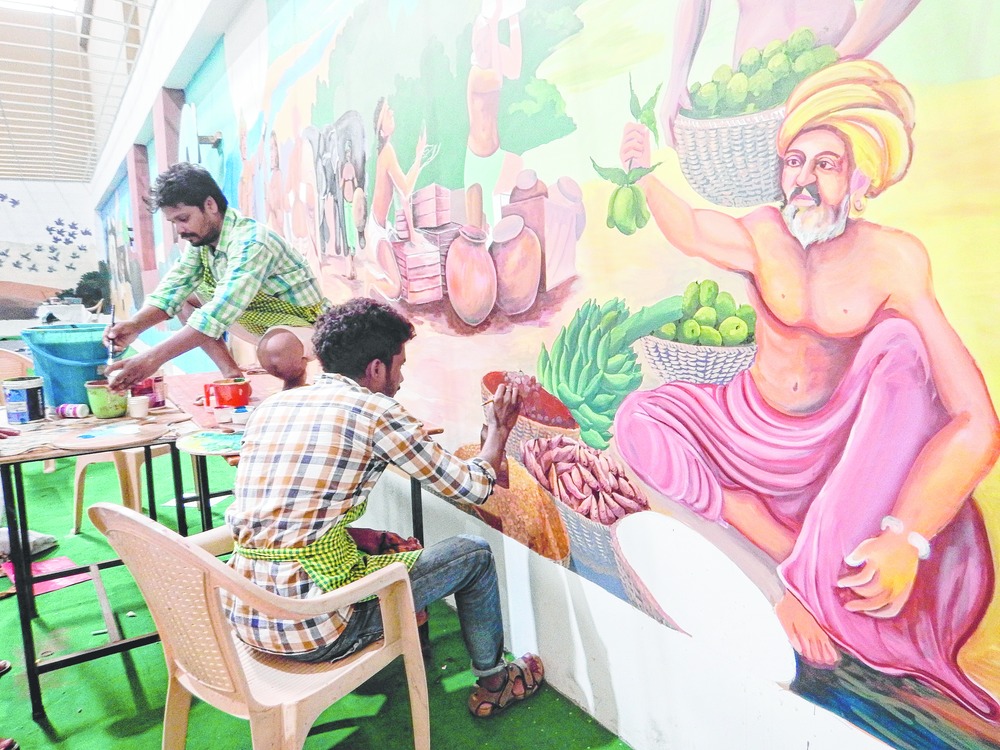
With the walls of the sports and fitness centre of the varsity as canvas, around 40 artists from Government College of Art and Crafts, Khallikote, and B K College of Art and Crafts, Bhubaneswar, threw light on little-known episodes of the state's history through their art. Students learnt about the ancient times from historians Sailen Routray and Santosh Mallick during the process-oriented workshop.
"Lectures were given and audio/video presentations on the topic shown. A number of brainstorming sessions followed to discuss the various ideas to be presented on the walls," said artist Veejayant Dash, who curated the event.
One of the panels speaks of the Kalinga war, which took place in 261 BC. It outlines the main issues and sufferings of the people during the war. The mural is accompanied by paintings about King Asoka's transformation from a warrior to a preacher of peace and harmony.
The panel also depicts inscriptions of the famous Hathigumpha and the contribution of King Kharavela to the fortification of Sisupalgarh.
Another narrative highlights the Buddhist heritage of Odisha, throwing light on Buddhist sites such as Lalitgiri, Udaygiri, Ratnagiri, Kayama, and Langudi.
One panel tells the story of the ancient trade and commercial activities in Odisha and the export and import of products that were a part of the region's rich maritime tradition.
Scenes of Afghans, Mughals and Marathas destroying Hindu temples and terrorising common people are portrayed on another panel.
Other aspects of the state's history such as weapons used by people in ancient times, their art, craft items used, the Kalapahad attack, the period of British rule and the great famine of 1866 have also been depicted.
"The aim of the workshop is to bring to the fore the aspects of Odisha that are never acknowledged and still remain hidden. The works focussed on various issues of the region, from rock art to the rich temple architecture," said Adwaita Gadanayak, director of Kala Kos.