|
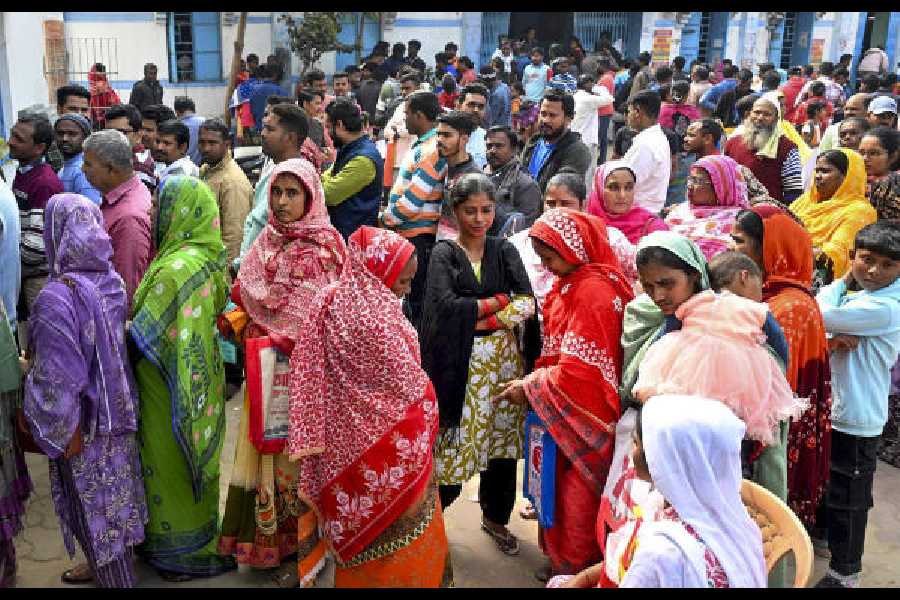
| Women at a blood donation camp in Kendrapara. Telegraph picture |
Kendrapara, July 19: In a noble gesture, a cross-section of women self-help groups today came forward to help health authorities in tiding over blood scarcity.
Seventy-seven women, mostly homemakers, donated blood at the blood donation camp at the Municipality Town Hall here.
Of the donors, a sizeable number were from the minority community. “It was for the first time that I have donated blood. I was overawed by the occasion. I was scared. But I felt relived after donating blood. Blood donated by me could save someone fighting for life,” said Kasima Biwi, a donor.
“Four months back, I had volunteered to donate blood. Today, it was the second occasion. I have made it a point in life that I would donate blood thrice every year,” observed Lipsha Priyadarshini, a blood donor.
District Red Cross blood bank officer Debendra Prasad Sutar said, “It was a unique occasion as all the donors were women only. Involvement was spontaneous. Never before have women in such large number stepped out of their homes to take active part in such a drive.”
“In the past, blood donation camps were organised in girls’ colleges and ladies’ clubs. Often the turnout for such noble work is not found encouraging. The organisers on most occasions struggle to arrange women donors. The number of donors hardly reach double digit. But today’s blood donation camp, exclusively organised for women donors, presented a different story. Inspired by awareness campaigns, women from self-help groups evinced keen interest to donate blood,” said Sachikanta Nath, chief coordinator of Ama Odisha, a social service outfit that organised the camp.
The number of donors would have been higher if the camp did not run out of blood collection kits.
Many women from the minority community braved humid weather to turn up at the camp to donate blood. These women have set an example for others to follow.
The camp would go a long way in motivating the people of Kendrapara to voluntarily donate blood.
In most cases, college students turned up at such camps while other sections of the society did not show much interest to donate blood, said Sutar.
He said while a male could donate blood once in three months, a female can do it once in four months.
Sutar said that if women got motivated to donate blood, it would have a lasting impact on other family members. “They could act as facilitator in motivating male members to donate blood to save precious lives,” he said.