
Bhubaneswar, Oct. 28: There will be an eye in the sky to nab civic tax defaulters and fight encroachment.
Chief secretary G.C. Pati today asked the municipal corporation to use geo-positioning system (GPS) based land management technology to curb encroachment and identify people tax defaulters.
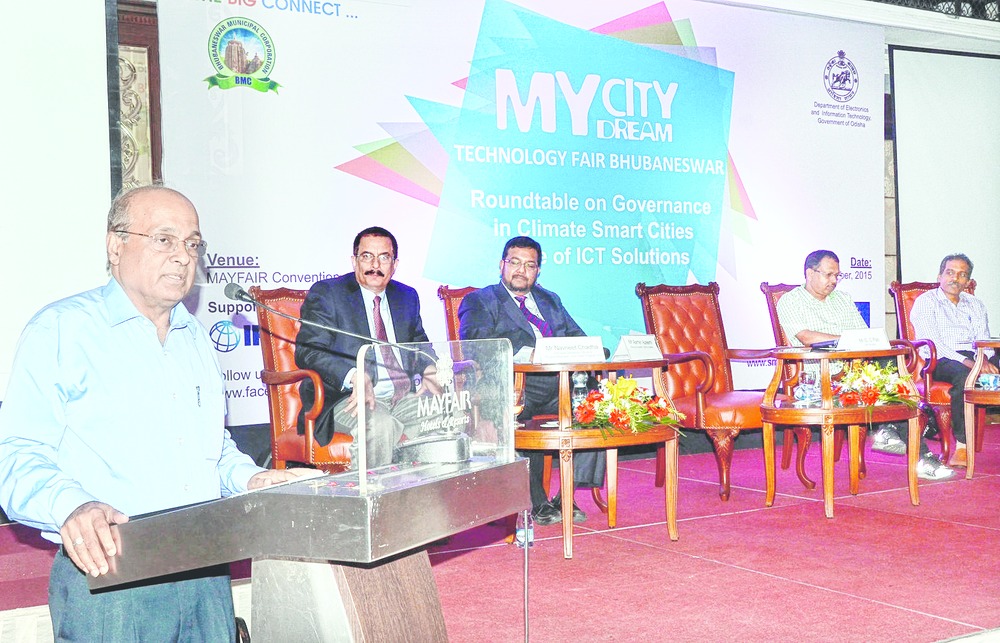
Speaking at the technology meet under the smart city programme organised by Bhubaneswar Municipal Corporation (BMC) and information technology (IT) department, Pati said: "Once a new database on land in the corporation area is generated, the encroachers can be tracked easily through the IT-enabled system and the problem can be tackled at a preliminary stage."
With online collection of holding tax already under way, a satellite-linked IT service platform will make it easy to identify households and book defaulters.
Later while talking to The Telegraph, the chief secretary said that the shift to the property tax regime would happen shortly after legislative processes required for it was complete.
Once it is introduced, the tax collection of the civic body, which is now pegged at Rs 25 crore per year, may touch Rs 100 crore.
Sources said to make the collection of holding tax effective, the BMC had already engaged the Orissa State Remote Sensing Agency (ORSAC) to create a detailed database on the number of houses. The project will cost Rs 2.5 crore.
Similarly, Infrastructure Leasing and Financial Services Limited was given the responsibility to develop a complete software package for the city so that citizens can submit their property tax online and without hassles. To develop the software, the civic body will invest more than Rs 8 crore.
Principal secretary of housing and urban development department Mathi Vathanam said: "Smart city means inclusion of people from all economic strata and hence IT applications must work as tools to achieve a better citizen service mechanism."
The theme of the meet was "Governance in climate smart cities: Role of information communication technology". It was organised as a prelude to the smart city race for the first 20 cities.
Bhubaneswar is hoping to get a berth among the first 20 cities.
Managing director of Cisco Systems Aamer Azeemi shared his experience of best practices in cities such as Barcelona, where the smart city concepts have actually translated into useful urban planning. From sensors in dustbins to Wi-Fi service near bus stops to detect passenger density and upgrading facilities based on Wi-Fi feedback, Azmi also shared information on IT kiosks at malls in Bangalore where people can get citizen services of all types including filing of FIRs.
It is not just IT that emerged as the focal issue at the meet.
Management of wastewater was also discussed.
Speaking on it, development commissioner and additional chief secretary U.N. Behera said: "To have an effective way of treating waste water, low-cost technologies can be used instead of costly and time consuming alternatives."