
During the niladri bije of Lord Jagannath on July 17, the temple servitors had misbehaved with you. Is being the district collector of Puri a challenging post?
I am blessed to be posted in Puri. I have got an opportunity to serve Lord Jagannath. Few IAS officers get a chance to serve in Puri during their career.
What happened during niladri bije? The incident seems to have affected you. You appeared to be tense following the disturbances during the last leg of rath yatra.
I am not tensed. The issues that surfaced during the niladri bije had pained me a lot, particularly the way the pahandi (procession of the Divine Trinity) was stopped. Just to please one's ego, they (the servitors) had played with the rituals. A few servitors had tried to prove that they could do whatever they liked. That is what pained me. But, I still believe I am blessed to be able to serve the Lord here.
You are the district magistrate. You enjoy enormous power. Why did you not take action immediately when some people attacked you during the procession?
We have to play the role of a facilitator. My responsibility was to ensure a smooth niladri bije and entry of the Lord to the temple.
There might be incidents that provoke you. You have to maintain cool and keep a tab on the circumstances. Any strong action would have lead to a logjam, the rituals would have been stopped. Had I taken action, people would not have been able to get a darshan of the Lord in the sanctum sanctorum and would not have been able to get the nilachal abhada (cooked food).
This is why I restrained myself. Any action would have escalated the problem. One had to patiently handle such a situation. That was the need of the hour.
The servitor in question is Damodar Mahasuar, who had taken his daughter up on the chariot. He had earlier announced that he would do so and had even displayed posters saying that the servitors would not tolerate the administrations' move to infringe on their rights. Why did not you prevent him before he climbed the chariots and wait till his return?
He had pasted one or two posters on the walls of the temple. He had not informed us and we did not know about it. Just a few hours before niladri bije, we heard the murmur that something was going to happen. We had instructed all officials to ensure that no one came to the chariot.
There were many family members of the servitors inside the cordon near the chariot. There was no restriction on them to enter the inner cordon. But once someone climbs the chariot, it's the responsibility of the Jagannath Temple Police (JTP) to initiate action.
However, the JTPs were unable to check him and there were lapses on the part of the JTP. While she was returning, we stopped her and the problems started.
The temple administration is headed by a senior IAS officer (Suresh Mohapatra). Sometimes he issues directions that differs from the command of the district collector. Don't you think the double command system during the car festival was creating problems?
Not exactly. We work together as a team. There is clear division of responsibilities. The temple administration looks after rituals of the temple and district administration is in charge of law and order. Besides, being the district collector, I am also the deputy chief administrator in the temple administration. That's why my responsibilities are manifold. This arrangement has been made deliberately so that there will be proper co-ordination. Under the leadership of the chief administrator, we worked as a team during the Nabakalebar and also in this rath yatra.
Don't you think a single command would work better?
It's not the question of a single command. Such a structure has been made after a lot of deliberations. The Lord is always the state's responsibility.
We noticed how you had climbed the chariots and dealt with the servitors on bahuda yatra. It indicates that you did not get the required support from the temple administration...
We have to understand the principle of law enforcement. Since law enforcement is not the job of the Jagannath Temple Police, I had to take charge as district magistrate and deputy chief administrator of the temple on that day.
Some people, including Vinayak Das Mohapatra, had threatened that if unauthorised sevayats were removed from the chariot, they would step down. I was firm and tough on my stand that the law had to be enforced. They agreed to abide by the law.
l When the servitors manhandled you on the street in front of the temple, the chief administrator and law minister were there. But no one came to your rescue. Don't you feel let down?
I am the deputy chief administrator and the district collector. I am the decision implementing authority. It is not expected of them to come to the field and take part in the discussion process.
There is a mechanism. We take commands and instructions and accordingly, things are managed. It is not about the support.
There was no trouble for me at that moment. There was a section of sevayats who misbehaved with me. I was in constant touch with the chief administrator and the law minister. They themselves had told me to ensure that the law of the land prevailed.
At least nine servitors have been arrested and some have been suspended from their duties. There is confrontation between the servitors and the district administration. Where are we heading?
It is not a tussle between the sevayats as a group and the administration. Most of the sevayats are law-abiding, devoted and sensitive to the cause of the Lord Jagannath. Those who break the law will be punished.
Why did the administration not take action when Shankaracharya Nishalananda Saraswati allegedly took a contractor on the chariot?
It is not about the contractor. The temple administration allows Shankarcaharya and six of his disciples to mount the chariot. It's not possible for us to identify who are his disciples. It is his office that gives us the list of persons.
A PIL has been filed in the court. The temple administration has filed its views. Whatever the court decides, it will be apply to all. All are equal before the law.
There have been three judicial commissions on the Shree Jagannath Temple. The commissions have recommended several measures, including abolition of the hereditary rights and Record of Rights (RoR) to streamline the affair of the temple. Don't you think time has come to implement these things?
We have implemented some of the recommendations. The temple is not a new temple. It has its traditions. There is absolutely no problem with the RoR and there is no need for modification. About 90 to 95 per cent sevayats are law-abiding ones. Everywhere you will find some people challenging the established principles and the law of the land.
The temple is no expectation to it. Any disturbance to the core structure and value system of the temple will lead to more problems.
Since their birth, they are tuned with the environment of the Jagannath culture. If the hereditary rights are removed, non-devoted people will enter to the temple.
The dignity and devotion associated with the rituals will go down. We need to streamline the system.
But don't you think that the need of the hour is to implement the recommendations?
There are many complex issues attached to the temple. Sevayats are major part of the temple and they will continue to be. Reforms cannot be forced on someone.
To make the reform more sustainable, we have to build an environment where maximum number of people accept the reforms on their own. Persuasion and continuous efforts are required.
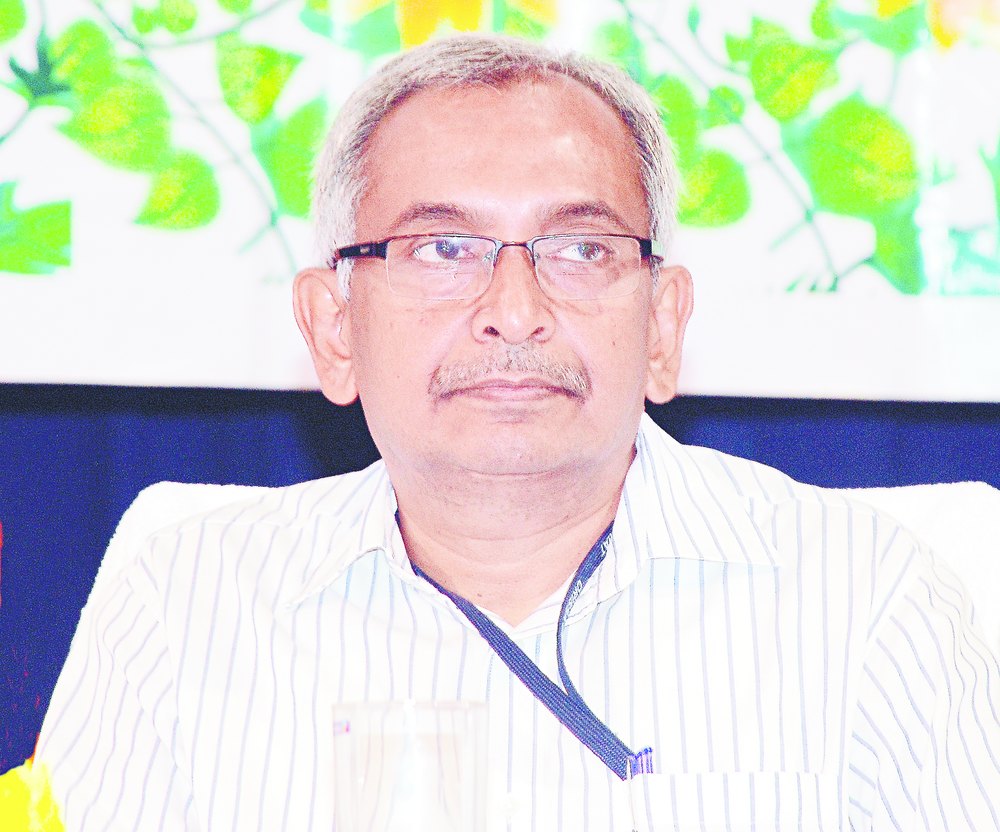
COOL-HEADED ADMINISTRATOR
• Agrawal did his BCom from Kantabanji Vocational College in Balangir
• Later, he moved to Raipur in Chhattisgarh to do a course in chartered accountancy
• He joined the civil service in 2007 nd has served as collectors of three districts
WHAT WOULD YOU HAVE BEEN IF NOT AN IAS?
I am a commerce graduate and was a chartered accountant before joining the IAS. Perhaps, I would have continued in that profession