
Bhubaneswar, Nov. 26: The development authority, in collaboration with the police and some government departments, today decided to observe Raahgiri Day every Sunday, beginning December 20.
Pedestrians and cyclists will rule the roads instead of cars and motorcycles for certain hours on these days.
Every Sunday, Raahgiri, a term modelled on Gandhigiri, would be observed on pre-determined stretches with people of all age groups, along with the physically-challenged, playing, practising yoga and doing other activities.
Raahgiri is aimed at getting across the message of the bad effects of overuse of vehicles and a stagnant lifestyle. Sarika Panda Bhatt, manager (cities and transport programme) of World Resources Institute of India, today spoke to officials of the Bhubaneswar Development Authority (BDA), Bhubaneswar Municipal Corporation (BMC), police, public works department, local universities, social service organisations, associations and clubs associated with promotion of non-motorised transport to formalise a detailed action plan for Raahgiri in the city.
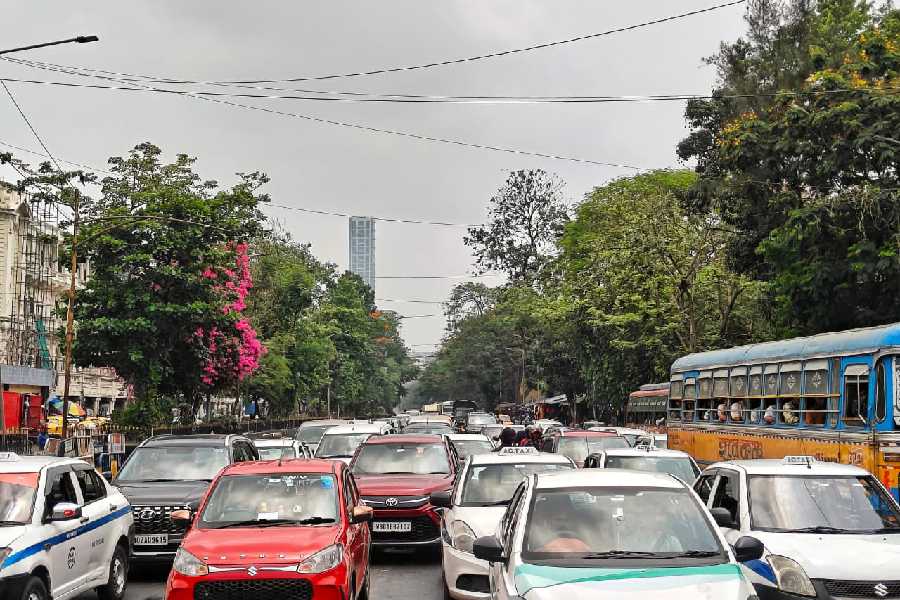
She said bigger cities such as Gurgaon, Mumbai, Delhi and Hyderabad had seen that widening roads and adding flyovers had not solved the problems of traffic congestion since hundreds of new cars roll out on the roads every day.
According to a 1999 study in Bhubaneswar, around 40 per cent people rode bicycles to their workplace. Now, only 11 per cent do so. On the other hand, in the West, while only 1 per cent rode bicycles to work in 2001, the number has increased to 11 per cent this year.
"Using bicycle has come to be associated with economically weaker sections. But in fact, it is more eco-friendly and good the general health of the society. We have to reverse the flow and it calls for massive awareness generation. Celebration of events such as Raahgiri is going to help the city have more cycles in future," said Bhatt.
BDA vice-chairman Krishan Kumar said: "For a sustainable urban transport mechanism, we have to provide room for everyone, including pedestrians and cyclists. So, we have to redesign our roads and have more and more cycle tracks and footpaths across the city."
Saying that 60 to 70 per cent of air pollution in a city is caused by cars, Kumar said researches have traced high levels of toxic chemicals in the lungs of children. "It is high time we started using alternative modes of transport such as cycles and walking. At a time the western world has already realised their mistake and adopting no-car days, we are yet to understand its importance," he said.
BDA additional commissioner (enforcement) Bhabani Chayani said: "A special squad will work from Monday to remove encroachments on the footpath and cycle tracks along Janpath. Later, similar action will be taken along the stretch joining Jaydev Vihar and Nandankanan."
He said a zero-tolerance policy would be adopted by the BDA to clear the cycle tracks and footpaths across the city. "The city wishes to provide more space to the people using non-motorised transport," he said.
City resident Dillip Patnaik said: "The works department now has to adopt new road design parameters and not just concentrate only on cars."
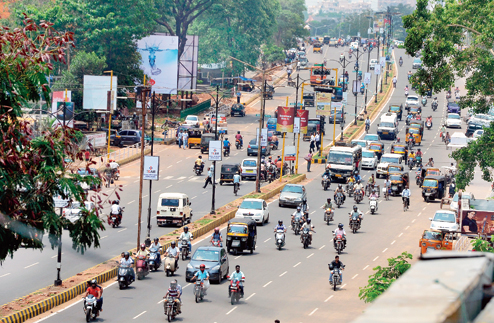
COME DECEMBER, WATCH THIS SPACE TO GET A VIEW OF JANPATH WITHOUT VEHICLES
DECODING THE CONCEPT
• How did it start?
The trend that started with Ciclovía, a Spanish word meaning cycleway, in the Colombian capital of Bogotá, where roads are made free for people on Sundays, will be reborn in Odisha as Raahgiri. The urban mobility concept envisages motorised vehicles keeping off a road or an entire city on a particular day of week
• Any parallel in India?
Yes, it happens in Chandigarh, Gurgaon, Delhi, Hyderabad, Ahmedabad and Bhopal. Already 36 Indian cities have taken to Raahgiri
• When will it happen in Bhubaneswar?
On December 20, Raahgiri has been planned on Janpath between Rupali Square and Master Canteen Square. (It could also be from Master Canteen Square to Sishu Bhavan or Master Canteen Square to Sachivalaya Marg). Every Sunday, a new road will be taken up for Raahgiri
• What is the plan?
Those who support non-motorised modes of transport can take part in Raahgiri Day on December 20, when no vehicles will be allowed on the selected stretch. The event is open to all
• How will we benefit?
With vehicles off the road, air pollution will decrease. According to a finding by All-India Institute of Medical Sciences (AIIMS), New Delhi, children have a layer of carbon inside their lungs due to air pollution in the national capital region
• Who will implement it?
Bhubaneswar Development Authority will partner with works department and police to implement Raahgiri. Volunteers from Sikshya O Anusandhan University will join on the first day
• How will things change?
Road and pavements will be made encroachment-free. A special squad will be formed for the purpose and work will start this Monday