
• You have been in the teaching profession for the past 30 years. You are still the controller of examinations at Utkal University. How has the education system, particularly the pattern of examinations, changed over the years?
During our days, examinations were tougher in the sense that it was very difficult to get a first class. At that time, the process of evaluation of answer scripts was strict and you could not expect the teachers to be liberal. If you got a first class in the matriculation examination, you were a hero in your area. Things have changed over the years. We the teachers have become liberal. Our mindset has changed. We are facing a competition from various sectors. We have to survive in the competitive world. Students get marks liberally in English-medium schools and consequently, we now have to give marks to our students so that they can compete with others at various levels.
• Do private schools pose a challenge to government-run schools?
They certainly do. But we will try to convert the challenges into opportunities. We cannot afford to ignore the interests of six lakh students studying in government schools. There are hardly 50,000 students studying in English-medium schools. Here, students cannot afford to pay the fees charged by the English-medium schools. The state government has already thought of it and started setting up model schools. Good things will certainly emerge. Have patience.
• But where did you go wrong?
Just think of our generation. Though we were unable to speak fluent English, we wrote good English. I read English first in Class IV and my elder brother came in contact with the language in Class VI. During our school days, we had 200 marks in English. There was précis writing, comprehension, translation, narration, clause and grammar. Our teachers taught us these. We had to prepare accordingly. But, things have changed over the years. The marks in English have reduced from 200 to 100. Many topics were taken off the syllabus. This has had an impact on students. At this point, you cannot increase the marks. Educationists of the state should sit together and hold a brainstorming session on this issue. We can take the help of various software available to enhance our knowledge in English.
• But what should be done to improve the language?
After announcement of my new assignment, the vice-chancellor of Utkal University advised me to concentrate on government schools with zero per cent pass outs. In order to do that, we have concentrated on the environment, economic and social conditions of the students. It's not difficult to get them do well in the examination, but we need to motivate the teachers.
• When all of you will be getting a salary hike following the 7th Pay Commission recommendations, how can a teacher with a paltry sum be motivated to deliver results?
Teaching is not a profession but a mission. No one forced anyone to join the teaching profession. However, our consistent effort would be for their salary revision.
I get pained when I see a brilliant student getting less salary than I do. But such is the system and it cannot be changed overnight. The government has its own resources and it is trying to satisfy everybody. I have good relations with all the teacher's associations and always respect their demands.
At the same time, I tell them not to always go on strike. Their strike should not affect the academic activities, especially the conduct of examinations. When the university staff had gone on strike, I managed to conduct examinations with only two staff. If I do my job honestly, the job will take care of me. I have no godfather. But I have reached my position because of my sheer labour.
• So, you think teachers should not go for strike because it affects the studies of the students.
It is affecting the studies. Everyone should understand that teaching is not a profession, but a mission.
• After assuming charge, will you be tough on teachers?
I always believe that a man needs to give thrust on the proper study of mankind.
• Do you think there is need for reform in the entire education system?
Reform has to come in the examination and evaluation systems. Now, we are going to adopt the CBSE pattern. The students and the teachers have to discharge their own duties.
• You had moved to Allahabad University in 1979. Why did you go?
During our days, students used to go to Allahabad University to prepare themselves for various competition examinations. But in my case, I was forced to move to Allahabad University because I had failed to get a seat in Utkal University. I was an average student. I had got first class in matriculation examination and but did not fare well in graduation.
There was stiff competition at that time to get a seat in the university because it was the only centre of knowledge at the highest level in the state.
lThe number of Odias getting into the Indian civil service from our universities has come down over the years. Why is it so? Have we failed to give them proper education?
I have a different opinion on this issue. Odia students are brilliant and intelligent and capable of facing competition. During our days, civil service was more alluring. Public and private sectors had not opened up. We were confined to books only and our only option was to get a government job. Now, the students are more exposed to a diversified job market and are also confident. They see that if they join IIT and do an MBA from a good institute, they will earn lakhs every month. They take the decision from the early stage, even from Plus Two, and they go to other streams.
• Don't you think that the standard of education at the university level has come down? Is it failing to attract students?
The state government was the biggest employer during our days. But now, the students have more options. After Plus Two, they can go for medical and engineering streams. During our days, there were no private engineering and medical colleges. Now, things have changed.
There has also been a radical change in the mindset of the parents. Earlier, the parents wanted their wards to get education here, get a government job and stay with them. Things have changed now.
The economic condition of the parents have also changed drastically. They are sending their wards outside the state for studies.
• As you say, the students are now going to other streams, has education at the post-graduation level failed to attract them?
I have noticed during the last two to three years that the demand for core subjects - mathematics, physics and chemistry - has gone up. Even now, if a student has an English honours degree with a BEd, his or her employability will increase. There is a also demand for mathematics teachers.
lBut don't you think that subjects in the arts stream are losing their sheen and the time has come to abolish all these courses?
They have their relevance. If a student is doing well in philosophy, he will certainly get a job.
• But only a handful will. What about the rest?
I will always argue that all these courses should stay. Suppose we take away history, Sanskrit and other subjects, a time will come when we will fail to know where we are. These subjects are a great social equaliser. If the students are not enrolled in the universities, what will they do? They will go on the wrong path. Here at least, they get two years of education in the important phase of their life, which helps them become good citizens. That's all about education.
• Don't you think that at times, students are paying the price in the form of bad marks because of the fault of teachers?
There are six lakh students and the teachers have to check 60 lakh answer scripts. We engage nearly 60,000 teachers for this purpose. Knowingly, no teacher will commit a mistake in the evaluation. If they knowingly do it, God is there to punish them. But sometimes, mistakes take place unintentionally. We are taking steps to avoid those.
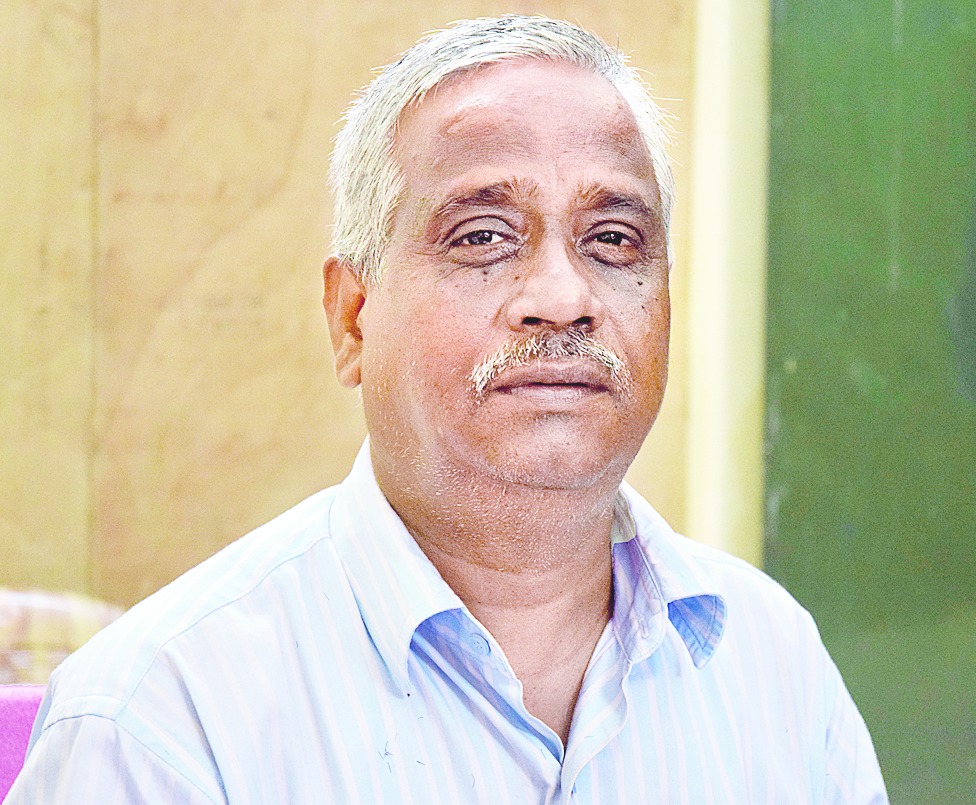
Teacher for 30 years
• Das hails from Sibjajpur of Jajpur district
• He did his matriculation from his native village and then completed his graduation from Ravenshaw College in Cuttack
• Later, he moved to Allahabad University to do his MA and PhD in economics
• After passing out from Allahabad University, he joined Utkal University as a research associate
• He began his journey as teacher from the Dhenkanal Government College
• He has served as a lecturer in various colleges, including BJB College and Ravenshaw
WHAT WOULD YOU HAVE BEEN HAD YOU NOT BEEN AN EDUCATOR?
What I dreamt of in my childhood has been achieved. During my school days, I had been inspired by my schoolteacher and I aspired to become a teacher. Perhaps, I would have continued with that.