AI is now so much a part of life that the first instinct for many tech-savvy Indians is to ask the AI chatbots. Why should the Union Budget be an exception?
Keeping that in mind, The Telegraph Online asked three AI models – Elon Musk’s Grok, OpenAI’s ChatGPT and Anthropic’s Claude – the same question: What do you think of India's Union Budget presented today?
Here’s what each of them said, verbatim.
GROK: Overall, it's a Yuva Shakti (youth power)-driven budget
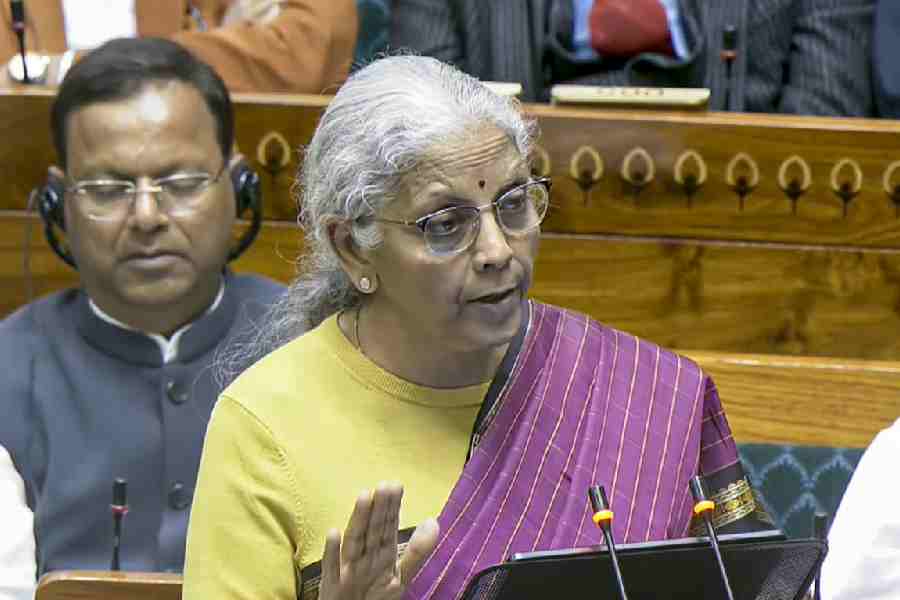
The Union Budget 2026-27, presented today (February 1, 2026) by Finance Minister Nirmala Sitharaman in Parliament, strikes me as a solidly pragmatic, reform-oriented exercise rather than a flashy populist one. It's her ninth consecutive budget presentation—a record—and frames itself around "action over ambivalence" with a clear "Viksit Bharat" (Developed India) lens, emphasizing three "kartavyas" (duties): accelerating/sustaining growth, fulfilling people's aspirations/capacity building, and ensuring inclusive access to opportunities.
Key Strengths and Positive Aspects
Fiscal Discipline Maintained: The fiscal deficit target for FY27 is set at 4.3% of GDP (down from 4.4% projected for the current year), with ambitions to bring central government debt-to-GDP closer to 50±1% by 2030. In a world of volatile geopolitics, trade tensions (including US tariffs), and global uncertainty, sticking to consolidation while still pushing capex is responsible and investor-friendly.
Capex Push Continues: Capital expenditure rises to ₹12.2 lakh crore for FY27 (up from ₹11.2 lakh crore). This sustains the infrastructure-led growth engine that's been a hallmark of recent budgets—think continued heavy lifting in transport, urban development, waterways, and coastal shipping.
Manufacturing and Strategic Sector Focus: Heavy emphasis on scaling up in frontier areas—India Semiconductor Mission 2.0, Biopharma Shakti (₹10,000 crore outlay), rare earth corridors (Odisha, Andhra, Tamil Nadu, Kerala), chemical parks, electronics components, textiles revival, container manufacturing, and affordable sports goods. There's also a scheme to revive 200 legacy industrial clusters. This directly tackles import dependence, builds supply-chain resilience, and aligns with "Make in India" evolution—especially timely amid global trade disruptions.
Infrastructure and Urban Push: Seven new high-speed rail corridors, City Economic Regions with ₹5,000 crore per region over 5 years, Urban Challenge Fund (₹1 lakh crore), Infrastructure Risk Guarantee Fund, and coastal/inland waterways promotion (aiming to double modal share by 2047). Long-term structural bets here.
Other Notable Moves: Tax simplifications (new Income Tax Act 2025 effective April 1), staggered ITR filing, support for MSMEs/SMEs (including a growth fund), jobs acknowledgment for youth entering the workforce, and niche initiatives like Ayurveda expansion, content creator labs in schools/colleges, and women-led entrepreneurship (She MARTS/girls' hostels).
Overall, it's a Yuva Shakti (youth power)-driven budget that prioritizes productivity, competitiveness, resilience, and private-sector involvement (e.g., asset recycling via REITs, private infra financing). It avoids broad giveaways, which shows confidence that the economy can sustain momentum through reforms rather than consumption sops.
Areas That Feel Underwhelming or Mixed
Markets' Reaction: Stocks (Sensex/Nifty) appear to have tanked or stayed flat/mixed during and after the speech—possibly due to no major income-tax relief fireworks (e.g., no big slab changes or standard deduction hikes that many hoped for), limited immediate consumption boosters, and lingering global headwinds.
Job Creation: There's clear acknowledgment of the youth employment challenge, but concrete new large-scale schemes feel somewhat light compared to the scale needed. Manufacturing push should help indirectly, but it's more medium-term.
Taxpayer/Middle-Class Relief: Some simplifications and compliance ease, but no headline-grabbing personal tax cuts stood out as a big win for salaried folks or the middle class in initial reactions.
Populist Restraint: In an election cycle context (even if not immediate), the lack of big-ticket welfare expansions might disappoint some quarters, though opposition reactions seem predictably critical anyway.
In summary, I view this as a mature, forward-looking budget that doubles down on structural reforms, manufacturing self-reliance, and infra continuity—exactly what a mid-cycle government aiming for long-term 7%+ growth in a turbulent world should do. It's not a "wow" budget full of surprises, but it's coherent, disciplined, and bets on India's productive capacity rather than short-term stimulus. If execution follows (especially in the new missions and clusters), it could position India quite well amid global uncertainties. What specific part of the budget interests you most—tax changes, manufacturing push, infra, or something else?
CHATGPT: ‘This Budget seems pragmatic and growth-oriented’
Broad Takeaways
1. A continuity-plus-growth focused Budget
The Government appears to have stuck to a strategy that balances fiscal discipline with developmental spending — boosting infrastructure and strategic sectors while keeping deficit targets in check.
2. Record infrastructure push
Capital expenditure was raised to an unprecedented ₹12.2 trillion, signaling continued emphasis on building physical and economic infrastructure — good for jobs and long-term growth.
3. Strategic bets — manufacturing & tech
A big push was announced for advanced manufacturing and technology — notably the launch of an expanded India Semiconductor Mission 2.0 with large funding — aiming to make India a stronger player in global tech supply chains.
4. Fiscal consolidation & borrowing
The government outlined gross borrowings of ₹17.2 trillion, higher than many forecasts, while signalling a commitment to gradually lower the fiscal deficit. Markets are watching this closely, as elevated borrowing can influence bond yields and investment sentiment.
5. Market reaction & public sentiment
Initial news suggests equity markets reacted negatively today, which often reflects investor disappointment over lack of big tax cuts or surprise reforms.
📊 Expected Impacts (based on early coverage)
🏗️ Infrastructure, railways, logistics likely to benefit from capex allocations.
💻 Tech & electronics sector boosted by semiconductor and advanced manufacturing incentives.
📉 No sweeping tax reliefs appears to be a disappointment for markets and some consumer groups.
📈 Fiscal prudence maintained, though borrowing is still substantial.
🧩 What this means overall
Pros:
Continuity in economic policy helps build investor confidence.
Heavy infrastructure investment can catalyze longer-term growth.
Focus on future industries (semiconductors, high-tech) could enhance India’s global competitiveness.
Challenges:
Markets reacting poorly suggests expectations weren’t fully met (especially around tax cuts).
High borrowing needs could put pressure on interest rates and long-term fiscal consolidation.
🗣️ My view
This Budget seems pragmatic and growth-oriented, with a clear push on infrastructure and technology. It is not a “big bang” budget of dramatic tax cuts or sudden reforms, but rather a recalibration towards future industries and sustained investment. How effective it will be for inflation, job creation, and disposable income will unfold as details are digested and implemented.
CLAUDE AI: Technology sector, particularly data center infrastructure, may see a surge in foreign interest
India's Union Budget 2026–27: Key Highlights and Strategic Shifts
Union Finance Minister Nirmala Sitharaman presented India's Union Budget 2026–27 today, February 1, 2026, marking her record-breaking ninth consecutive budget presentation.
The budget is characterized by a major proposal for a New Income Tax Act and strategic incentives for the digital economy, including a long-term tax holiday for foreign data centers.
Overall, the announcements prioritize policy continuity and structural reforms to sustain India's growth trajectory.
Record Milestone: FM Nirmala Sitharaman has set a historic record by presenting her ninth consecutive Union Budget today.
New Income Tax Act: The government has proposed a completely new Income Tax Act, scheduled to take effect from April 1, 2026.
Data Center Incentives: A significant tax holiday until 2047 has been proposed for foreign companies that establish data centers within India.
Sectoral Allocations: The budget continues to emphasize infrastructure development, defense, and the expansion of the railway network.
Tax Slab Updates: Specific updates to income tax slabs and regime structures were introduced to provide clarity to taxpayers.
Details Background and Context
The Union Budget is traditionally presented on February 1 to ensure that the legislative process is completed and the budget is implemented before the start of the new financial year on April 1. wikipedia This year's budget is particularly significant as it marks a rare milestone in Indian parliamentary history with the Finance Minister's ninth consecutive speech.
The New Income Tax Act
The proposal for a New Income Tax Act aims to simplify the existing complex tax code, reduce litigation, and modernize tax administration.
This reform is intended to make the tax system more user-friendly for both individual taxpayers and corporate entities.
Digital Infrastructure and FDI
By offering a tax holiday until 2047 for foreign data centers, the government is making a clear push to attract global technology investment.
This move is expected to bolster India's position as a digital hub and support the growing needs of the AI and cloud computing sectors.
Practical Takeaway
Transition Planning: Taxpayers and businesses should prepare for a major transition in tax compliance as the New Income Tax Act rolls out in April 2026.
Investment Opportunities: The technology sector, particularly data center infrastructure, may see a surge in foreign interest due to the long-term tax holiday.
Personal Finance: Individuals should review the specific slab changes under the new regime to assess the impact on their net take-home pay for the upcoming fiscal year.