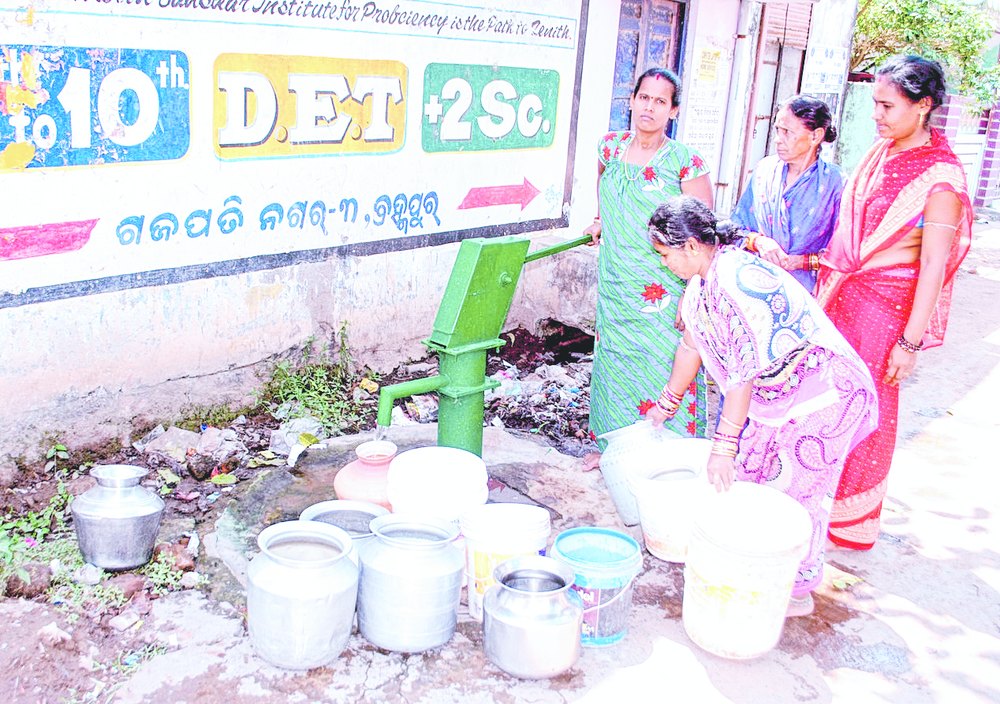

Berhampur, March 22: Cracks in the pipeline have disrupted water supply in the city affecting more than 1.5 lakh people.
Residents of the city, Berhampur University campus, Military Cantonment at Golabandh, Indian Rare Earth premises and Chatrapur have been deprived of drinking water supply from the Rushikulya river as the main supply pipeline cracked at three different places over the past four days.
Sanjib Mohan Palo of Co-operative Colony said: "We don't have water supply now and it is a big problem."
The pipeline cracked at Kamapalli and Karatalli on the Badamadhapur-Kaliabali road on March 20. Earlier, the same pipeline had developed a crack near Sara village on March 17.
"We repaired the cracks at Kamapalli and Karatalli last night and we are expecting restoration of normal water supply by Monday morning," said assistant executive engineer of public health engineering department Dambarudhar Nayak.
"The pipelines crack because of the water hammer effect. Heavy pressure develops inside the pipes in case of sudden power failure. The main supply pipeline was laid 30 years ago and it is in urgent need of replacement. We have to find out a substitute pipeline system soon," said Nayak.
Though World Bank has sanctioned Rs 36 crore under the Odisha Disaster Recovery Project for the 13.8km standby pipeline project, the work is progressing at a snail's pace.
Approximately 20 to 22 million litres per day (MLD) of water is supplied to the city and the nearby Military Cantonment at Golabandh, Berhampur University and Chatrapur district headquarters town from the Rushikulya project. Pipe water supply in the city began for the first time in 1905 with a capacity of 2.724 MLD for a population of 30,000.