
.jpg)
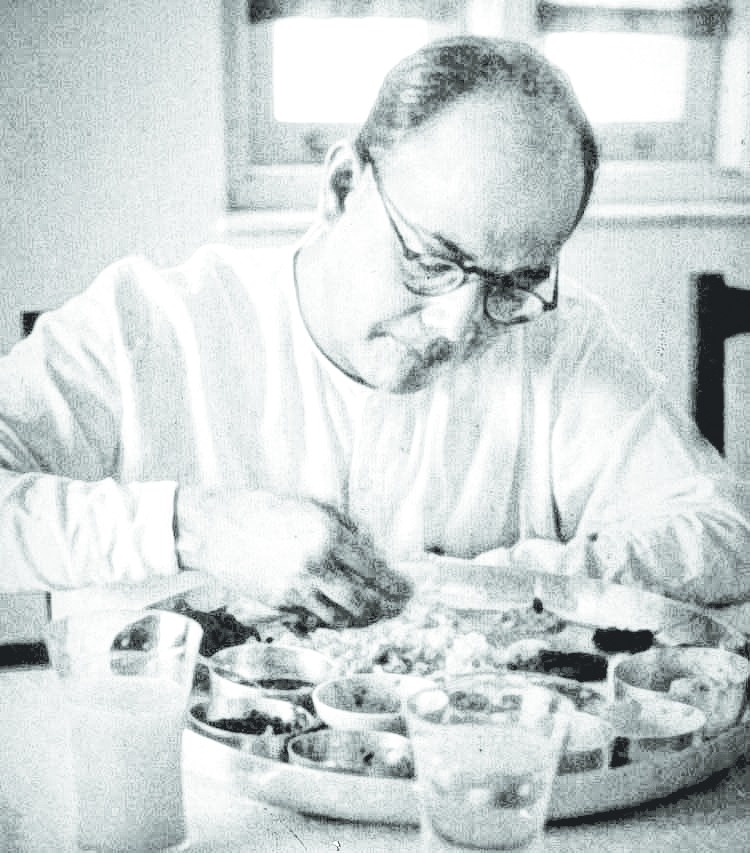
Cuttack, Sept. 18: The Netaji Birthplace Museum Trust here hopes to get in digitised form the 64 files that the Bengal government declassified in Calcutta today. The files might throw some light on the mysterious disappearance of Subhas Chandra Bose.
While researchers and scholars can access the original files, which comprise 12,744 pages, kept at the Calcutta Police Museum, its digitised version is available in a set of seven DVDs.
"We will soon start the process to obtain the digitised version of the declassified files," museum secretary Bhabani Prasad Ray told The Telegraph here today.
"Though the birthplace museum have many rare objects on Netaji, including his original letters along with those written by him while in prison in 1920s to his father Janakinath Bose (then a flourishing lawyer in Cuttack), visitors to this place have always looked for something related to his mysterious disappearance," said Ray, who is also superintendent of state archaeology.
Subash, who was born at Janakinath Bhavan on January 23, 1897, had spent the first 16 years of his life at his ancestral house in Cuttack's Odia Bazar.
After his elementary education in a protestant school (now Stewart School), Subhas had passed his matriculation examination from Ravenshaw Collegiate School in 1913.
The same year he had moved to Calcutta's Presidency College.
In 1954, before the family shifted to Calcutta, Netaji's aunt Bibhabati Bose handed over Janakinath Bhavan, along with the land, to the state government. Subsequently, the building functioned as a maternity home under Netaji Seva Sadan Trust Board with the chief minister as ex-officio president.
In 2003, the Netaji Birthplace Museum Trust was formed to convert the building into a memorial museum dedicated to Bose.
Today, the museum is equipped with state-of-the-art lighting and display system with high-tech security.
"The museum has 12 galleries shedding light on Subhas Chandra Bose's birth, early life, people in his life, his student days, role in freedom struggle, his days at the helm of the Indian National Congress, prison life, Azad Hind Fauz (Indian National Army), Azad Hind Bank, Azad Hind Radio and Provisional Government of Azad Hind and spiritual influence," museum curator J.P. Das told The Telegraph.
"The museum has a media centre equipped with audio-visual and multimedia projection system to screen films on Netaji," Das said.