|
Do you feel the Posco project will become a reality?
Yes, it will. It has been delayed because of opposition by a small section of people — ironically those who don’t stand to lose their own land. Majority of the people are in favour of the project.
With a section of the people opposing the Posco project, the land acquisition remains the problem. How do you think that the hurdle would be crossed?
Now, the agitation has subsided. It was unfortunate that the opposing groups used children as shields to halt land acquisition. But we are handling the issue deftly. People are willing to accept the compensation. Nolia Sahi villagers, who would lose their agricultural land, home and hearth, have been cooperating with the government from Day One. The rehabilitation work, felling of trees both in the forest and non forest land, payment of compensation to those who have encroached upon the government land for cashew plantation or prawn farming pond and the private lands owners is being done smoothly. Of the 3,700 acres, we have already acquired 2,300 acres.
All mega projects are facing problems. Is Orissa moving in the right direction of industrialisation?
A mega project requires huge land acquisition and will have mega problems. But smaller projects, occupying 200 to 300 acres, have smaller problems and are progressing smoothly.
So far, how much land has been acquired for industrialisation?
I cannot give you the accurate figure at this point. The total land requirement at present is about 1.5lakh acre. But with the allotment of the new coal blocks for various mega projects, the requirement would go up to 2 lakh acre. The Orissa Industrial Infrastructure Development Corporation (Idco) has 1.3 lakh acres, which have been allotted to different industries.
The allotment of mines for Posco is still a problem.
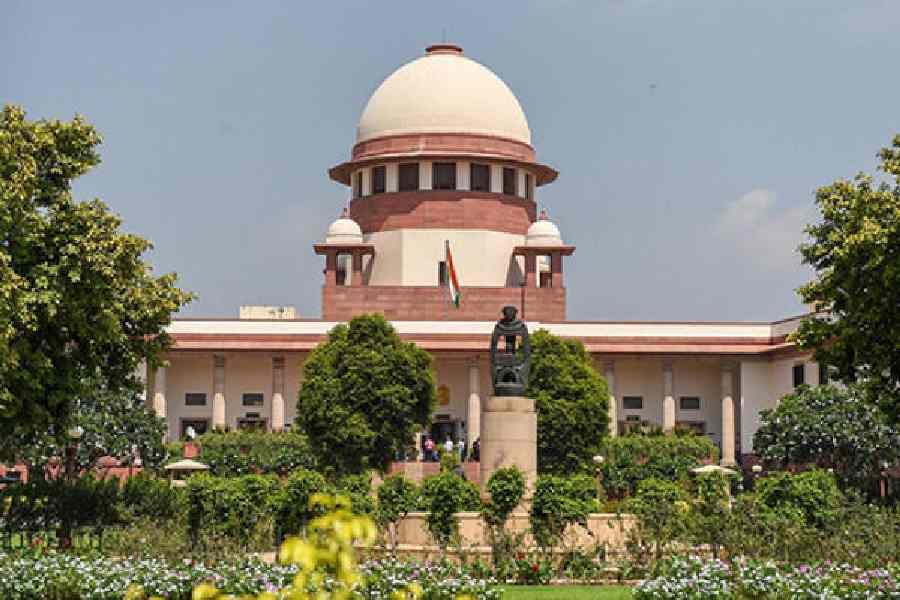
The case is pending in the Supreme Court. I should not comment on this issue. In our state 70 to 80 million tonnes of iron ore is being traded. Posco’s requirement for its entire 12 million tonne steel plant is only 18 to 20 million tonnes of iron ore. Posco can procure raw materials from the open market till they get their captive mines.
The steel industry is water intensive and there is a huge resistance to the proposal of drawing water from Mahanadi and Hansua rivers. How will the project get water?
It would be wrong to say that Mahanadi is facing a water crisis. Millions of gallons of water are going into Bay of Bengal carrying valuable top soil without being utilised. The Mahanadi Banchao Andolan has no meaning at all. Our position is different from Gujarat, which receives much less rainfall.
Would Orissa benefit in terms of employment from the Posco project?
The National Council of Applied Economic Research, an autonomous and independent organisation, conducted an in-depth study on Posco — the single largest foreign direct investment in the country. The indirect employment potential is much more than the direct employment opportunities. Around 8.7 lakh people will be engaged for 30 years.
The government has asked Idco to strengthen check gates to check the illegal transport of minerals.
We are in the process of floating a tender for modernisation of the check gates. Steps should be taken to ensure that goods, including minerals passing through the checkmates, are verified and there is no leakage of revenue at the check gates.
In 2008, police questioned you after judo coach Biranchi Das was murdered by gangster Raja Acharya. Acharya, who was obsessed with an Oriya album actress, alleged Das and you had threatened him not to meet her. How do you feel about it now?
I feel angry. Besides being a senior IAS officer, I am a citizen whose moral duty is to help those in crisis. I had met a criminal to dissuade him from harassing a family. Few IAS officers would have done that. I have sued two newspapers that came out with false reports against me.
How have you been able to cultivate the image of being a tough administrator?
(Laughs) Being an administrator, you have to work with dedication within the parameters of rules, regulations and provisions of the constitution of India. During my tenure as collector in various districts, I had personally taken steps against criminals and anti-social elements. Perhaps that is why people consider me tough.
Despite tall claims of industrial progress, the poverty situation in Orissa has remained the same.
When the Rourkela Steel Plant was established, Orissa did not have sufficient skilled manpower and people outside the state got the jobs. Now, we have sufficient number of skilled manpower in all sectors except paper technology, petroleum and plastics engineering.
A tough administrator
Known as a tough administrator, Priyabrata Patnaik is the nodal officer for the Posco steel project and chairman-cum-managing director (CMD) of Orissa Industrial Infrastructure Development Corporation (Idco).
He studied at Convent School, Puri and then moved to the Rajkumar College, Raipur, after securing a government of India scholarship. Later, he came back to Puri and completed undergraduate studies from SCS College. He holds a bachelor’s degree in political science and master’s degree in the same subject from Delhi University.
In 1975, he appeared for the civil service examinations and was selected for the IAS in 1976. He was first posted as sub-divisional officer, Khurda, and later moved to Rourkela as additional district magistrate. He has been the collector of Dhenkanal, undivided Cuttack and Balasore. In this capacity, he took serious steps to curb criminal and anti-social activities.
He was given the posting of secretary in various important departments such as energy, transport and commerce. He was also the CMD, Gridco, special secretary, general administration and CMD of Industrial Infrastructure Development Corporation.
The only low point in his career was when he was dragged into the controversy surrounding the murder of judo coach, Biranchi Das, following which he was posted as officer without duty. However, he made a comeback and is, at present, playing an instrumental role in the industrialisation process of the state.
What would you have been had you not been an IAS officer?
Honestly, I have never really thought about it. I was hell bent on joining the Indian Administrative Services. When I passed matriculation, my father advised me not to appear for the civil services. He wanted me to become a lawyer. My mother asked me not to pay attention to that. She said my father was a student of philosophy and philosophers have a tendency to be slightly erratic (laughs). So, without convincing him, I worked towards my goal. If not an IAS officer, I would have been a lawyer. Or maybe a businessman. Once I had even planned to enter into a business partnership with a close friend.