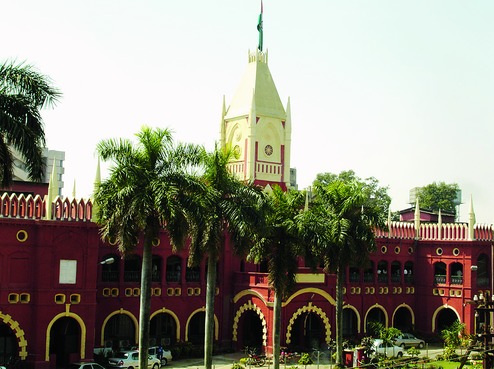

Orissa High Court
Cuttack, Oct. 3: Orissa High Court has ruled that when a murder accused pleads inability to understand the trial proceedings on grounds of unsound mind, a trial court can proceed with it only after ascertaining that he or she is not of unsound mind.
In such circumstances, the high court said the trial court in the first stage was expected to be satisfied that the accused had a case to be considered, and then in the second stage, conduct trial of the fact of unsoundness of his or her mind.
The single-judge bench of Justice B.K. Nayak gave the ruling on a petition filed by an accused, Snehaswakshayar Samal, facing trial for murdering three persons and attempting to murder some others. Samal, 43, who used to work as a medical representative is facing the trial as the accused in the Khandagiri triple murder case in Bhubaneswar which had hit the headlines three years ago.
Samal had allegedly entered the house of orthopaedic surgeon Dr Atulya Kumar Meher and killed him, his caretaker Prashanta Behera and the caretaker's son Munu on October 14, 2014.
During the course of trial, Samal had filed a petition for getting him examined. He also pleaded to suspend the trial on grounds of his unsound mind till the examination report was received, for he was unable to understand the proceedings and make his defence.
Samal had moved the high court after court of additional sessions judge, Bhubaneswar, rejected his petition on November 3, 2016.
On scrutiny of the case records, the high court found that the trial court had passed order to send Samal to Mental Health Institute in Cuttack for his examination and treatment.
Even after his discharge from the institute, on the prayer of the superintendent of special jail, Bhubaneswar, Samal was shifted to Choudwar Circle Jail for treatment under a psychiatrist.
According to the high court, this indicated that the trial court had completed the first stage, and in the second stage, it was incumbent on the trial court to conduct trial of the fact of his unsound mind and consequent incapacity of Samal to make his defence by taking evidence before proceeding further.
'Therefore, the impugned order is unsustainable. Further trial of the petitioner (accused) cannot be held without first conducting trial of the fact of unsoundness of his mind,' Justice Nayak ruled in his September 21 order.
'It is, therefore, ordered that the trial court shall first of all try the fact of unsoundness of mind of the accused-petitioner and the consequential incapacity to make his defence by taking such evidence as may be produced by the parties. Only after trial of the fact of the petitioner's unsoundness of mind, if the trial court comes to a finding that the petitioner is not of unsound mind, it shall proceed with his further trial,' Justice Nayak specified in his order.
The high court expected the trial court to consider as evidence the reports of the institute's superintendent and the psychiatrist's report.