Cuttack, July 25: The state government is in a fix over conducting Odisha Civil Service Examination, 2011, due to legal tangle over reservation of 27 per cent of the posts for the social and educationally backward classes.
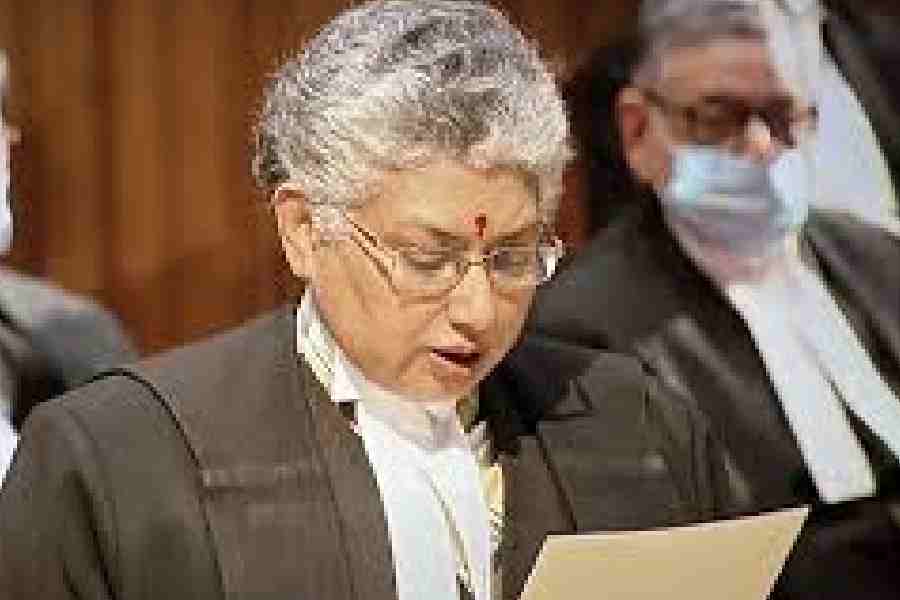
The division bench of Justice M.M. Das and Justice A.K. Rath, before which the petition had come up today, closed hearing and reserved judgment on the matter.
The legal dispute has centred on total reservation exceeding the Supreme Court’s order to limit quota for scheduled caste (SC), scheduled tribe (ST) and social and educationally backward classes (SEBC) to 50 per cent.
To keep the total reservation at 50 per cent, the SEBC quota should have been decreased.
But, the Odisha government has preferred to battle it out in Orissa High Court citing the Orissa Reservation of Posts and Vacancies (for Socially & Educationally Backward Classes) Act, 2008.
In 2008, the Naveen Patnaik government had enacted the act to fix quota for the SEBC in government jobs at 27 per cent.
Consequently, the total reservation in Odisha went up to 65.75 per cent, with 16.25 per cent and 22.5 per cent already earmarked for SC and ST, respectively.
Accordingly, the Odisha Public Service Commission issued an advertisement on November 17, 2011, inviting applications for the Odisha Civil Service Examination - 2011 for recruitment to 364 posts. While 59 posts were reserved for SC, 81 were reserved for ST. Another 62 posts were reserved for the SEBC.
More than 60,000 candidates had submitted applications. But, the commission is yet to announce the date for the examination.
Following petitions, the State Administrative Tribunal has made it practically impossible for the commission to proceed with the test. The Odisha government has sought the high court’s intervention against it.
The high court had sought reply from all the 64 petitioners in the case in which the tribunal had passed the order. Notices were issued accordingly.
The tribunal had suggested to the Odisha government to either approach the Centre for inclusion of the act in the Ninth Schedule “or continue with reservation within 50 per cent as has been decided by the Supreme Court.
If the act is placed in the Ninth Schedule of the Constitution, it cannot normally be challenged in the court of law. The states, which are providing reservations beyond 50 per cent, have got their state laws placed in the Ninth Schedule. To place a state act in the Ninth Schedule, Parliament has to pass a law.
The Odisha government, however, has sought intervention of the high court to implement its decision to give reservation beyond 50 per cent on the ground that it has not been struck down by any competent court or tribunal.