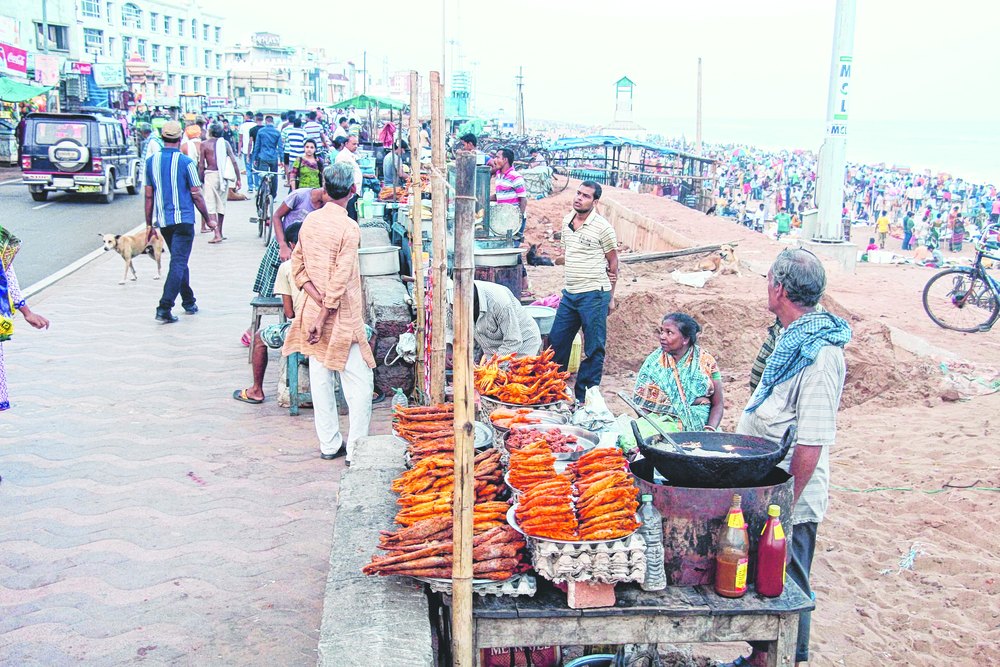

Puri, July 13: The health and family welfare department's public health wing has deployed 10 food safety officers to ensure that water-borne diseases are kept at bay and there is no sale of stale food in Puri during the rath yatra.
This year, with lakhs of tourists, including the pilgrims, expected to throng Puri in view of Nabakalebar and rath yatra, state food safety commissioner B.C. Das is also camping in the temple town to ensure availability of safe drinking water and healthy food to tourists and devotees.
Additional district medical officer (public health) Amarendra Mohanty, the nodal officer for public health, said: "Our priority is water quality sampling. The administration has made it mandatory for all hotels, lodges, guesthouses and dharmasalas to get their water tested at the state public health laboratory's camp office at the Gopabandhu Ayurvedic Medical College."
Similar facility has also been set up at the infectious disease hospital in the city.
The public health engineering organisation that supplies pipe water to the city is also testing the water quality.
While 3,000 shallow tube wells have been checked for safety with halogen tablets being applied to them, 500-odd makeshift shops have been asked to destroy stale food immediately.
Prashant Jena, a fried fish seller on the beach, said: "Yesterday, a team of food safety officials came and destroyed a tray full of rasgullas at an eatery installed on the beach and warned others not to commit similar mistakes. Shop owners were advised to maintain cleanliness standards as the temple city is going to experience a massive crowd by July 18."
A senior health official said the quality of food such as panipuri (gupchup), chat and khaja was being tested and checking the quality of colour being used in food items was also a top priority. The panipuri sellers have been asked to use halogen tablets without fail while making the tamarind water.
These measures have boosted the sale of food items at roadside eateries. "I am now using serving gloves and halogen tablets to prepare tamarind water, and I have seen a rise in my clientele within a week's time," said Sanatan Samal, a panipuri seller on VIP Road.
"With tourists staying on the beach and walking down the streets near their hotels and eating at roadside eateries, vendors on the beachfront have been asked to be particularly careful," said Mohanty.
"The 10-member squad of food safety inspectors has also been asked to remain vigilant round the clock," Mohanty said.