
Cuttack, Nov. 16: Scholars and former diplomats today said the reality about India-Indonesia relations was far from good.
However, they hoped that if the two countries agreed and played their cards well, the situation could improve.
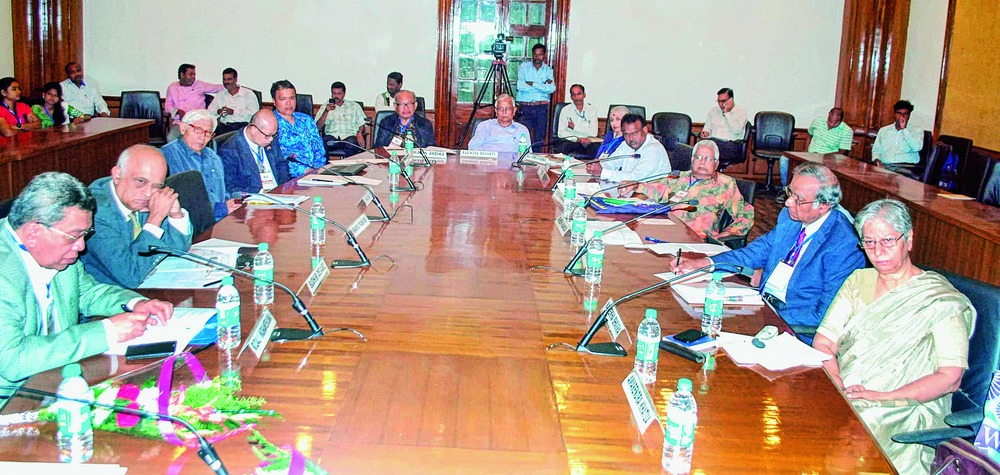
The experts were speaking on the second day of a conference organised by the Kalinga Lanka Foundation as part of the Kalinga Indonesia dialogue at Ravenshaw University. With Sudhir Devare, former Indian Ambassador in Washington DC, as moderator, the pre-lunch session dwelled on India-Indonesia in the recent past.
Former Indian Ambassador to Indonesia Navrekha Sharma said: "One must ask oneself whether terms such as natural partner or even strategic partner reflect the situation? Or they are merely rhetorical devices."
"Indians have invested in Indonesia abundantly and created nearly 2,50,000 jobs in the country, but there is hardly any reciprocal investment by Indonesian companies in India," Sharma said.
"Of course, the continued absence of direct airline connectivity between India and Indonesia is most baffling of all," Sharma said.
"The signing of strategic partnership agreement between the two countries in 2005 have remained by and large unfulfilled," Sharma concluded.
Founding director of Centre for South and Southeast Asian Studies at the University of Madras V. Suryanarayan said during 1945-49, "India was Indonesia's window to the outside world and played a magnificent role in mobilising international opinion on behalf of the Indonesian Republic".
Suryanarayan said: "An important factor that brought Indonesia and India closer was that the nationalist leaders faced similar problems and they pursued more or less the same policies to tackle these problems."
Rahul Mishra, a research fellow at Indian Council of World Affairs, said India-Indonesia relationship "gained much warmth" in the first decade of their independence. However, personal differences that crept up between Prime Minister Jawaharlal Nehru and Indonesian President Sukarno "crippled the relations at the top level".
The relationship was further damaged by the 1962 India-China war. "Furthermore on the India-Pakistan conflict, Indonesia begun to tilt towards Pakistan that caused much discomfort to Indian policy makers. Indonesia's support to Pakistan in India-Pakistan wars in 1960s and 70s further affected the bilateral ties," Mishra said.
"Mutual neglect kept on affecting the bilateral relationship, until India attempted to reach out to Indonesia through its "Look East Policy", now termed as "Act East Policy," Mishra added.
In a special address before the start of the session, member of Parliament B.J. Panda called for a renewed approach of mutual respect for others aspiration.
"India should see Indonesia as an emerging regional power with global presence. Similarly, Indonesia should learn to value India's interest - which is not just Southeast Asia but the entire Asia," Panda said.