
Big Bazaar, Satya Nagar
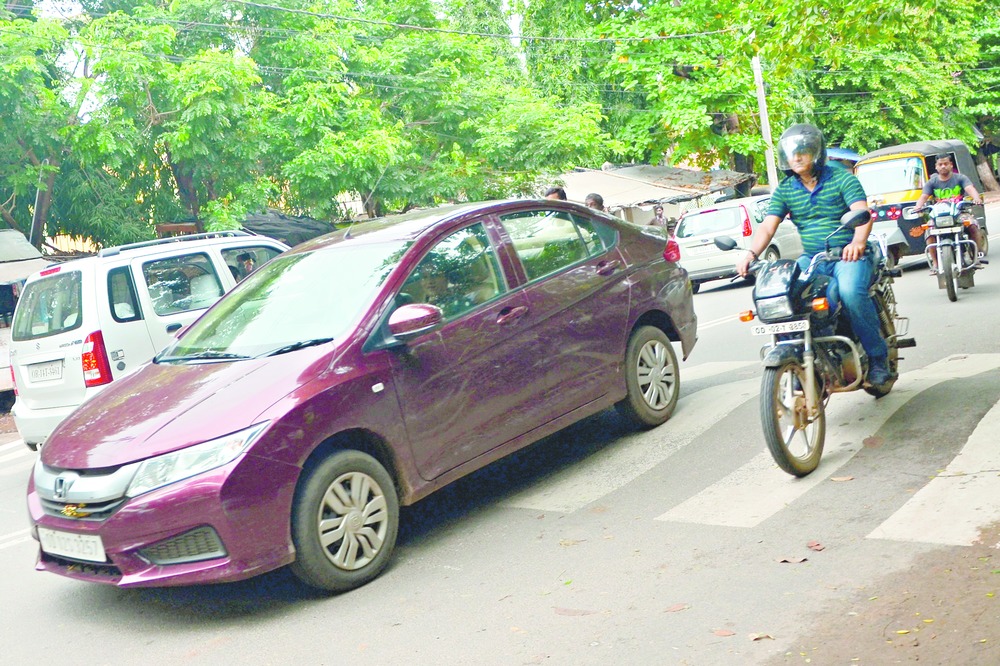
The speed breaker near the shopping mall was reconstructed a year ago. Located near a hostel for the visually challenged, it is too high for the comfort of motorists. “Vehicles with low ground clearance, especially scooters, get stuck while crossing the hump,” said Asutosh Dey, 39, an income tax professional and resident of Lakshmisagar. Besides, he said that lack of reflectors on the speed breaker made it tough to spot it at night. “It gets difficult to spot the hump when it is raining or there is a power cut in the area,” he said.

Ram Mandir Square to Unit-IV Square
The stretch between these two major junctions has two speed breakers. However, lack of a signpost and reflectors makes it difficult for motorists to spot them at night. “Vehicles travelling at high speed often do not get time to slow down,” said Asish Mohanty, 47, a pharmacist and resident of Saheed Nagar. The stretch has a government school and an institute for the visually challenged, which makes speed breaker a necessity here, but they should be properly marked otherwise it will not serve the purpose,” said Mohanty.
MISSING BUMPS

Unit-IV to Capital Hospital Square
This busy stretch doesn’t have a speed breaker at all. Utkal University of Culture and Rabindra Mandap are located on this stretch, making it a much-frequented area. One speed breaker, if not more, is a must for the safety of pedestrians and motorists. “The stretch between Unit-IV Square and Capital Hospital Square is congested. It has a college, cinema hall and recreational institute. It becomes dangerous for pedestrians to cross the road as vehicles are always speeding in absence of a speed breaker,” Manoj Sinha, 38, a medical representative and resident of Unit-IV said.
In 2014, a speeding car had hit a vehicle carrying retired bureaucrat Tara Patnaik near Capital Hospital Square. It had sparked a debate on the need for a mechanism to control the speed of vehicles on the road. The stretch is used by almost one lakh vehicles on a daily basis.
 Ram Mandir Square to Master Canteen Square
This stretch also needs a hump. On June 30, chairman of Odia Film Producers’ Association Kusha Ranjan Patnaik died when a speeding motorcycle hit him. Patnaik’s death had reaffirmed the need for a hump on the stretch.
“In a fast growing city such as Bhubaneswar, speed breakers are required as vehicles are also increasing every day. Traffic police should identify unregulated speed breakers and those spots where they are required the most,” said S. Maqbool Ali, president, Prevention of Accidents Society, Odisha
Rasulgarh Square
This busy junction is crying for a speed breaker.
“This is one of the most important junctions in the city as two national highways — Nos. 203 and 5 — meet and intersect here. This apart, a road from the Mancheswar industrial area joins the square. People from VSS Nagar, Mancheswar, Chakeisiani, Rasulgarh, Bomikhal, Palasuni and several newly developed areas depend on this junction to reach the city centre,” said Bikram Mohanty, 28, a marketing executive and resident of Bomikhal.
Khandigiri Square
The road connecting Pokhariput and Kalinga Studio crosses NH-5 at Khandigiri Square. The presence of Khandagiri and Udayagiri hills makes it a very busy zone. Moreover, a shopping mall and a school located near the square adds to the buzz. Two constables, one havildar and one home guard man traffic here. Around 80,000 vehicles pass the square everyday. “It’s quite long that we have been asking for a speed breaker here,” said Manoranjan Kar, 54, a state government employee and resident of Khandagiri.
What ails city speed breakers
♦ Unplanned and not built to specification of Indian Roads Congress
♦ Absence of warning signage (at least 40m ahead of humps) forces motorists to negotiate at the last moment. This often leads to mishaps
♦ Most humps do not have white strips or reflectors on them to make it visible to motorists from a distance

WHAT THEY SAY
“Public works department has mooted a proposal to construct rumble strips, as is being done in New Delhi, in front of educational institutions. These strips are fitted with reflectors that make it easy for motorists to spot them at night”
OP Patel, chief engineer (roads), Bhubaneswar
“If the civic body receives request from the public to construct humps on busy roads, then it can notify works department to initiate the process”
Anant Narayan Jena, mayor
“Maintenance and construction of speed breakers are not the responsibility of the traffic police. Since accidents due to absence of speed breakers are attended by the police stations concerned, the traffic wing does not have the data pertaining to such incidents”
Jatin Panda, Bhubaneswar ACP (traffic)
SAFETY RULEBOOK
What are speed breakers?
A speed breaker is a hump surface across the roadway having a rounded, shape with width greater than the wheelbase of most of the vehicles using the road
Specifications: The Indian Roads Congress states that speed breakers should be constructed by providing a rounded (of 17 metre radius) hump of 3.7 metre width and .10 metre height for the preferred advisory crossing speed of 25 kmph for general traffic. It is mentioned that more humps be constructed at regular intervals and the distance between one hump to another can vary from 100 to 120 metres centre to centre
How unplanned or poorly constructed speed breakers affect movement?
♦ Slows down emergency vehicles such as ambulances, police vehicles and fire trucks
♦ Cause traffic congestion
♦ Reduces fuel efficiency and increases air pollution of vehicles
♦ Causes rapid wear and tear of vehicles
♦ The impact can be harmful for patients in transit, senior citizens and pregnant women
♦ Causes an increase in noise pollution due to sudden braking, honking and congestion
♦ May scrape the under-body of low cars
♦ Can cause vehicles (especially two wheelers) to skid and collide
Where can speed breakers be used?
♦ T-intersections of minor roads with rural trunk highways, characterised by relatively low traffic volumes on the minor road but very high average operating speed and poor sight distances
♦ Intersections of minor roads with major roads, and mid-block sections in urban areas where it is desirable to bring down speed
♦ Selected streets in residential areas where public utilities such as schools, colleges or universities and hospitals are situated. Also in areas where traffic travels faster than regulated or safe speed of the area
♦ Humps can also be constructed on roads with a consistent record of accidents, primarily attributed to speed of vehicles, approaches to weak or narrow bridges and culverts requiring speed restriction for safety; near unmanned railway crossings and sharp curves with poor sight distances
Pictures by Ashwinee Pati