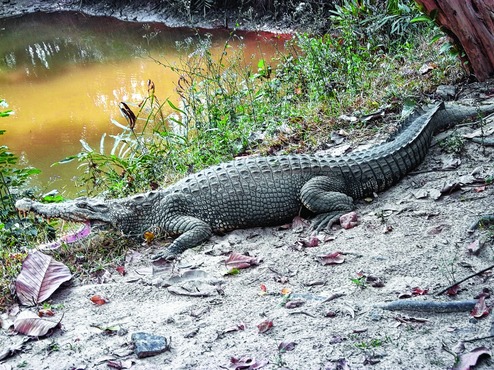

Kendrapara: The Bhitarkanika National Park will remain out of bounds for tourists and visitors from Tuesday to check human interference during the breeding season of estuarine crocodiles.
The prohibition will be enforced from May 1 and will remain effective till July 31, said an official.
"Human interference would disturb the animals during the breeding season. These reptiles often turn violent and attack intruders during this period. So, the objective is to ensure the safety of humans and provide congenial environs to the breeding crocodiles, said divisional forest officer, Rajnagar mangrove (wildlife) forest division, Bimal Prasanna Acharya.
According to the current headcount, 1,698 estuarine crocodiles are living along the Bhitarkanika's water bodies.
In view of the commencement breeding season, the forest department is prioritising the safety of local people. Local residents should remain watchful and vigilant. They can ensure their own safety by staying away from crocodile-infested water-bodies.
Man-crocodile conflicts often reaches a flashpoint in peripheral villages of Bhitarkanika wildlife sanctuary. After a temporary sojourn, they leave for their permanent habitation corridors within the Bhitarkanika habitation corridors, said a forest official.
Wildlife researchers studying on saltwater crocodiles are of the view that the habitat of these species has squeezed in about 26sqkm within the national park.
These reptiles prefer water bodies with salinity contents. The salinity level in some of the water bodies might be dropping proving less ideal for crocodiles.
There are large habitats for saltwater crocodiles in Sundarbans in Bengal and large mangrove wetlands in Andaman Islands, but those cannot match the density and population of crocodiles in wild habitats of Bhitarkanika.
Albino estuarine species are also not found in the mangrove wetland sites, said crocodile researcher Sudhakar Kar.