
On a daily basis, I cringe. There is an air of "colère", and there is the heat of "enfado" around me; as the French and Spanish will give a narrative to anger. I am sixty-four and am preparing to step back from public life. The all-pervasive anger is like the Greek description "ankhone", a strangling.
A young doctor in his thirties, on a night call, is kicked, abused and has lost his vision in one eye. When you are called to attend to a patient, there will be no guarantee that you will save a life in the face of grievous injuries or a fatal disease. Hippocrates with his school of disciples under the platanus orientalis tree in the Greek island of Cos assiduously developed a system of medicine which classified ailments and injuries.
"The regimen I adopt shall be for the benefit of the patients to the best of my power and judgement." The abiding theme in the Indian medical system has emanated from the sayings and compilations known as samhita by Charak and Susruta more than two thousand years back. "Arthaanaam karmanah kaalasya cha atiyoga - ayoga - mithyaayogaah." Medicine as we know has progressed over the centuries.
Of all human transactions in the history of mankind, the doctor-patient relationship is a beautiful bond. My younger sister now based in Chicago recalls fondly the childhood ride she took upon a tricycle rickshaw in Chauliaganj neighbourhood of Cuttack in the 1970s with Dr Mohanty, addressed colloquially as " kala (hard-of-hearing) daktar". He was a general practitioner who would visit the houses of sick and ailing. It is a bond, which is not usually forged with a mechanic, lawyer, priest, or a kirana store owner. It truly transcends age, gender, caste, race, religion and very often time zones. In the frontiers of medicine, there is no enemy.
Fundamental to the development of the nation is the health and well being of its citizens. Life expectancy for an average Indian was 32 years at the time of independence in 1947, and it is now touching 70 years, within seven decades. Not a small measure for India's health system, despite our limitations in water, sanitation, malnutrition and above all the hurdles to access medical care for the average Indian.
At a time when ire and hot tempers are expressed against the medical community, it is for a society to take the steps. "Do you know, you should dress properly to the lecture hall and the lab?" My bright yellow shirt was frowned upon by a senior in the medical college. I learnt a lesson. A disproportionate attention will be paid to a doctor: how you are dressed up, the way you talk, and at all times avoid laughing loudly in your out-patient or ward areas. In their twenties, when the schoolmate techie is riding out to work in a collarless T-shirt with earbuds; the young intern learns to spend the coming years in reading, keeping awake at night duties, and to negotiate with colleagues, patients and their families for a safe delivery of health care.
It was never easy till I reached my forties and it is increasingly becoming a life where the youth is gone much before the young boy or girl has entered and exited through the magical gate of the medical college.
To feel vulnerable in a work atmosphere which is meant to be humane for looking after the body, mind and disease?
Violence and abuse against doctors, nurses and other health workers have increased over the last 30 years; something rare in my sister's childhood. It is understandable that a hospital and the health workers are liable to be scrutinised for their professional role and responsibilities in the optimal delivery of care. It is further recognised that there is gross inadequacy of facilities and overburdening of public hospitals in India. Nearly eighty per cent of the illness among our citizens is attended by private practitioners and in paying hospitals, mostly out-of-pocket expenditures for the families.
In the April 2017 issue of Nautilus, a science magazine, Heather Miller states: "Financial cost can be almost as toxic to the patients as the disease itself." The costs for medical care become a hidden part of the burden of diseases in a society, where the doctor can appear as the big target to be punched and kicked.
I have talked to some present colleagues in healthcare and as well whatsapped to batchmates with whom I had entered a medical college 47 years back. We have exchanged a few lessons. Patients and their families get angry when there is a perception of delay and a lack of medical facilities. The most distressed and abusive are those who seek care in emergency, obstetrics and gynaecology, paediatrics and intensive care. The demand on health system is tweaked as a revenue model by private entrepreneurs and investors, often for quick returns.
The doctor-patient communication about disease and its attendant costs for the family lacks openness in our socio-geographic milieu.
I am embarrassed to hearing " doctor Bhagwan ka doosra roop hote hai". Medical care cannot be equated with Godly dispensation and then any loss or failure becomes unacceptable from the "Bhagwan ka doosra roop". Just like a bridge falls and a train derails, a medical procedure will also have its failure and complication. Before a doctor is upbraided, it is time we look at the life expectancy graph of the country to understand the struggles and achievements of our health system.
It is inescapable; I will fade out from the profession. Like Joe Pearson, in Arthur Hailey's Final Diagnosis, the old guard has to clear the desk for a new doctor to set up the course.
The advances in medicine from the discovery of the malarial transmission by Ronald Ross at a small laboratory on the premises of SSKM Hospital in Calcutta in 1897 to the present days have been arduous in India. It is thousands of health workers like Rohan Mhamunkar of Dhule who have forgotten their youth in the process of learning and advancing the frontiers of medicine. What answer do we have to Archana, the mother of Rohan, who asks: "Did my son go out at night to be beaten up by a patient's relatives?" I do not know if we can imagine a society without any health care need.
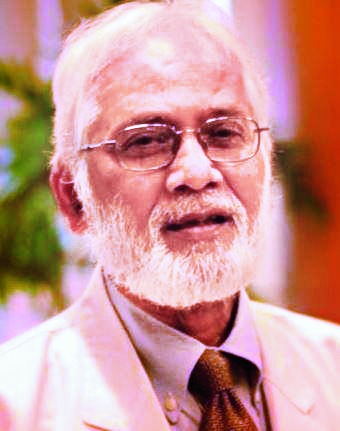
(The author was a professor of radiation oncology at AIIMS, Delhi. Now he works at Fortis Memorial Research Institute, Gurgaon, India)