|
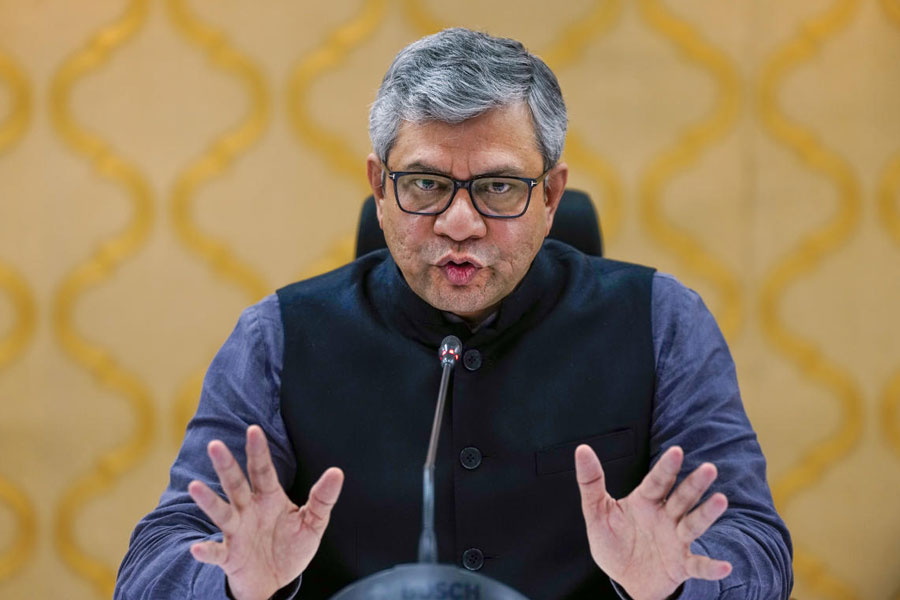
| Tea Board of India chairman M.G.V.K. Bhanu speaks at the interactive session in Guwahati on Friday. Picture by UB Photos |
Guwahati, July 19: Just once is not enough. The Tea Board of India is targeting rural areas to promote consumption of tea with a slogan that pushes for “Aur ek cup chai (one more cup of tea)”.
The current slogan is “Chai piyo mast jiyo! (Drink tea and live it up)!”
“The domestic campaign will target people in rural areas and is scheduled to take off in September. The strategy has been finalised and it will cost Rs 5 crore,” the chairman of the Tea Board of India, M.G.V.K. Bhanu, said at an interaction with Federation of Industry and Commerce of North-Eastern Region (Finer) here today.
He said major tea companies have decided to take part in the campaign to help make it a success.
“We are not disclosing how the campaign will be marketed but it will not be through the electronic media, which is expensive,” he said.
At present, the per capita consumption of tea in India is nearly 730 grams, while in states like Gujarat, the per capita consumption of tea is over 1kg.
“Our quality is good but we are not marketing it well enough and that is the reason for launching this campaign,” he said.
The current tea production in the country is 1,150 million kg in 2012-13, of which 30 per cent comes from small tea growers.
“India can meet its demand and will continue to have surplus for exports,” he said, adding that exports have been hovering around 200 million kg in the last five years.
“The production of quality tea is increasing, which is getting reflected in good prices and we would like to keep up this tempo. We are starting with a code for tea factories, which will regulate quality from the factory level itself. It will start within the next six months and tell what kind of machinery and other relevant issues should be kept in mind in the factories,” he said.
Tea sent for export from the Inland Container Depot at Amingaon in Assam conforms to international standards, Bhanu said. “Today, consumers are ready to pay more for a good cup of tea and production of quality tea is on the rise,” he added.
On the persistent demand by many organisations on shifting the Tea Board office from Calcutta to Guwahati, Bhanu said this is not possible as the tea trade is concentrated in Calcutta.
“To deal with this demand, there will be an office of the chairman at the regional office in Jorhat where the chairman can visit once every month to resolve the issues,” he said.
The board is taking steps to reduce paperwork and soon the process of licensing will go online. “In 12-16 months’ time, the board will become paperless,” he added.