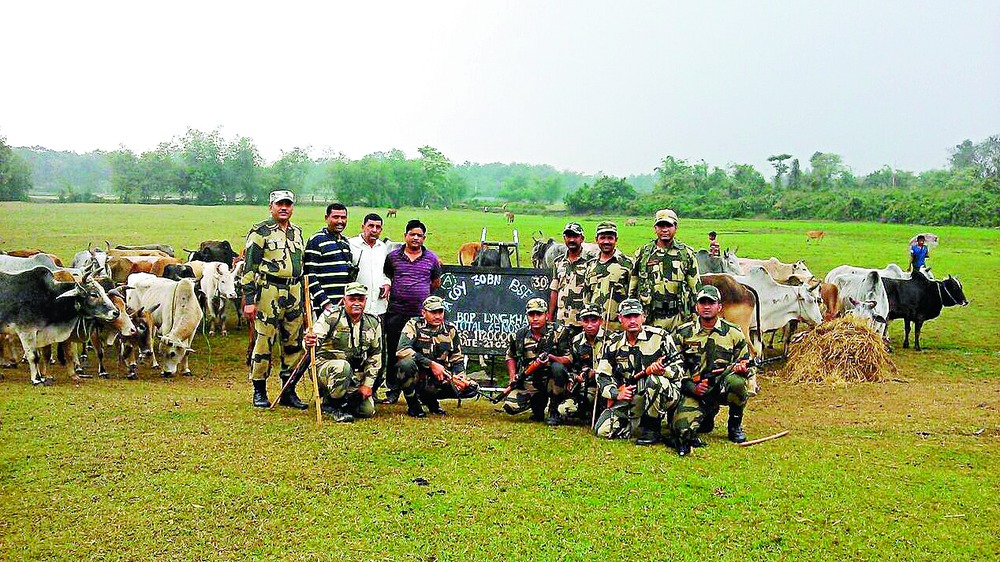

Shillong, March 9: Cattle smugglers have been found to adopt several ways and means to escape the glare of border troops while transporting head of cattle into neighbouring Bangladesh.
Cattle smuggling has been on the rise for the last two years, going by figures provided by the Meghalaya frontier of the BSF.
From 2011 to 2016, more than 8,000 head of cattle were seized by the border troops along the India-Bangladesh border in the Meghalaya sector. These amount to more than Rs 9 crore. This year alone, in January and February, 1,419 head of cattle worth Rs 1,26,48,760 were seized by the troops.
Explaining the latest modus operandi of cattle smugglers, a BSF official told The Telegraph that the smugglers have been using several means to try and hoodwink the troops.
"There are instances of stone pelting, attacks by smugglers on BSF troops, attempts to lure them and using women to create an awkward situation and blame BSF troops of molestation," the official said.
Moreover, cattle smugglers have developed a well-oiled "counter-intelligence network" where there are "linesmen" whose task is to keep tabs on the movement of troops.
There are also "transporters" who ensure that the cattle cross the border.
Yesterday, the troops unearthed a new modus operandi, suspected to have been adopted by the smugglers.
The BSF jawans unearthed a "tunnel" in the Gujangpara area, which is flanked by West Garo Hills and South West Garo Hills districts. The tunnel was allegedly dug by cattle smugglers to transport livestock into neighbouring Bangladesh.
Further, the BSF revealed that seized cattle make their way back to the smugglers as they purchase them during their auction by the customs department.
"These seized cows get auctioned, and most often, the cattle smugglers purchase them back," the official said.
The official said the present system where seized cattle are still being auctioned at a place near the international border should be replaced.
"Cattle need to be taken away from the border where genuine bidders could participate in the auctioning process. The smugglers take advantage of auctions at border areas and again attempt to smuggle the auctioned cattle to Bangladesh," the official said.
Explaining the main routes adopted by cattle smugglers, the official said the BSF have identified six major routes. These include Assam-Singrimari (West Garo Hills), Assam-Phulbari (West Garo Hills), Dudhnoi (Assam)-Siju (South Garo Hills), Khana-para-Shillong-Pynursla, Ass-am-Nongstoin-Mawkyrwat and Shillong-Jowai-Amlarem.
Stating that the recent slump in smuggling and resultant demand-supply gap has led to an increase in the price of beef in Bangladesh, the official said this has, however, made smuggling only "riskier but lucrative".
"The economics of the whole operation is found to be lucrative enough for people to ignore risks to life. This appears to have emboldened the criminals who are now more brazen and violent too," the BSF official said.