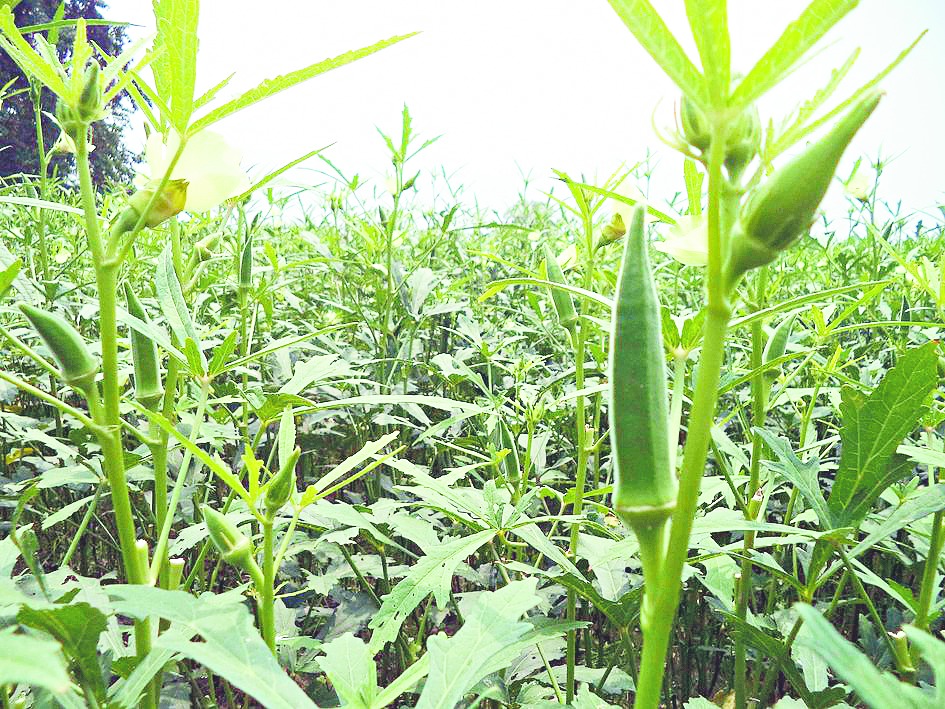

Dhubri, May 6: Record production of ladies' fingers or okra ( bhindi) in Charjogipar village of Dhubri district without using fertilisers has prompted the agriculture department to send a proposal to the Assam government to declare it an organic village.
Nearly 120 farmers had cultivated ladies' fingers on nearly 300 bighas of land without using chemical fertilisers and have ended up with a bumper crop.
Former gaon panchayat president Zakir Hussain said the farmers usually sow ladies' fingers seeds in mid-February and harvest in late April using chemical fertilisers.
"But this time, the farmers followed the advice of agriculture experts and took the calculated risk of cultivating the crop by applying organic vermi-compost. The result has been a bumper yield," he said.
Uzir Hussain, Jahan Uddin, Yaqub Ali and Aksar Ali are some who have already earned Rs 50,000 to Rs 55,000 per bigha of the crop since last month.
"We have used farm yard manure this time in place of chemical fertilisers, which are expensive and a health hazard. But our fear of low yield has been banished since the production has broken all past records," one of them said.
Charjogipar and its surrounding villages are known for growing vegetables and they usually capture the market with the season's first produce - be it cabbage or cauliflower.
This season, the ladies' fingers from Charjogipar have reached Shillong and Guwahati besides capturing the markets of the lower Assam districts like Bongaigaon, Barpeta, Dhubri, Goalpara, Nalbari and Kamrup.
District agriculture development officer Moinul Haque said they have been encouraging the farmers to adopt the organic method in production as it is safe and environment-friendly.
"We are happy with the farmers' success, which will encourage other villagers to take up this method. In order to encourage them further, I have written to the state government proposing to declare Charjogipar an organic village," he said.
Haque said in many countries, cultivation methods are being changed along with the production process without causing damage to the inherent soil quality. Using more and more chemical fertilisers might increase production but it also causes damage to the soil and is a health hazard, he added.