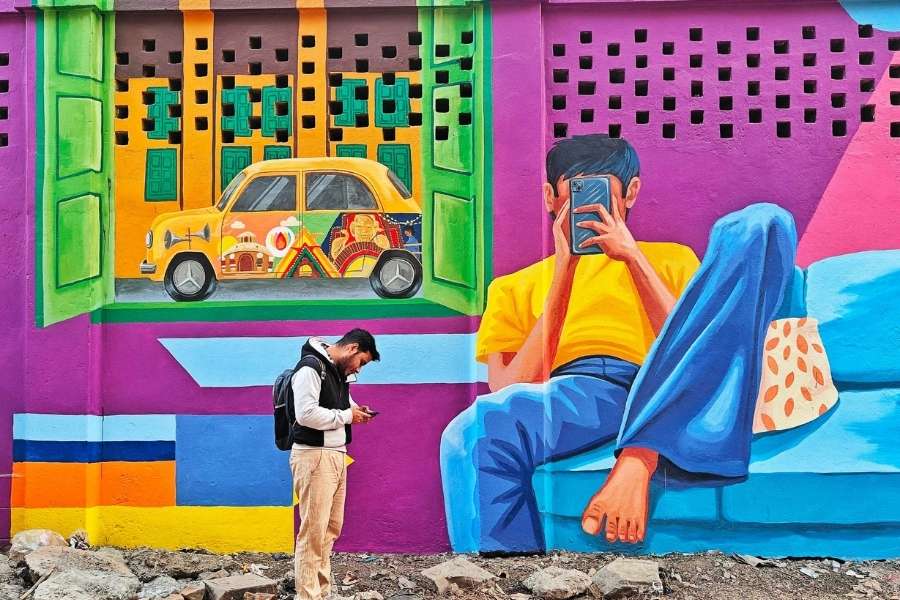
What was once a dull, neglected lane in Ballygunge has been transformed into an immersive public artspace that speaks of memory, home and colour in equal measure. Spread across nearly 8,200 square feet, the Colour Corridor is one of Kolkata’s largest contemporary mural projects, led by visual artist Sayan Mukherjee in collaboration with Start India Foundation and Asian Paints.
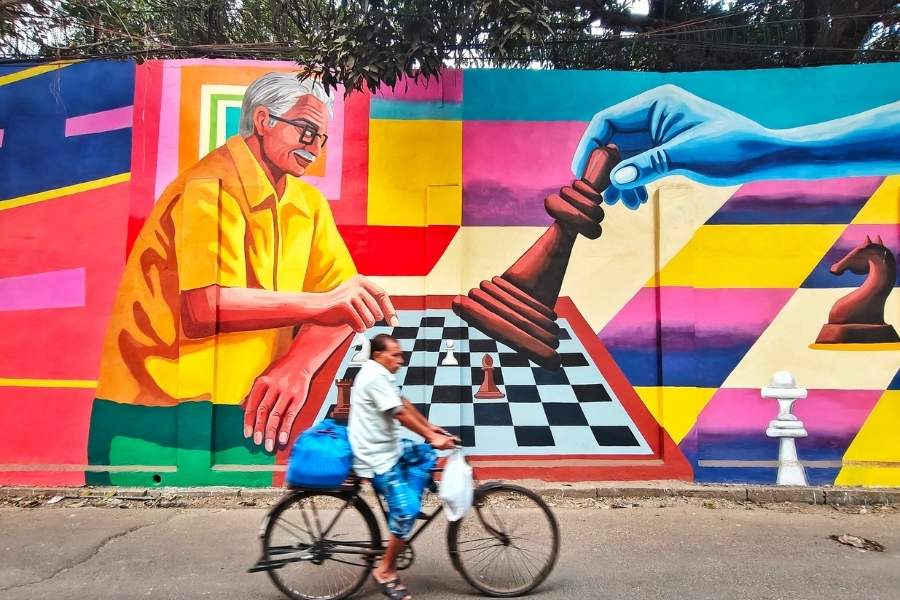
“The project actually began with Start India Foundation,” says Sayan. “They were doing an exhibition at Tri-Art Gallery and this mural was conceived as an extension of that show. Since the space itself felt like a passage, a corridor that people move through every day, the name Colour Corridor came very organically.”
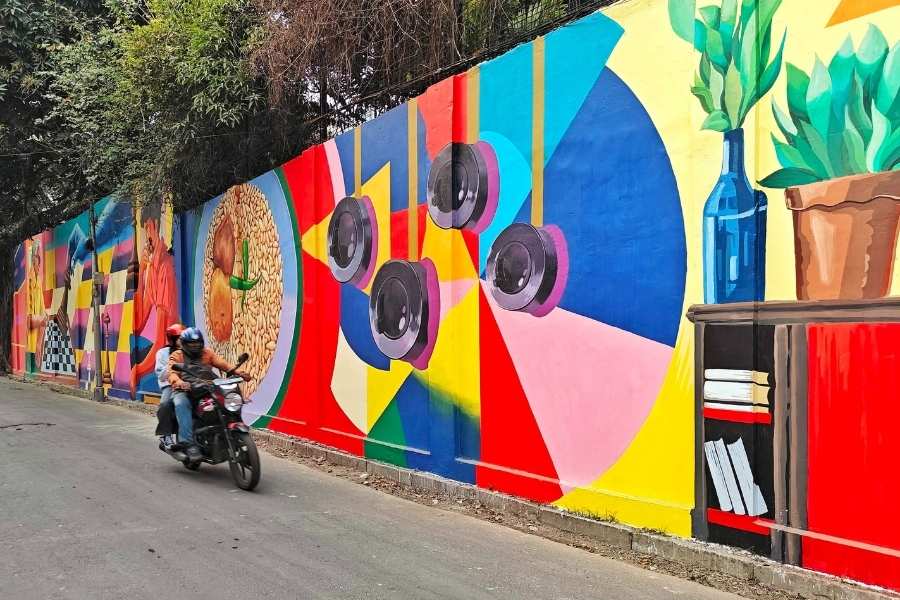
Asian Paints entered the collaboration with a clear and ambitious thought. With more than 5,300 shades in its catalogue, the brand wanted a public artwork that reflected its expansive colour universe. “It is impossible to use all those colours,” Sayan says, “but the idea was to capture the spirit of that palette. I wanted the wall to feel alive, layered and vibrant, so that colour itself becomes the experience.”
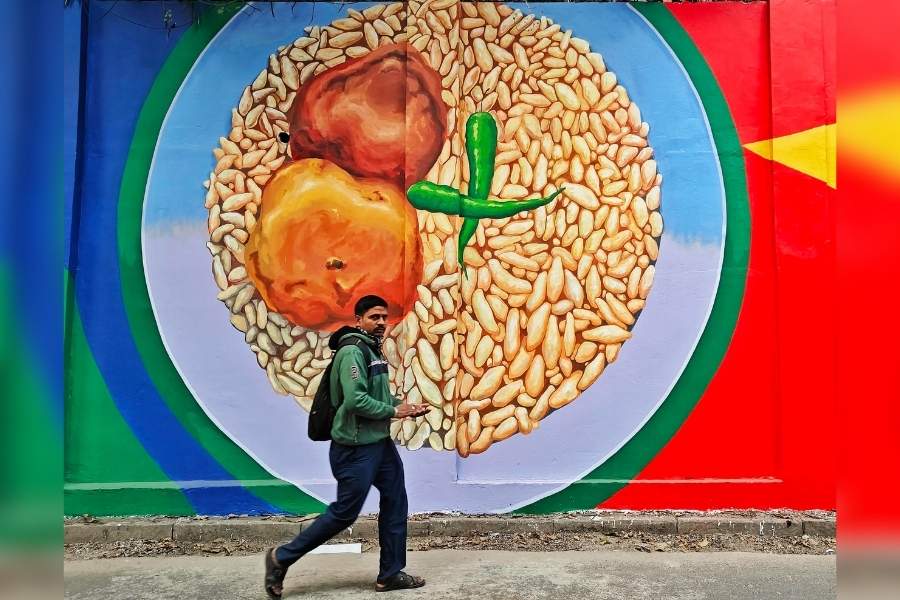
At the centre of the mural lies a deeply personal idea. “The brief was to show ‘home out of home’,” he explains. “For me, home is not just about people. It is about objects, memories, habits and the quiet things we grow up with. Those are what stay with you.”
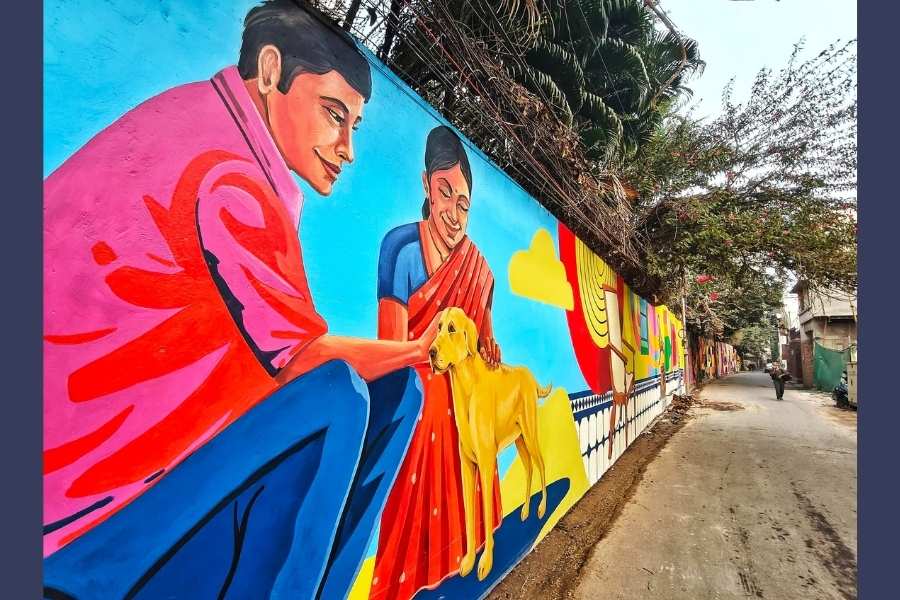
Before the first brushstroke was laid down, Start India Foundation took over the preparation of the site. The walls were repaired and treated, turning what had been a dark, broken surface into a workable canvas. “Earlier, this lane was very dingy and almost dead,” Sayan says. “Once the walls were prepared, you could already feel the place beginning to change.”
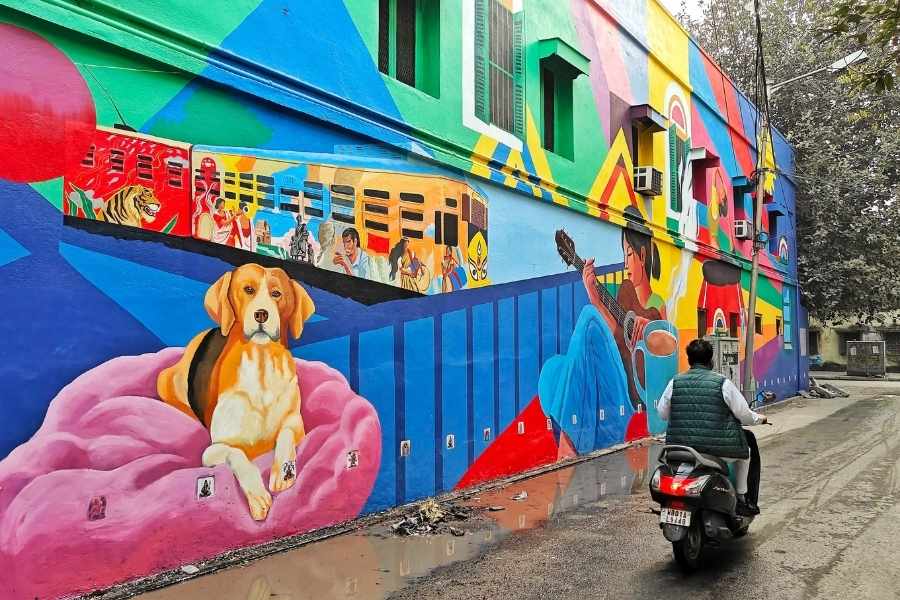
Instead of centring the mural around faces and figures, Sayan chose to build his narrative through everyday objects. “Human elements are always an easy way to connect with people,” he says. “I wanted to challenge myself by doing the opposite. I asked myself, can I show what home feels like without showing too many people?”
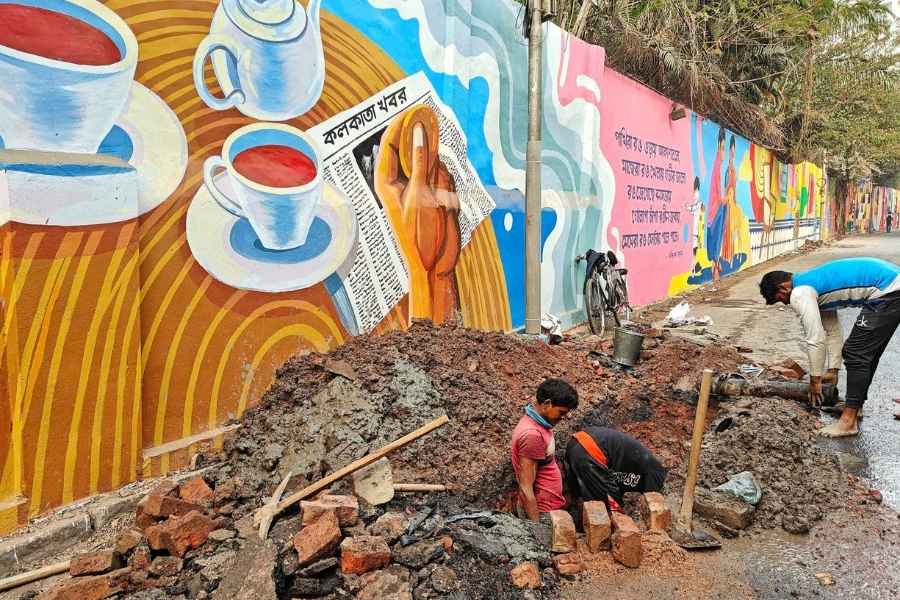
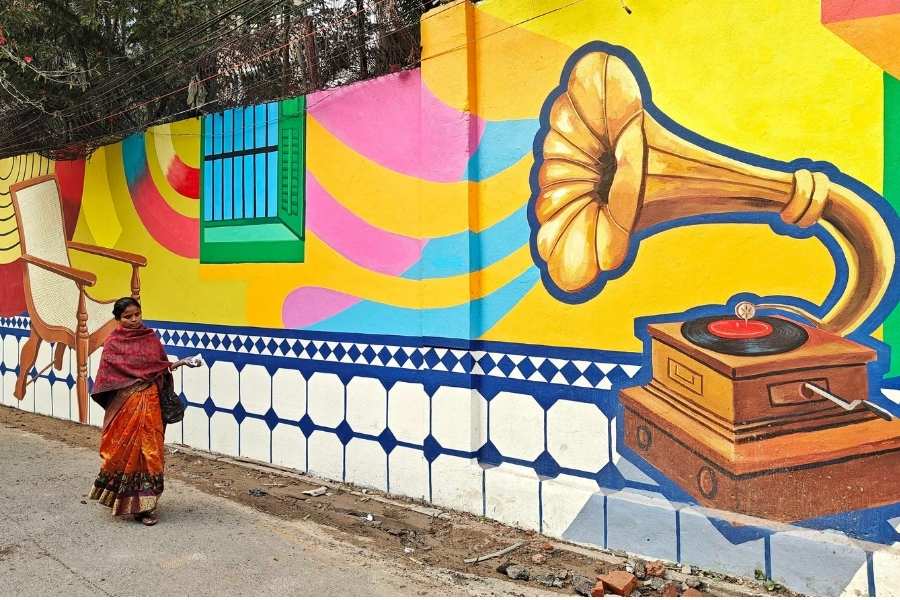
The result is a visual archive of domestic life. Letter boxes, gramophones, newspapers, pressure cookers, lunch boxes, a colour television perched on a cupboard, old switches and a grandfather’s chair appear across the walls. “These are objects we grew up with,” Sayan says. “Many of them are disappearing now. They carry culture in a very quiet way.”
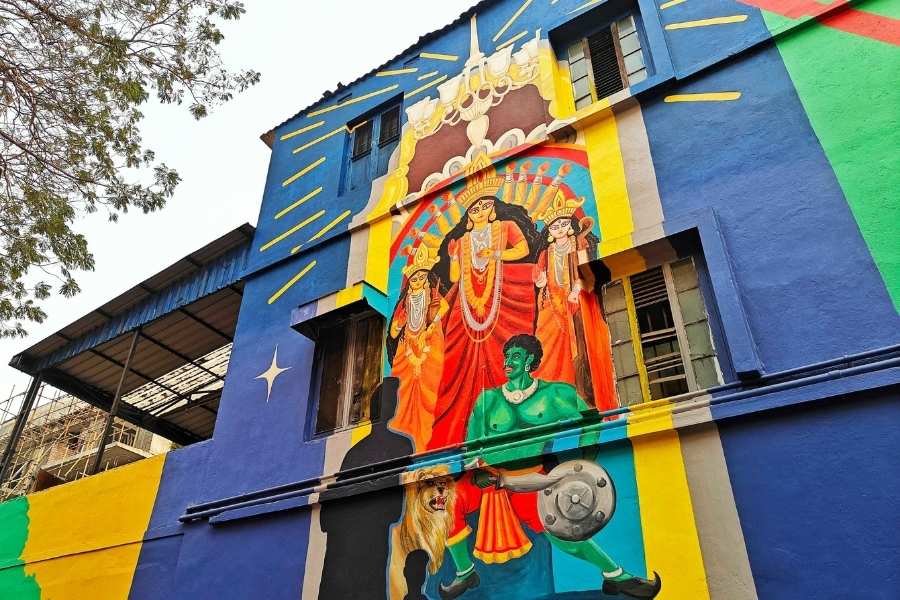
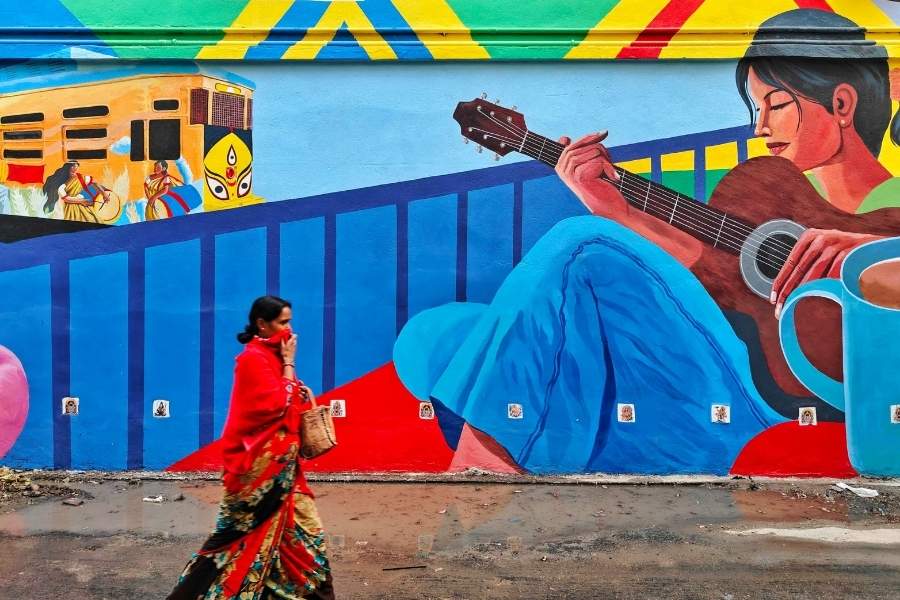
On the opposite wall, the scale allowed for a wider city narrative. Select human figures appear alongside subtle references to Sayan’s earlier projects, including a painted tram from 2023 and a taxi from last year. “I wanted those elements to sit naturally within the scene,” he says. “It is also a callback to the journey I have had with the brand.”
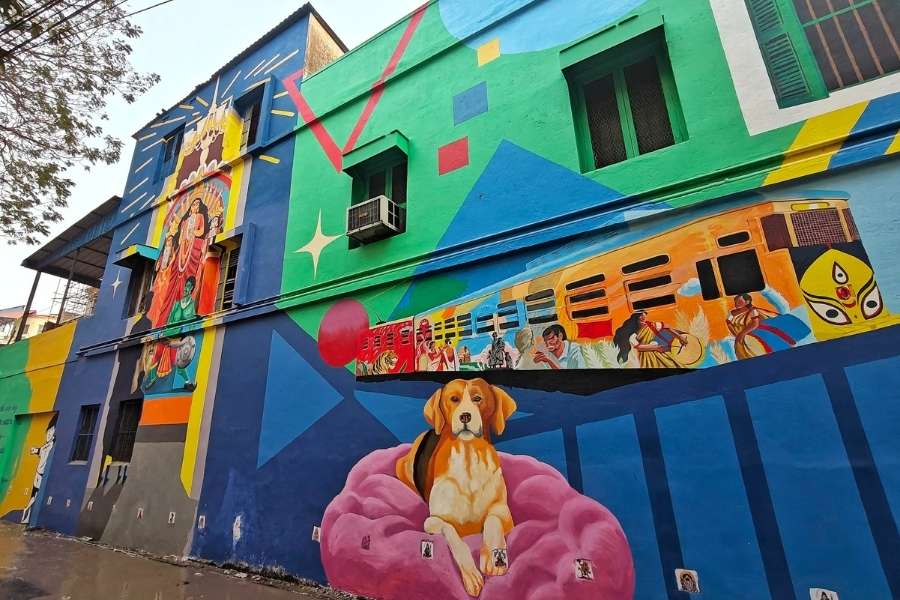
The mural took around 15 days to execute on site, following nearly two weeks of designing and multiple rounds of feedback. While the concept and design were led by Sayan, the physical scale demanded a strong collective effort. “This project would not exist without my team,” he says. “They are the backbone. I may design it, but it only comes alive because we work together.”
The process was not without its challenges. “The hardest part was dealing with people who had no respect for the space,” Sayan says bluntly. “There were instances where passersby would pee on the walls while the painting was happening. It is extremely painful as an artist. Once you paint something, it becomes like your child.”
What kept the team going was the response from local residents. “People living nearby kept telling us how unsafe and unpleasant the lane used to be,” he says. “Now they feel proud of it. Some even want to add lights so the artwork can be seen at night.”
For Sayan, Colour remains the most personal element of the project. “When I heard ‘Colour corridor’, I knew this was meant for me,” he says. “I am often asked to limit my colours. Here, I was told to explore freely, and that freedom shows.”
Asked which details matter most to him, his answer is immediate. “The old letter boxes, the pressure cooker and those protruding switches,” he says. “A young guy once asked me what those switches were. He had never seen them. That moment told me why this mural needed to exist.”
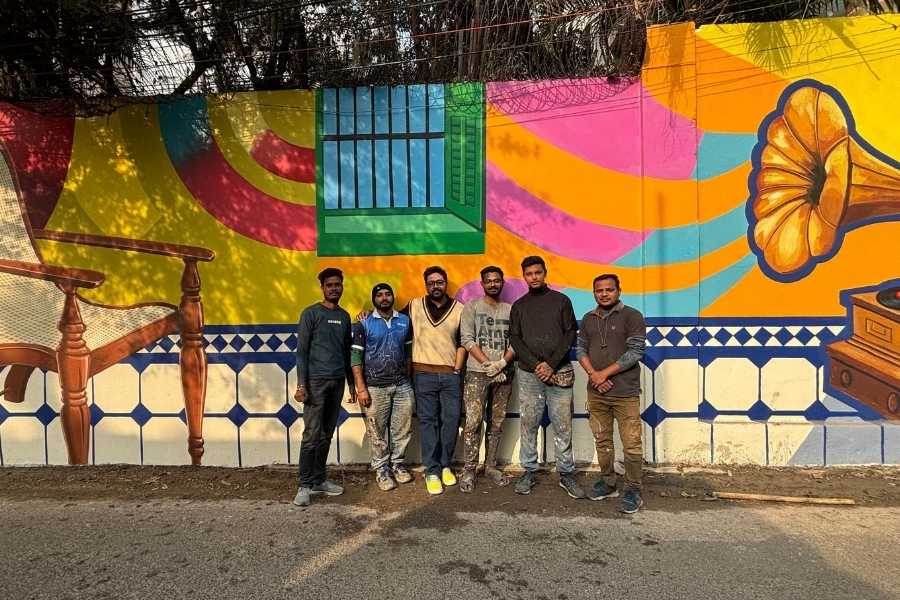
The Colour Corridor was brought to life by a team of artists working alongside Sayan Mukherjee. The artists are Prodip Sarkar, Tushar Adhikary, Palash Poddar, Sayandeep Roy, Subrata Sarkar, Rahul Jaiswal, Sandipan Paul, Supriyo Maity, Soumen Majhi, Bibhas Kotal and Pabitra Patra.