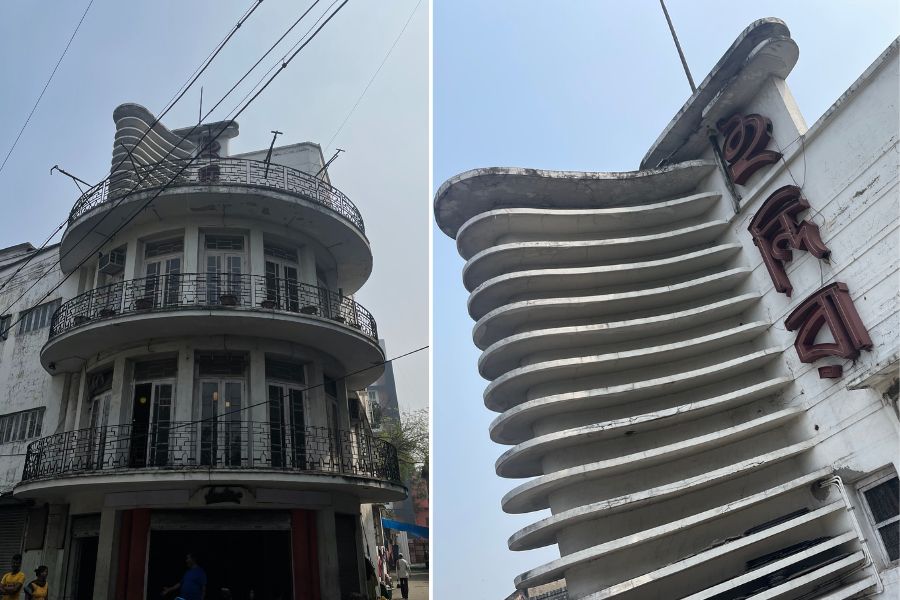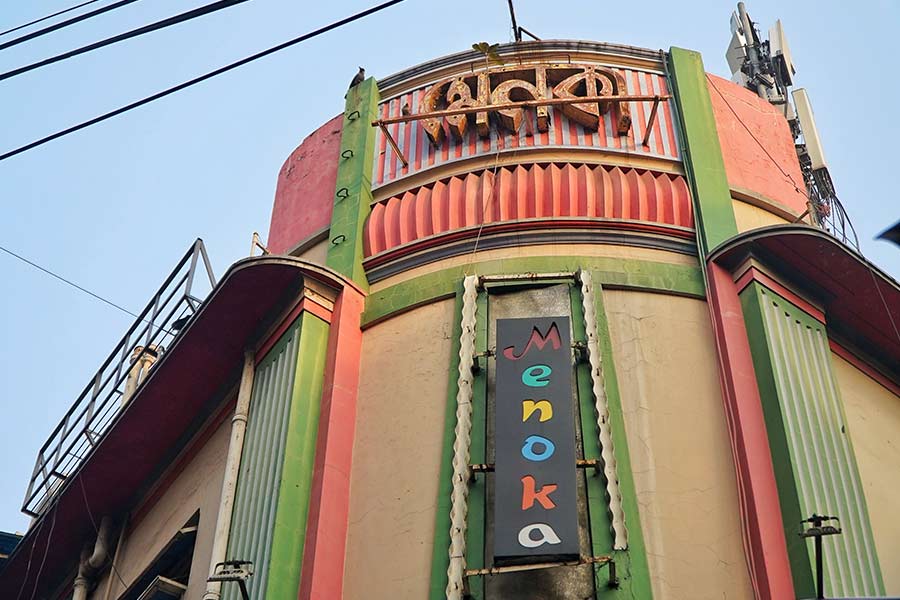
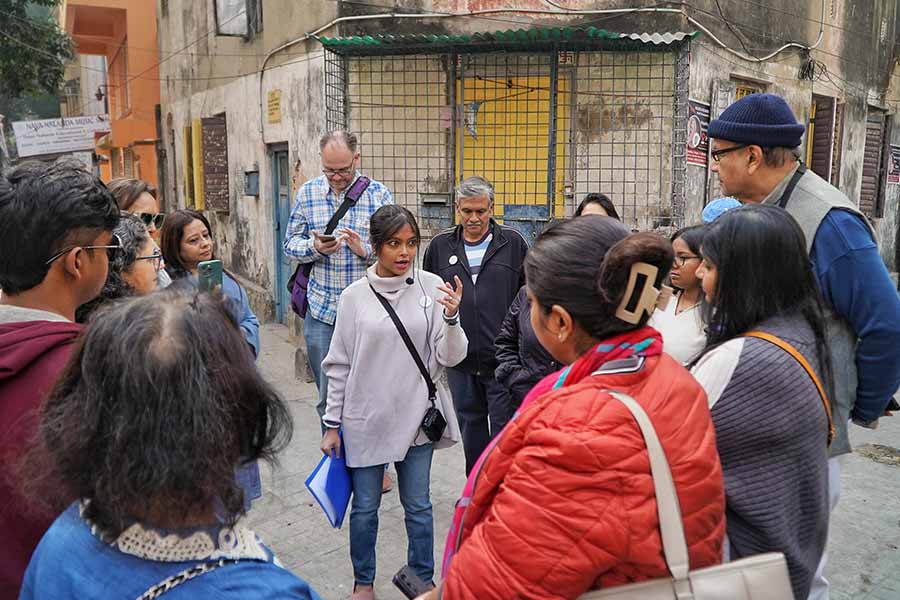
On a winter morning in the Lake Temple area, nearly 30 people gathered outside a quiet residential lane, craning their necks to notice details most passersby overlook. A curved balcony. A set of patterned vents. A pillar that does not belong to any classical order yet feels perfectly at home. This was not a sightseeing tour. It was a heritage walk organised by the Calcutta Heritage Collective, and led by writer and heritage enthusiast Mohor Sengupta guiding participants through a neighbourhood where Art Deco still breathes, even as it quietly disappears.

Sengupta, a freelance science writer and member of the Calcutta Heritage Collective, chose the Lake Temple area for a reason. The area, developed in the 1920s and ’30s by the Calcutta Improvement Trust, was once marshland shaped into planned neighbourhoods around a man-made lake. As families moved in during the early 1930s, they built compact homes on government-allotted plots. Many of these residents were professionals relocating from north Calcutta or from East Bengal, seeking new livelihoods in a growing city. Their houses, built between the 1930s and ’60s, became a unique canvas for global design ideas interpreted by local hands.
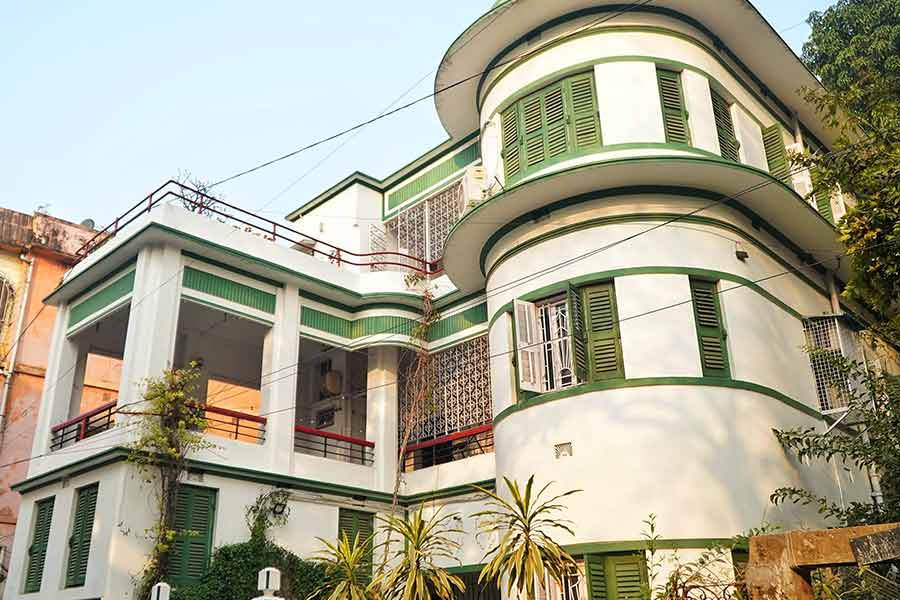
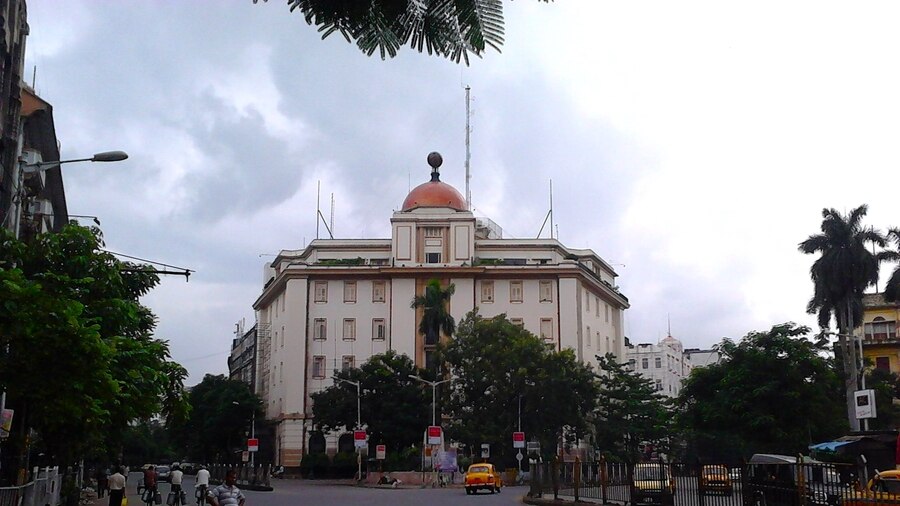
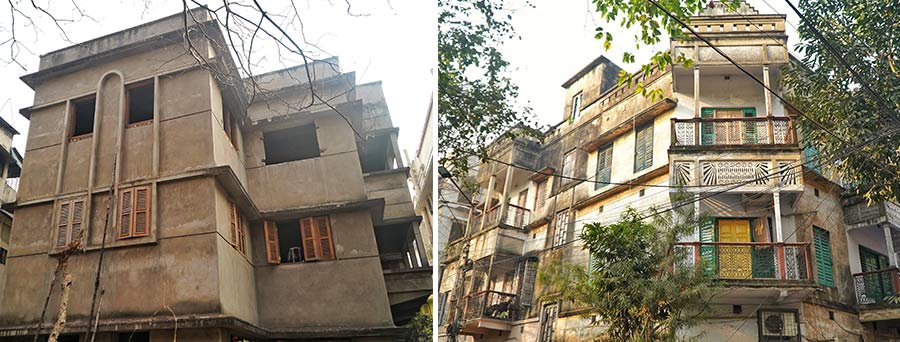
“Art Deco is a living style. It never really died here,” Sengupta told the group during the walk. She explained how 2025 marks a century since the Paris exposition that launched Art Deco onto the world stage. While grand Deco landmarks rose in central Kolkata’s cinemas and office blocks, the style filtered into everyday neighbourhoods through contractors, craftsmen and artisans who borrowed ideas, adapted them and passed them along from one house to the next. “These buildings exist because of the workers and artisans who replicated what they saw and made it their own. No two houses are the same. Every home here carries its own interpretation,” she said.
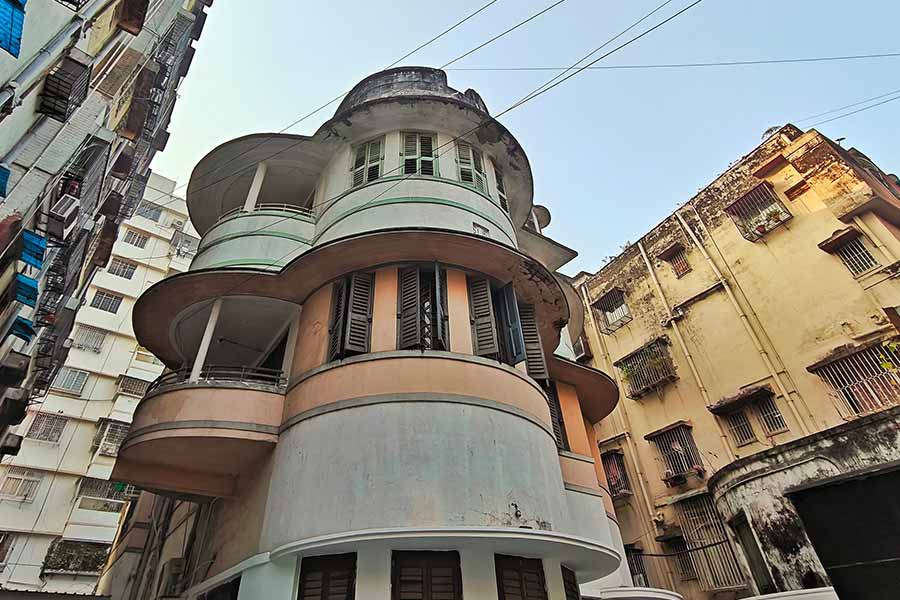
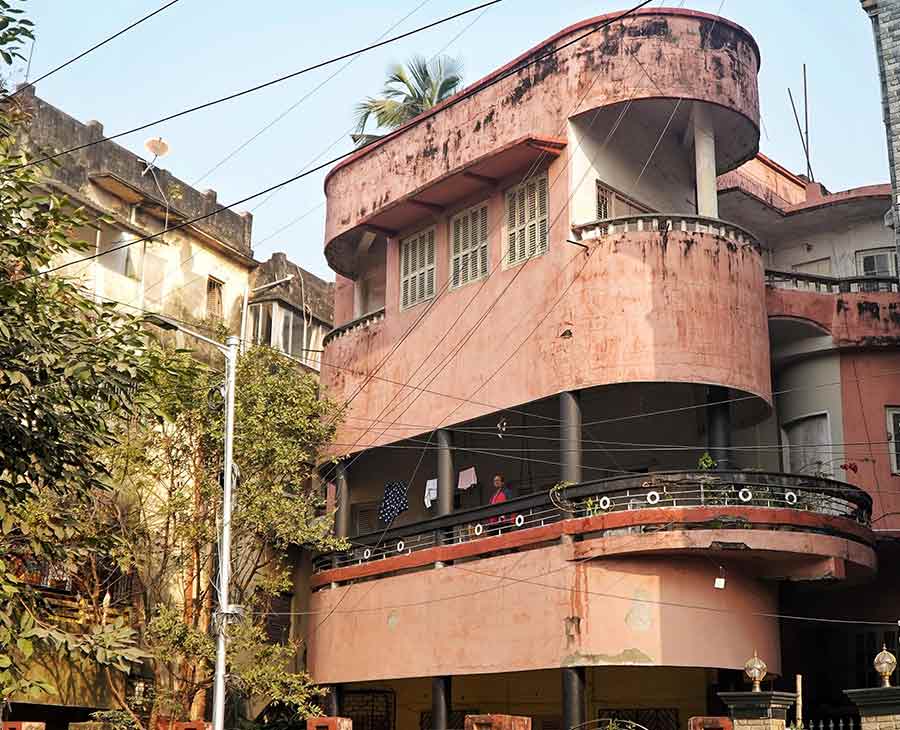
The walk moved through lanes where Art Deco curves met traditional Bengali features such as khorkhoris, jhool verandas and lattice screens. Participants paused at homes linked to cultural icons. The house built by legendary actor Kanan Devi drew special attention with its flowing lines and compact elegance. Nearby stood residences once associated with Satyajit Ray, Soumitra Chatterjee and other artistic figures who shaped Bengal’s cultural memory. Yet many of these structures stand vulnerable, their owners moving out, developers waiting in the wings.
For Sengupta, the walk was also about connecting architecture to social history. Art Deco did not remain confined to buildings. Its aesthetic travelled into jewellery, fashion and popular culture. She pointed to Kanan Devi’s famous chandelier earrings as proof that modern design had entered the mass imagination of Kolkata long before the term heritage became fashionable.
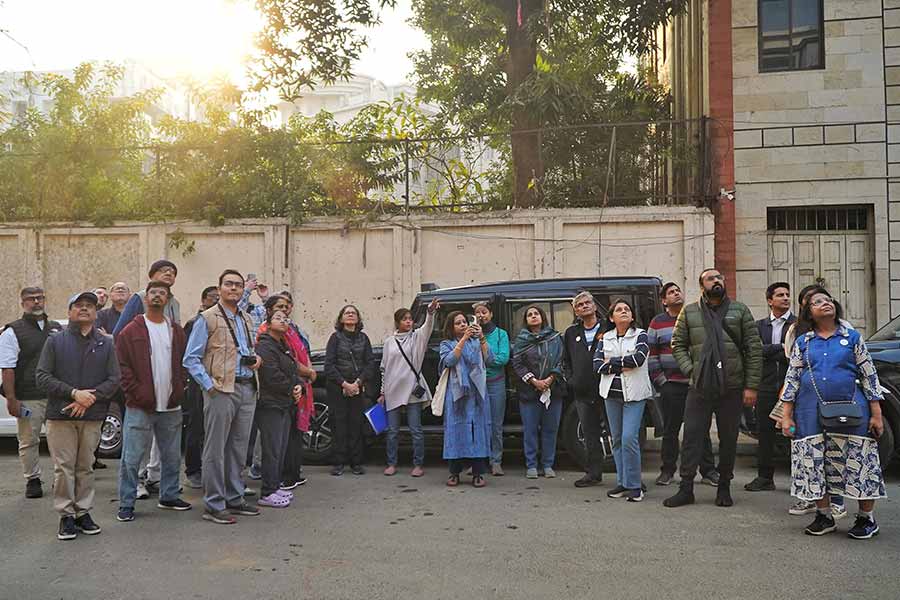
Mukul Agarwal, founder trustee of Calcutta Heritage Collective, sees such walks as the first step toward saving what remains. “Our aim is to create awareness about our beautiful heritage and make Calcutta relevant again,” she said. “People travel abroad and admire old buildings, but we rarely look at our own city with the same spirit. First we need to know what we have. These walks highlight that and inspire citizens to conserve and preserve.”
Agarwal said that even members of the collective are still discovering unknown corners of Kolkata. The organisation brings together architects, hoteliers, writers, researchers and ordinary residents bound by a shared concern. Their mission is simple. Make people notice. Make them care. Make them act.
Among the walkers was Hauke Wiebe, a German visitor based in Edinburgh with a professional interest in colonial-era links between Europe and India. He has spent years in south Kolkata but had never joined an organised heritage walk before. “In Germany we have very little Art Deco. I always knew places like Bombay and Miami celebrate it, but in Kolkata there was less awareness,” he said. “To walk through a small area and see so many variations of the style was fascinating.”
One building stayed with him above all others. “Kanan Devi’s house was extraordinary. So many curves in such a small structure. But what worries me is that the owner said they are moving out and it may go to developers. That building needs to be saved,” he said.
As the walk ended, participants lingered, comparing photographs and trading observations. The mood was warm, but the message was urgent. Kolkata’s Art Deco homes are timepieces of a city that once dared to dream in curves and geometry. Without attention and care, those dreams risk being erased. The Calcutta Heritage Collective hopes that by walking these streets, more citizens will choose to notice. And in noticing, choose to protect.