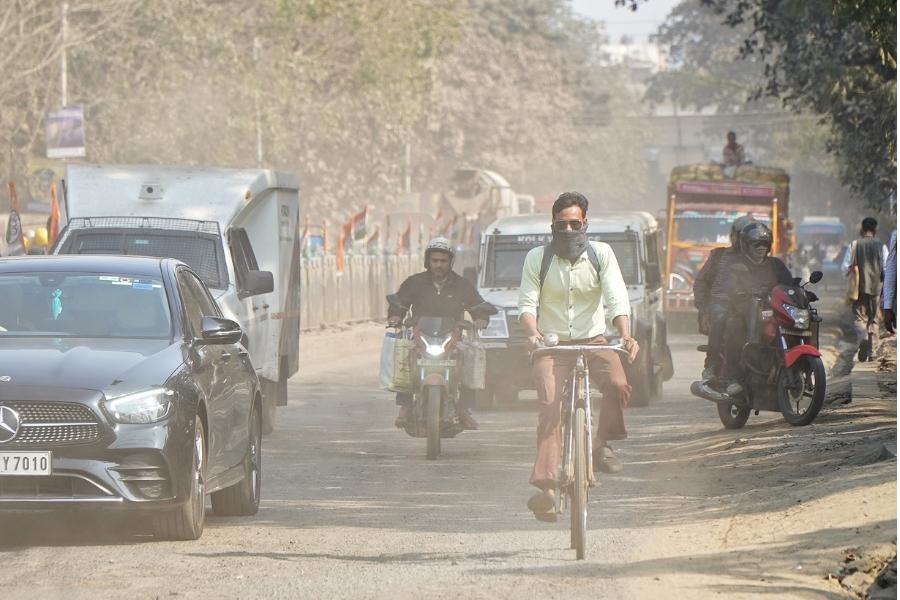
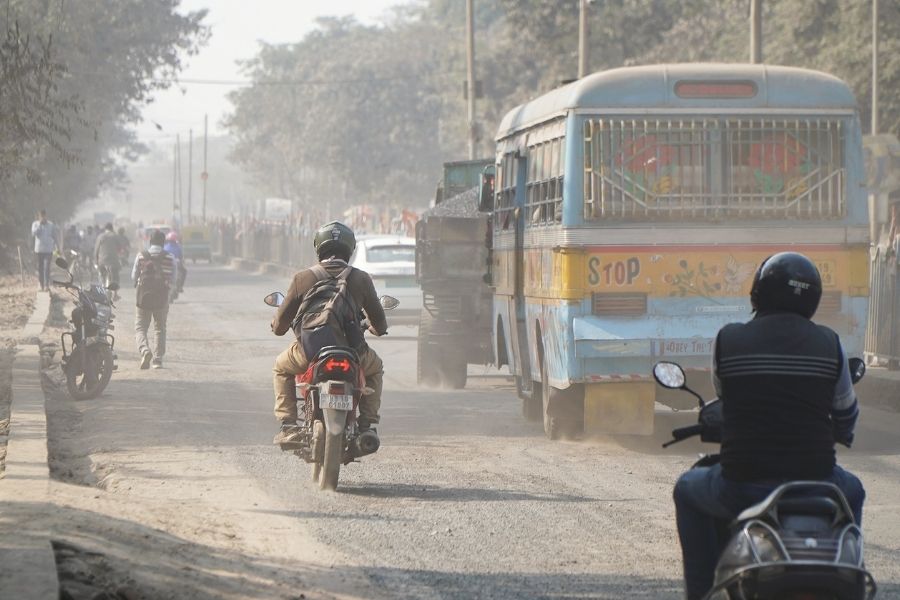
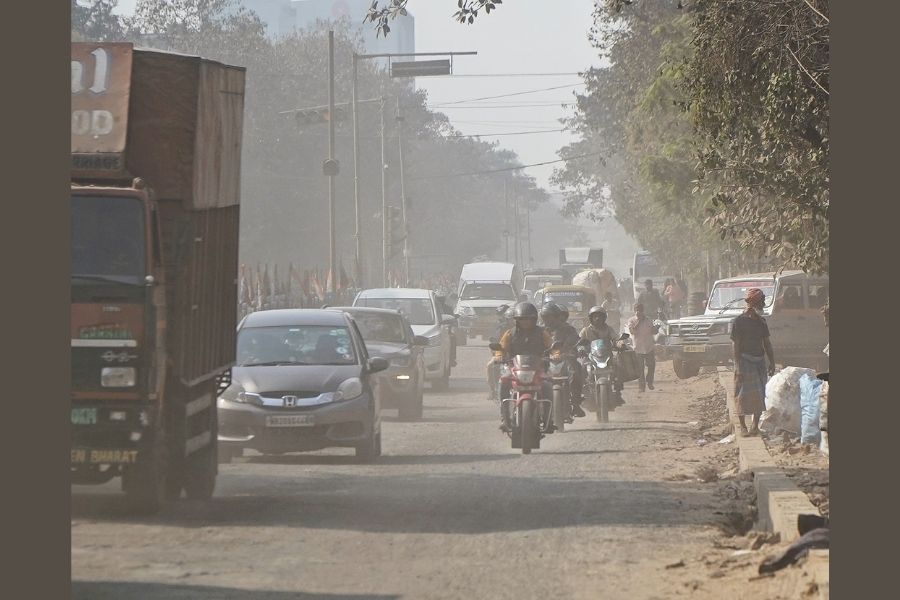
The 3-4km stretch of Diamond Harbour Road from Taratala to Ekbalpore has turned into a near-permanent dust bowl, with residents and daily commuters saying prolonged exposure to dust during the ongoing metro construction is affecting both health and livelihoods.
On any weekday, dust is everywhere. It coats the road surface, clings to footpaths and settles thickly on parked cars and roadside stalls. Every passing bus, truck or bike lifts fine particles into the air, creating a haze that hangs over the stretch. Regular commuters say the experience is unlike any other arterial road in the city.
Moumita Ghosh, whose daughter studies at St Teresa’s Secondary School in Kidderpore, said even short drives have become uncomfortable. “Whenever we take our car to pick up or drop off my daughter, it gets covered in a layer of dust. And if we have the windows down, then you can really feel the dust entering the car. We have started using masks,” she said.
For office-goers, the exposure is daily and unavoidable. Neeta Majhi, a Behala resident who travels every day to Dalhousie, said the dust follows her through the commute. “I take a non-AC cab every day. If I keep the windows open, the dust accumulates in my hair. I haven’t felt this in other routes,” she said.
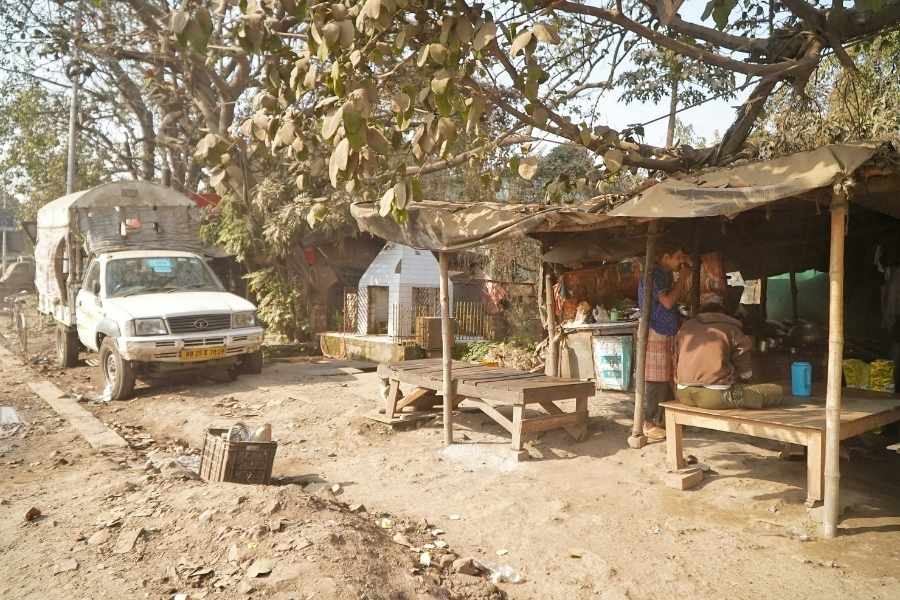
The problem is more acute for those who work on the stretch. Shopkeepers, hawkers and food stall owners say they spend long hours breathing in dust with little respite. Ramkrishna, who runs a food stall near Taratala crossing, said the situation has driven customers away. “There is a lot of dust on the road here. People can’t come and eat here. We have to take extra precautions to make sure the food is not contaminated,” he said.
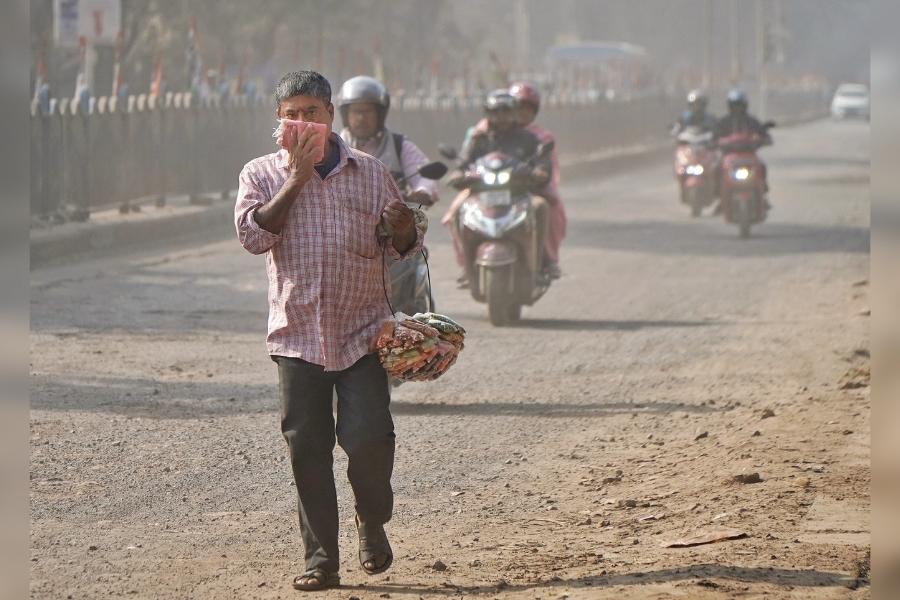
Biswanath Das, a hawker at Taratala, said even walking has become difficult. “I spend most of the day here and it becomes difficult to even breathe. They sprinkle water but after it dries up, it is again dusty. All of winter, it has been like this,” he said.
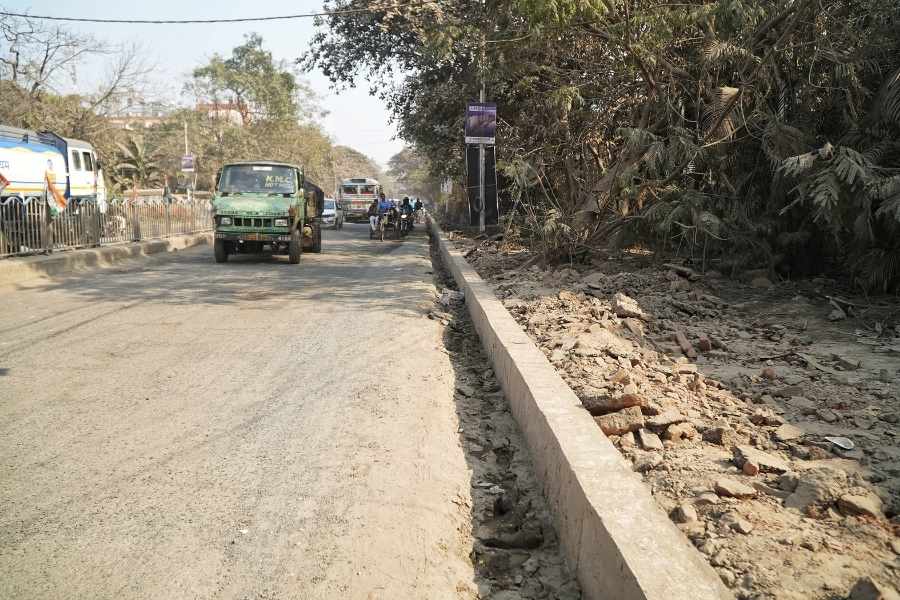
When My Kolkata visited the area, piles of broken bricks, rubble and excavated earth were seen lining several stretches of the road. The debris narrows usable space and adds to the dust as tyres crush the loose material. Concrete dividers meant to organise traffic were coated in a dull brown film, underlining how pervasive the dust has become.
Near roadside tea stalls, wooden benches, tabletops and cooking areas were covered in fine dust, with shopkeepers operating just a few feet from moving traffic. The ground was uneven and littered with loose soil, making it difficult for customers to stop or sit comfortably.
Kalpana Sarkar, who runs a shop on Taratala Road, said the exposure is affecting her health. “We sit here all day exposed to the dust. I have breathing trouble sometimes. Everything in the shop gets covered in dust. But what can be done? Washing the street is just a temporary solution,” she said.
Parked cars, trucks, trees and signboards along the stretch bore thick layers of grime, suggesting the problem persists throughout the day and not just during peak hours. While water sprinkling was visible in parts, the relief appeared short-lived, with dust returning as soon as the surface dried.
Doctors warn that the health risks of such prolonged exposure should not be underestimated.
Akshit Gupta, a pulmonology and respiratory medicine specialist at Apollo Multispeciality Hospitals, said prolonged exposure can trigger chronic cough, asthma and COPD exacerbations, leading to increased healthcare use and mental stress. He added that dust control measures such as physical barriers, frequent water spraying and covering loose material are crucial, while residents with respiratory issues should use masks or cloth coverings properly and replace them daily.
Sarat Kumar Behera, director of Critical Care and senior consultant in pulmonology at Manipal Hospital, Bhubaneswar, said construction dust contains fine particles like PM2.5 and PM10 that can penetrate deep into the lungs and remain there.
“Long-term inhalation is seriously detrimental. It can cause chronic cough, asthma attacks, frequent infections and reduced lung capacity,” he said, stressing that measures such as regular water spraying, soil covering, proper fencing and limiting vehicle movement should be treated as basic safeguards, not optional steps.
Metro construction on the stretch is expected to continue till 2028.
Several calls to the Kolkata Municipal Corporation seeking an update on dust mitigation measures went unanswered on Friday and Saturday.