Dhritiman Mukherjee does a unique brand of wildlife photography and filmmaking. Speaking with t2oS, he talks about his relationship with his subjects, trying to close information gaps for conservation, and his outlook on visual communication and how he has evolved. Excerpts.
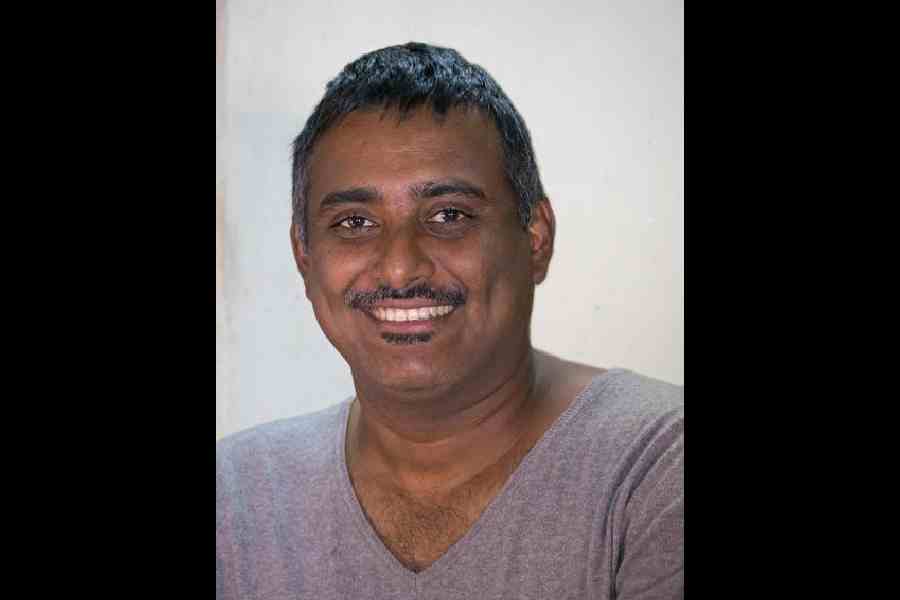
Dhritiman Mukherjee, wildlife photographer and filmmaker, and conservationist
What are the conservation issues that you’re working on?
A lot actually. So it is not like conservation issues. It is more related to conservation issues. So, whatever I do, it is in some way or other related to conservation. For example, I am going to the Sundarbans. I’m doing a film on the forest guards. It’s a parallel story of the struggle of the species. It’s like because it’s a difficult habitat, the Sundarbans. Any animal living there, they have a different way of dealing with the habitat because it’s an intertidal ecosystem where the crabs and the crustaceans are the heroes, not the tiger.
Anyway, so it’s a story of the struggle of the guards who are actually protecting the forest and nobody talks about them. They are protecting it in a place like Sundarbans, which is such a difficult area. And why is it important? Because it’s our home. And they are protecting our home. So it’s a parallel story. I am talking about the guards so that they will be inspired and that story will inspire other forest people also.
I’m doing work in Andaman, for example. So, Andaman is a fragile habitat where there are a lot of issues. It’s an isolated island. It’s a land of endemism. The maximum number of bird species, reptiles, amphibians, whatever species are there, they are all surviving only there. So if we lose the habitat, we will lose all these endemic species forever from the planet. Not only from the Andamans. They will vanish from the planet. Now, a lot of projects are happening in Nicobar. I made five films in Nicobar when I heard that Nicobar project is happening. Just to say, “Look, this habitat has so many life forms that are only surviving in this place.”
How many species would you put the number at?
So, I mean, if you consider everything, it is more than 1,000 species which are both in Andaman and Nicobar but they are endemics. So there are like more than 30 species of birds that are endemic, like this Narcondam hornbill, Nicobar megapod. So, we made a film on the Nicobar megapod, Galatia Bay, this Leatherback turtle, then there is a lizard called Bronchocela Danieli which is endemic to the Campbell Bay. Only one island, not even the entire Andaman islands. It is endemic to great Nicobar. So, we made a film on that. We made a film on the longtail macaque, which is another endemic monkey species found in the Andamans, then we made a habitat story and also a film on Barren Island.
What is conservation? Conservation is not like a saviour or something. The main point is that where we live, we live with certain things, certain amount of forest, certain quality of air, certain quality of water and our living style actually affects the system. So, it is our lifestyle issue, where we are creating impact on our home. If we don’t know about our home... So whatever stories I tell or films I make, I never blame anyone because I think it is ignorance which is prevailing for all these problems. I don’t take people like it’s they and us. There is no they and us. It’s all us.
If there is no option of conversation, the solution will not come. When I tell the story, my goal is to convey to the rest of the mass that “Look, this is our home, these are the participants, and this is the situation of the habitat and the species. If we are not responsible or conscious or we don’t know the situation, then our action can twist the situation.” So, our goal is to make people aware of a certain situation so that responsible decisions can be taken.
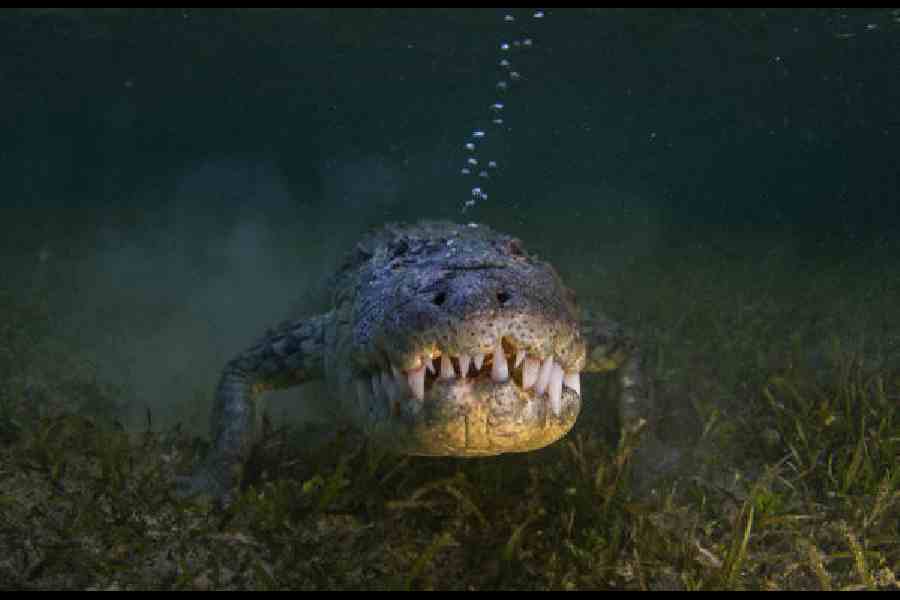
The crocodile picture
See, we cannot be hypocritical. We actually enjoy all kinds of facilities. We say we definitely oppose mining and then we use all mined products. We are the end users. So, we are actually the consumers of all these things.
Why did you think you wanted to get into filmmaking?
I’m a photographer and filmmaker. So it is the scene. I believe there is no fixed line in between… Actually it is all about visual communication. So visual communication can be a movie, can be a photograph, wherever it is effective. I do articles also. In the last seven years I did 240 articles. So, 240 photo stories and articles on different issues and species and then I worked on 83 films also in the last six years and all are based on very utpatang (random) subjects actually, like in Kashmir we made a film on the markhor.
Why markhor? Because nobody is talking about the species. Markhor is one of the biggest mountain goats. They are only found in Kashmir. So markhor are found in Kazinag and border areas with Pakistan. It is the national animal of Pakistan. But in some parts of Kashmir, we have got that animal.
You also had one on the stag...
We did a story on the hangul, the Kashmir stag, and Himalayan black bear, there’s also the Kashmir Agama (a kind of lizard). There was a conference in Kashmir and it was on ungulates. So we showed these two films at the end of the three-day conference. (Jammu and Kashmir chief minister) Omar Abdullah was there. So, his address was after seeing these two documentaries. He has no idea what is happening (with these species). But this is the easiest way to communicate with the policymakers, that “Look, these are the natural resources we have and they are in certain situations. So any responsible decision can, you know, make the situation better.”
Are you seeing policy changes on the ground?
It’s a very slow process, but it happens. I mean I have very different experiences with very different people. We need to have the right kind of communication. People want to be responsible actually. But they have no idea. Say, we are sitting here and I say that something is sitting in this seat which is very important for planet Earth. But we don’t know it. So, when we don’t know it, we are acting against it, but unknowingly. If somebody tells us, then we can be, “Oh, okay, really? Then we have to act differently.”
So, apart from making films, is there a comprehensive way in which conservation or protection of wildlife can be dealt with?
See, in my experience, I found that, as of now, tourism is one of the strongest ways to deal with this.
You mean to protect?
I mean for protection or for conservation. So, at the end of the day, what we are doing actually is building relationships. This word relation means interest. If there is no interest, there is no relation, even between a mother and child. So we have to find the interest. What do we do with the photographs? Sometimes if I show a beautiful image, when we say beautiful image that means it is triggering your emotional quotient of your mind. You feel like, ‘Oh, this animal is so beautiful, let’s not kill it’. It’s an emotional connection. Interest is your emotional need. If we feel good about it, then it is an interest.
On the flip side, if we feel bad about it?
Exactly. If we feel bad about it, we don’t want to bear with it. So that is the goal. Why do we feel bad about it? So, the primary thing is visual communication to connect the disconnected. The very basic concept. So, if the connection happens, then a lot of solutions can come. So, whatever I do, I prefer to connect either with policymakers or with students. They are the most important audience for me, actually. Whatever I do, whenever I give a talk, I give a talk because of my responsibility, so that I can reduce the (information) gap.
So why is connection important? Say one road is going through a forest. The biggest problem of conservation is the impact comes later for whatever we do. Now if you cut a tree, the effect will come after 10 years. So you are not seeing the result. The problem of conservation is that whatever we are doing, the impact will come later. So we are not acting accordingly.
Now, what is our job if we cannot show that impact, because this impact is too scientific and too indirect? There are two kinds of knowledge — something you arrive at, something you know. Arriving is the most powerful one. These conservation issues, the impact, we cannot arrive now. We arrive much later, when we face the problem of (say) breathing trouble. But it started much before that. When we cannot arrive, that kind of knowledge is very difficult to translate as information to the masses. Then we take an indirect route, we take the help of beauty, then we take the help of tourism, like it’s a direct benefit. So, this is the interest.
It’s like a slot machine. You put in the coin and you get your water…
Exactly. So the moment some forest is giving revenues, people will say, “Okay, it is giving us revenue, so let it be.” Very simple. It’s a direct interest. It’s a matter of interest. Now the question is how can we build the interest. There are several ways. One is definitely this visual thing, like we show interest with entertainment and beauty and, you know, for the scientific community scientific information is the bait for them.
From that point of view I make very different kinds of films. We made a film on, say, Bengal florican in Arunachal Pradesh, where one Mishmi guy was trying to save a piece of land in the Brahmaputra. So my goal is to empower that marginal person. So, to this tribe he was not doing a great thing, but I am saying that it’s a great thing. So, he will be an example for others and others will be inspired.
How has your entire outlook on photographing or making films about nature evolved over the years?
I don’t like it when somebody asks ‘What is your five-year plan?’. I cannot say I know. It’s fantastic that I don’t know. I will be unhappy if I can tell my five-year plan. Today’s me and tomorrow’s me are different. Today’s me and tomorrow’s me will be dreaming different things. It’s an evolving process. So we learn every day. So our thoughts get modified. And we have to indulge. The moment we define, it is a restriction. Definition is limitation. When we define, it means we are stuck. We are dead. So my filming process is very much like it is. There is no similarity with other people’s traditional filming process. I don’t go with a script. I go, I learn, and, then, at the end I make my script because I learn something new because I go with some idea and come back with even more information.
In your work, one thing remains: you get really up close with whatever it is you’re shooting. So is that the philosophy, that you get really close to your subject?
Yeah, sometimes, yes. If you will notice, with most of the subjects I show the intimacy. I show the relationship that they are not dangerous. Wildlife is not about thrills. It’s a relationship where we are actually comfortable. There is no threat. So, we find this idea of thrill is a selling point and we sell the thrill which is actually not there. So thrill is a very negative word for me. I don’t do wildlife photography for thrills. So what we do (for thrills) is make these animals a villain and then we become a hero.
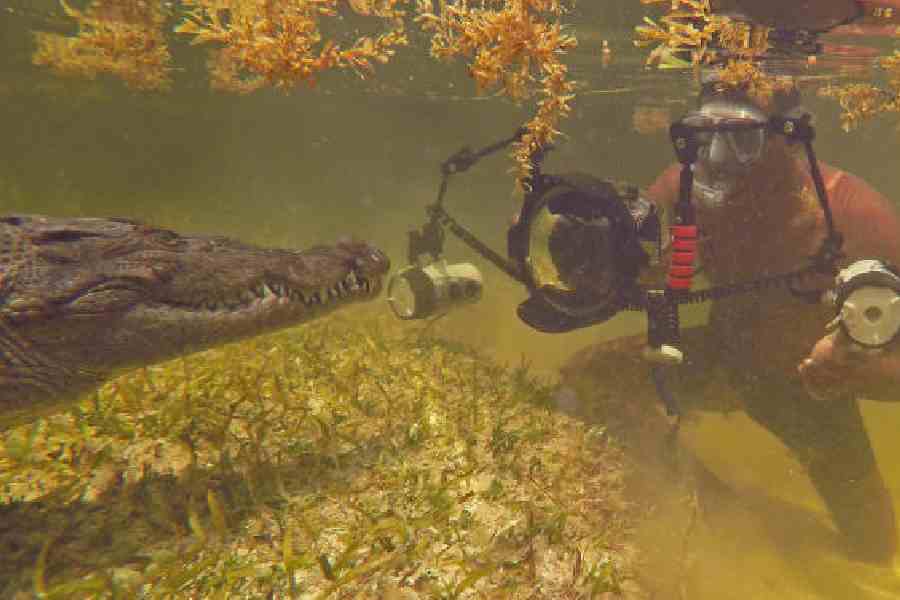
Like if I am in front of a crocodile very close and if I say the crocodile is very dangerous, then I become a hero. But the fact is that the crocodile is absolutely cool and I was very comfortable. When it becomes like that I cannot be the hero. But that is the truth. And that is my message that I photographed every possible so-called dangerous shark from six inches. Crocodile, anaconda, everything, you name a so-called dangerous animal, I have photographed it from six inches to one foot. The reason I could do that is because they are comfortable, because they are cool, not that I am brave. They allowed me to. If we are maintaining the respectful relationship, this will happen.
In film also, so stories are very different. Somewhere I promote scientific communities, scientists. So, my goal is always visual communication to bring attention to the marginal things. Either it’s a species, a group of people, a habitat, or any situation. So, wherever I go, I identify things.
I made a film on a plateau. A plateau is considered as a wasteland. Goa plateau is a flat land. When you see the land, you feel like nothing is there, so it is unimportant, so we can do anything, we can exploit the land. Now, we made a film to say take a closer look and you will find a lot of species are actually endemic to the plateau. They only survive in the plateau. If you know about all these things, then your action will be responsible. The Amboli toad, or saw-scale vipers, a lot of snakes, frogs, scorpions, they are surviving in the plateau. If we know this, then we can take care of these — “Okay, let’s give some space for them”, or this is the habitat where maybe their number is less.
We made a film on a coffee plantation. It has 36 species of frogs. When planters get to know that this forest is also supporting some kind of wildlife and without affecting our yield or business we can take a little more care, then the situation will be amazing. They will use less pesticides.
Or sometimes there are streams. We do cleaning operations around the stream — which is not needed. If we keep the bush as it is, we don’t clean it, then a lot of species will survive. So we’ll tell the story. We have a purpose of making those films to tell stories to certain people so that the action will be different after seeing all these things.
So has your photography or filmmaking shifted from something which was essentially meant to probably give you pleasure to something now with the bigger purpose?
We can contribute to society or science or art, anything. So, whatever we do, it is for contribution because I found there is nothing called good or bad. But I can contribute so that it will help society in some way. That will give some kind of satisfaction that because it is our people, we can live better tomorrow than today. I hate the words ‘winning’, ‘conquering’. I hate this word. Because when we win, somebody actually gets defeated. So if the people down there look at us, what’s the fun in that? If we meet each other, we can make a difference together.