Cang, cang, dong. Cang, cang, cang, cang, dong. Cang qi, cang qi, cang qi... That would be James Liao reciting the bols of the traditional Chinese lion dance. Liao, 55, runs a dance studio inside what used to be a tannery in Calcutta’s Tangra area. His students are the non-Chinese youth of the locality.
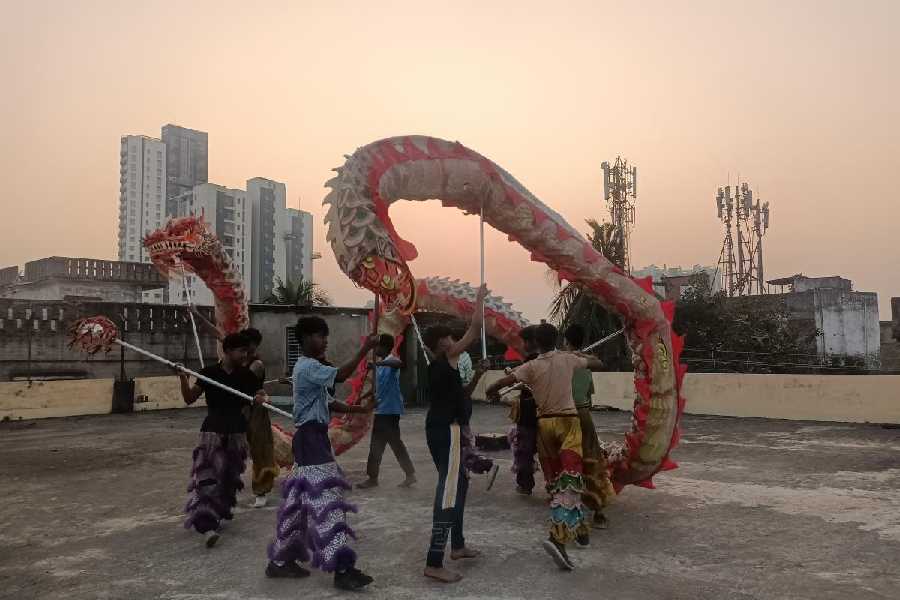
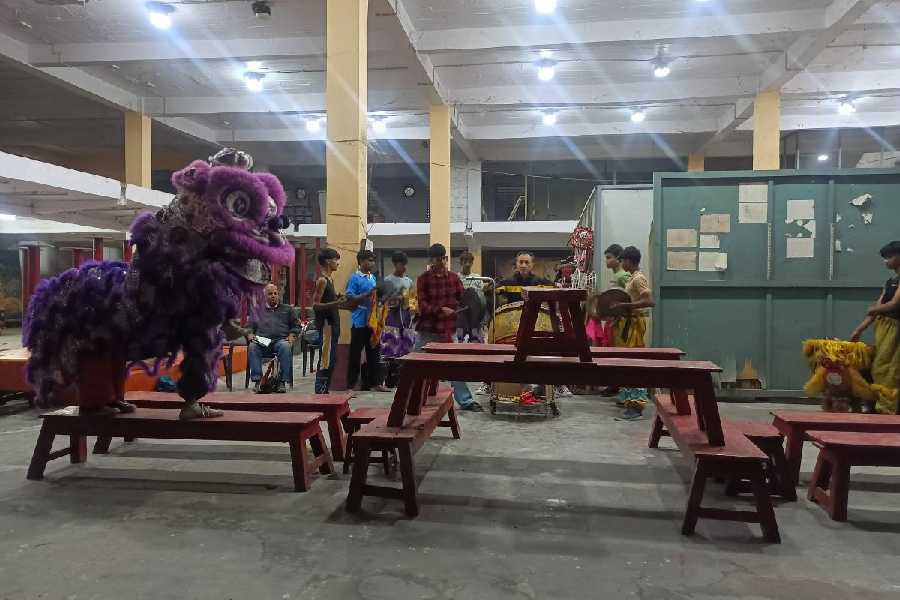
The studio opens its doors every evening. That day, there are a dozen youngsters practising. Two of the dancers are dressed in elaborate costumes and giant lion heads. Liao is standing in front of an upturned drum and on either side of him are the other dancers holding cymbals.
Liao, who has a stick in his hand, brandishes it in the air like a sword and after shaking it vigorously, brings it down with a vengeance on the drum. Almost on cue, the cymbals cry out loud and the lions leap in the air and onto the red benches. The Chinese lion dance has begun.
On Chinese New Year’s Day, which usually falls sometime in February, Tangra lights up with traditional Chinese celebrations. There is a fair, there is music and there are snake and lion dances. “We believe the lion and the snake are symbols of wealth and happiness. We usher in hope and prosperity with these ritual dances,” says Liao.
Liao, whose family has been in Calcutta for three generations now and owns a business, has had this studio for over 20 years. He had learnt the dance from his father and uncles. He says, “The dance they did was in the Hakka style. It did not appeal to me. I wanted to learn from the masters who knew the other form. So I went to Malaysia, and there I learnt the Cantonese style of lion dance from my master Siao.”
RING MASTER: James Liao (in the centre) at his dance studio in Tangra
In the middle of Liao’s studio, there are red poles arranged in a straight line. Each pole is 2.4m in height. The dancers, usually in pairs, swing from one pole to another with practised ease. Abhijit Yadav’s partner is Rahul Das.
While Abhijit tells The Telegraph that coordination between the partners is of utmost importance, Rahul talks about the challenges of dancing in costume. He says, “Inside the mask, it is all dark. So it feels like jumping from one pole to another blindfolded, not to mention how stuffy it is inside.”
The dancers enlist with Liao for the love of dancing, true, but they are paid for every performance. Abhijit is going to appear for his Class XII board exams next year. Most of the other dancers are high school students or in college. Their parents work as plumbers, dailywagers, vegetable sellers, electricians, all in and around Tangra.
“Lion dancing is basically a martial art,” says Liao. “These boys started training when they were pretty young and their bodies were flexible. Now they practise for half the year and travel across the country the next half, between October and March, when festivals happen. They earn good money, which helps them continue with their studies,” he adds.
The lion dance depicts a fight over food. Liao says, “Traditionally, it is supposed to be meat that they are fighting over. But now we use lettuce, which is a symbol of wealth. The lion chews on the lettuce and throws it into the audience. Whoever catches it is considered the lucky one — for the next year at least.”