 |
| Lonely times: seeking company in food |
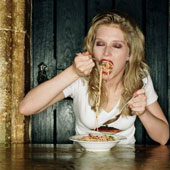
It’s often not a growling tummy but raging emotions that prompt us to raid the fridge or line up at the fast-food counter. Food cravings actually reveal a lot about you. As Linda Spangle writes in Life Is Hard, Food Is Easy: The 5-Step Plan to Overcome Emotional Eating and Lose Weight on Any Diet (LifeLine Press, 2003): “Food choices often act as a mirror, showing exactly which emotions are prompting the desire to overeat.”
To find out if you’re an emotional eater, take the following quiz. Choose A or B, or both if they are equally true. If neither selection applies to you, circle neither. Scorecard follows the quiz.
1. When I crave something to eat even if I’m not terribly hungry ...
(a) a specific food immediately comes to mind, such as cookies or potato chips, and nothing else will do. I may even drive to the store to get it.
(b) I wander around thinking, “I want something to eat, but I don’t know what.” I usually end up choosing pasta, ice cream or bread.
2. I often experience cravings ...
(a) when I’m at work, feeling stressed and pressured.
(b) when I’m home alone or bored.
3. When I crave something sweet, I usually choose ...
(a) a candy bar, trail mix or chewy cookies.
(b) a milkshake, a bowl of ice cream or a slice of cake.
4. Even when I’m not terribly hungry, I could go for ...
(a) hot dogs, pizza and french fries.
(b) home cooking, especially home-made desserts.
5. The time of day that I’m most likely to experience cravings is ...
(a) in the middle of the afternoon, when I’m at work feeling pressured by deadlines or I’m watching the clock.
(b) late at night, when I’m exhausted and have nothing to do and no one to talk to.
6. I just go crazy over ...
(a) potato chips, nuts or other snack foods.
(b) pasta, fresh-baked bread or other comfort foods.
7. On a given day, I’m likely to feel ...
(a) angry, frustrated, resentful, irritated, stressed or tense.
(b) discouraged, lonely, bored, restless or fatigued.
8. Sometimes I snack to avoid ...
(a) doing something — eating is a great way to procrastinate.
b) thinking about my feelings — food helps me bury my emotions.
9. I eat mainly because ...
(a) it’s fun. I often seek out snack-type ‘party foods’.
(b) it feels good. I go for my childhood favourites.
10. If I find myself craving breakfast-type meals, regardless of the time of day, I’m more likely to choose ...
(a) cereal or bread.
(b) eggs or biscuits with gravy
SCORECARD
A
If you chose more As it means your feelings of anger, stress, frustration, resentment, burnout, bitterness, self-disgust or being overwhelmed and/or your desire for excitement are causing you to seek chewy, crunchy foods. You may be munching on a cookie or candy bar, but what you really want to chew on is something in your life: deadlines, your spouse or your boss. This sort of craving is ‘head hunger’ because it’s generated by thoughts, attitudes and pressures. To de-stress, look for activities that match the intensity of your emotions. Go for a run or power walk, put on some loud, upbeat music and dance, or even beat on a pillow to release tension.
B
If you chose more Bs it means you are probably struggling with feelings such as boredom, loneliness, sadness, grief, depression, restlessness, hurt or disappointment, hopelessness, an overwhelming need for love or attention and/or a lack of meaning in your life. You also may be feeling fatigued or ill. Such emotions are called “heart hunger” because people who are feeling them often crave soft, creamy comfort foods to fill a void in their lives.
Non-food ways to soothe your soul:
Take a stroll in beautiful surroundings, soak in a scented bath, stroke your pet or read something affirming. Even better, try some longer-term solutions such as learning a craft, taking a class or seminar or volunteering for a good cause — all excellent ways to add meaning to your life, connect with people and make new friends.
If you circled three or fewer responses it means emotional eating is not likely to be a problem for you.You may occasionally use food to cope, but for the most part, it doesn’t hamper your weight-management efforts. If you’re having trouble losing weight, it’s probably your eating patterns and/or exercise programme (or lack of one) rather than your emotions that are to blame.