
Rising temperature, shrinking depth of water and depletion of dissolved oxygen level connived together to snuff out life in Jayanti Sarovar in Jamshedpur on Monday morning.
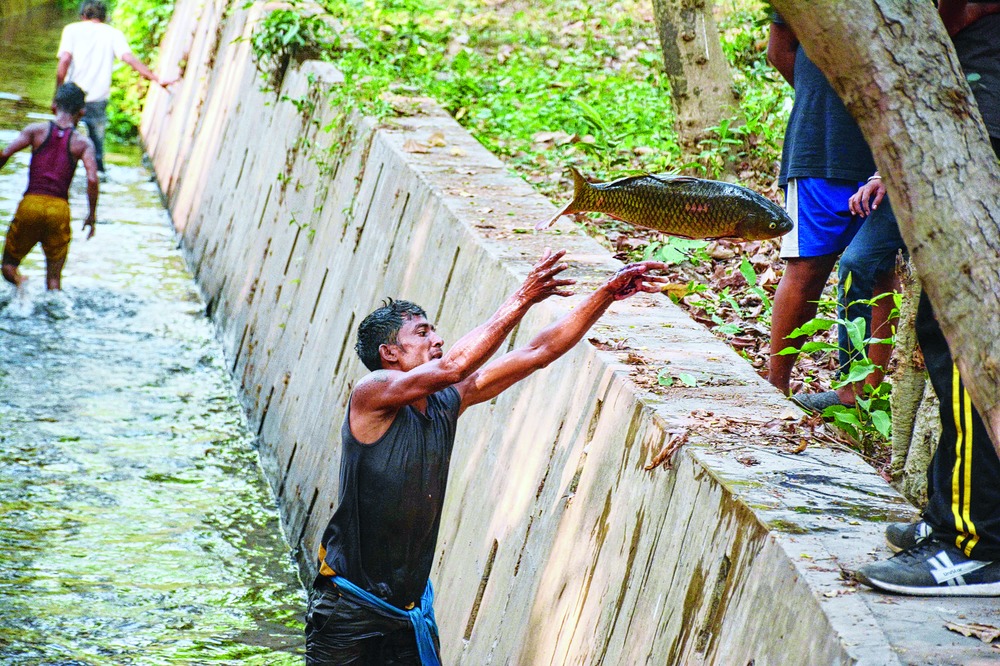
The shallow grave in the landmark lake sent shoals of gasping rohu, catla and catfish to a cooler and deeper drainage outlet, making them easy prey for hungry humans. The drain meanders through Northern Town in Bistupur and meets the reservoir near the main entrance of Tata zoo.
As soon as the fish started swimming into the drain in vain hope of survival, morning walkers, groggy residents and commuters began netting them with T-shirts, plastic bags or anything else they could find handy. Some overzealous youths even dived into the drain while others fetched and spread nets. The loot began around 7am and continued for well over an hour till not a fry was left.
Members of Jamshedpur Angling Club, which had released 2.5 lakh fries into Jayanti Sarovar in June last year, watched helplessly as their toil went down the drain. "We couldn't do anything to stop the frenzied mob. We lost at least a tonne of fish," secretary Bidyut Bhowmick told this correspondent.
Some anglers joined the loot, but were easily outnumbered by obsessed residents. "We caught 100kg of fish, which was later sold for Rs 8,000 in the market," said the club's tank secretary Ashish Mandal.
Bhowmick suspects light showers on Sunday night triggered this suicidal swim of fish. "Yesterday was hot and humid and then the rain increased real-feel temperature of the lake and depleted oxygen content in water. The fish surfaced and rushed to the relatively cooler drain, alas, for survival," he said.
Weather expert B.K. Mandal echoed Bhowmick. "The temperature of water was already high owing to extreme heat during the day (Sunday). The showers made the fish come out in desperate search of relief," Mandal said.
Conservationist K.K. Sharma blamed dropping water level and depletion of dissolved oxygen for the fish deaths. "Shallowness makes water hotter and affects oxygen content. Panic-stricken aquatic life rushed to the drain, which was perhaps their only chance of survival (had not people invaded their space)."
To underscore his theory, Sharma said Jayanti Sarovar had become so shallow of late that egrets could be seen walking on the water surface while hunting for fish. "Usually, the lake is 10ft to 15ft deep, but lack of regular de-silting has made it shallow."
Tata Steel subsidiary Jusco, which maintains Jayanti Sarovar, argued that shrinking depth had nothing to do with Monday's fish catastrophe. "Rising temperatures should be blamed for what happened. De-silting of the lake was done three years ago," said spokesperson Rajesh Rajan.
Conservationist Sharma, who heads the zoology department at Jamshedpur Co-operative College, maintained that fish were unable to breathe if oxygen in water was less than 4ppm (parts per million). "Fish survive in a restricted range and oxygen carrying capacity of the lake goes down when it becomes shallow," he said, not ruling out similar incidents in the future.