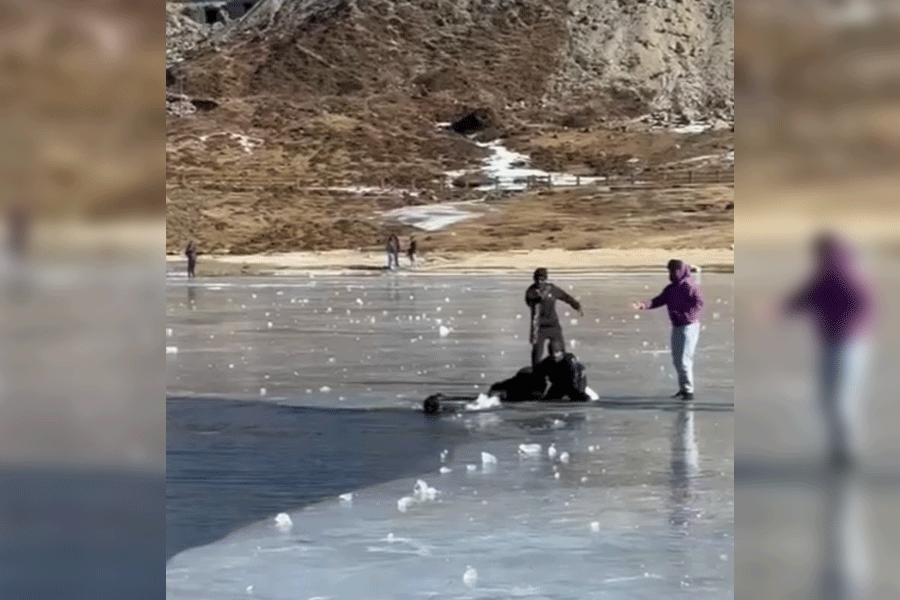
Two tourists from Kerala drowned after the frozen surface of Sela Lake in Arunachal Pradesh’s Tawang district gave way on Friday afternoon.
According to Tawang Superintendent of Police DW Thungon, a group of seven tourists from Kerala had stopped at Sela Lake when the incident occurred between 2:30 PM and 3PM.
The lake, which appears deceptively solid during winter, cracked underfoot, causing three members of the group to slip into the icy water. One tourist managed to escape, while the other two were pulled under.
Sela Lake, also known as Paradise Lake, lies close to the Sela Pass at an altitude of roughly 13,700 feet above sea level.
Rescue efforts were launched immediately, with teams from the Indian Army, the Sashastra Seema Bal (SSB), the National Disaster Response Force (NDRF), and the local police rushing to the site.
Despite difficult terrain and freezing conditions, rescuers were able to recover one body from the lake by evening.
The deceased has been identified as Binu Prakash, 26, a native of Kollar in Kerala’s Nedumpano district. The second tourist, identified as Mahavir, remains missing.
Officials said search operations had to be suspended later in the day as temperatures dropped to around 1 degree Celsius and visibility worsened, making further attempts unsafe. The operation is scheduled to resume early Saturday morning.
Police have registered a case of unnatural death at Jung Police Station. Authorities said all mandatory legal procedures, including a post-mortem examination, will be conducted on Saturday in accordance with protocol.
The high-altitude lake is revered by the local Monpa community and is woven into regional religious traditions. For tourists, however, it is best known for its beauty, especially in winter, when the surface freezes over and the surrounding landscape turns austere and white.
That frozen appearance, officials said, often masks serious risks.
Despite repeated advisories, tourists are known to step onto the lake, mistaking the ice for a safe viewing platform.
Authorities have installed warning signboards around the lake and marked designated safe areas, urging visitors to remain within them at all times, particularly during the winter months when the ice layer can be thin and unstable.