Prime Minister Narendra Modi concluded his two-day visit to Israel on Thursday after holding wide-ranging talks with Israeli leaders, meeting the Indian-origin Jewish community, and visiting sites of historical and cultural significance.
While addressing the Knesset, Modi recognised the contributions of the Indian-origin Jewish community in Israel, highlighting their role across education, culture, public life, and national service.
“This beautifully celebrates the shared heritage and enduring bonds between India and Israel!” Modi said in a post on X after witnessing a performance of the song 'I Love My India' by an ensemble of Divyang artists, bringing together Indian-origin Jews and Israeli citizens.
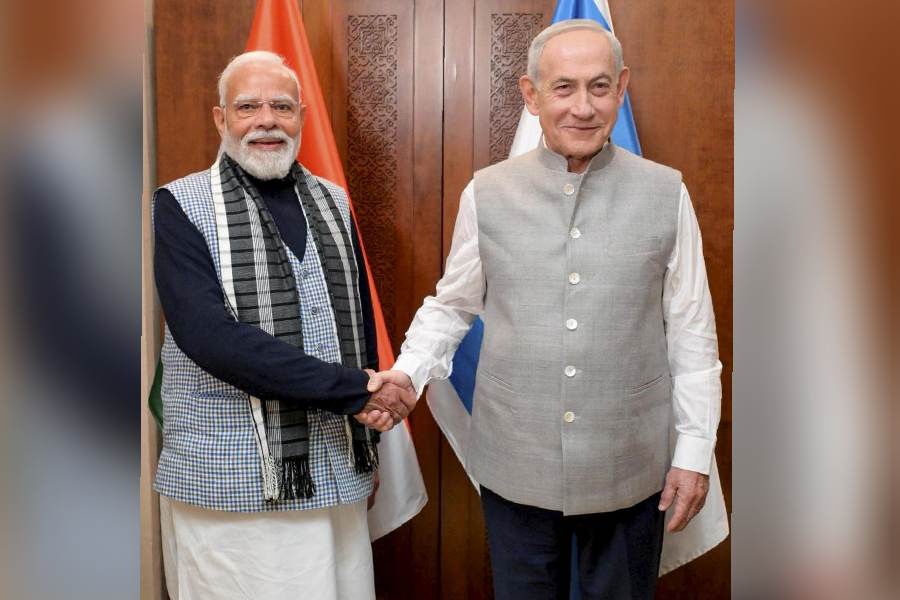
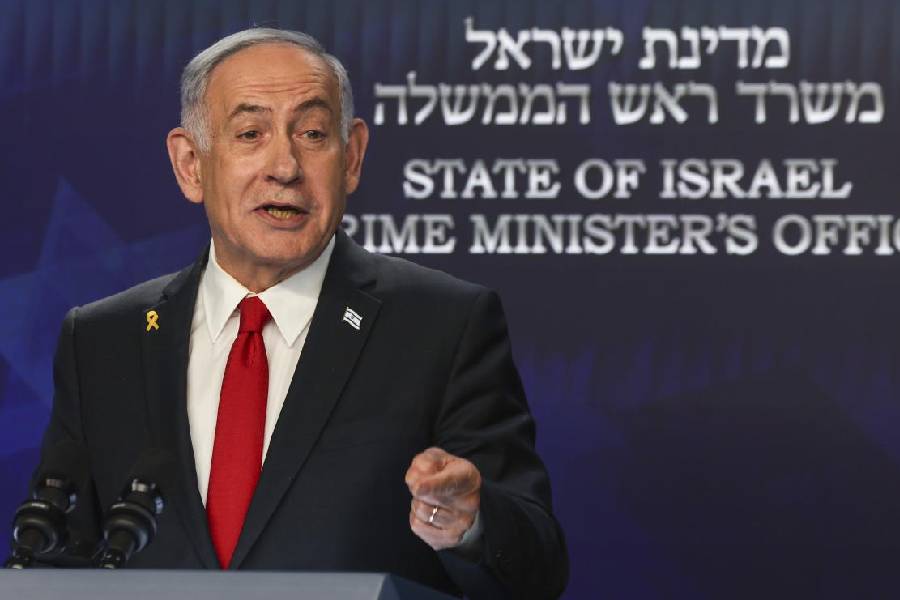
During his visit, Modi held talks with Israeli President Isaac Herzog and Prime Minister Benjamin Netanyahu.
At Herzog’s official residence, Modi and the president planted an oak tree together, which he described as a symbol of friendship, growth, and building a shared future between the two countries.
“Our talks were extremely fruitful and wide-ranging. Both leaders explored avenues to further enhance cooperation in education, start-ups, innovation, tech and connectivity,” Modi said.
With Netanyahu, Modi focused on defence, security, trade, technology, and agriculture, while also discussing the prevailing situation in the Middle East.
Following the talks, India and Israel inked agreements on civil and nuclear energy, agreed to expand their defence partnership, and decided to work towards a free trade deal.
Modi also expressed support for the Gaza peace initiative, saying, “The Gaza peace plan has opened a pathway to peace, and India has extended its full support to these efforts.”
Modi met prominent members of the Indian-origin Jewish community, including Dr Riki Shahi, a council member in Ashkelon. “He's doing a lot of things for people and we can see it in his actions. He's not talking a lot, but he's doing a lot,” Shahi said.
She has initiated a 'Twin Cities' programme between Baroda and Ashkelon. HR manager Isaac Thangjon, born in Manipur, said, “The visit of Prime Minister Modi is nothing short of 'great'. The stars are aligning themselves and things are looking very good. I wish that Prime Minister Modi takes the Israel-India relationship to greater heights.”
He was referring to Israel’s plan to bring all remaining 5,800 Jews from India’s north-eastern region, commonly referred to as Bnei Menashe, over the next five years.
Modi also visited Yad Vashem, the World Holocaust Remembrance Center, accompanied by Netanyahu.
At the Hall of Names, Netanyahu showed Modi the names of his wife Sara's relatives who perished in the Holocaust. Modi laid a wreath and placed a stone to commemorate the victims.
“Laid a wreath at Yad Vashem. Grateful to PM Netanyahu for accompanying me during this visit,” he wrote on X.
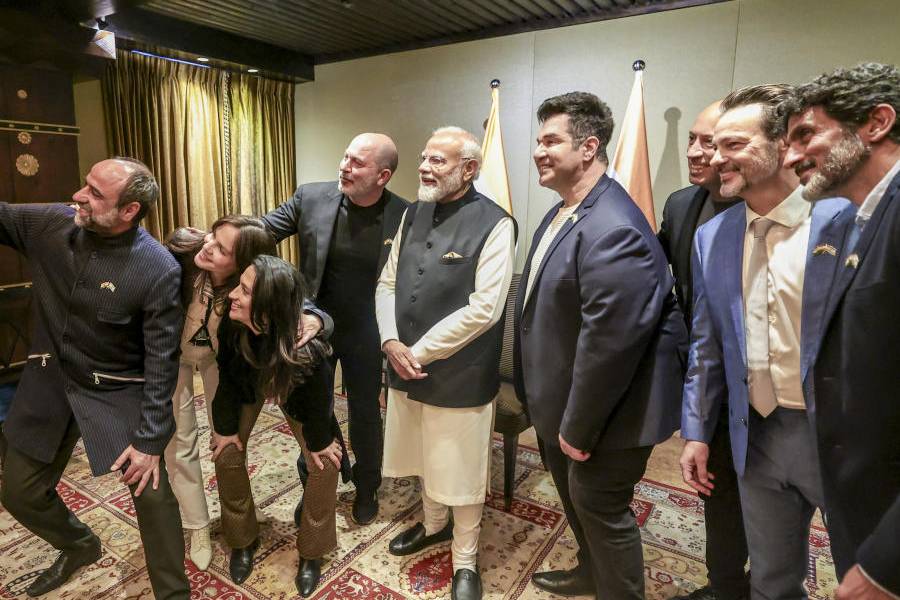
The prime minister met the cast and crew of the Israeli espionage show "Fauda" and shared a selfie on social media. “Thankfully, this interaction required only a selfie, no undercover work! #Fauda,” he wrote.
The show follows an undercover Israeli operative pursuing high-value targets in the West Bank and Gaza and has gained international popularity on Netflix.
There are approximately 85,000 Jews of Indian origin in Israel as of 2023, according to the Indian Embassy at Tel Aviv. The main waves of immigration from India took place in the 1950s and 1960s.
Most are from Maharashtra, known as Bene Israelis, with smaller numbers from Kerala, the Cochini Jews, and Kolkata, the Baghdadi Jews. In recent years, some Indian Jews from Mizoram and Manipur, the Bnei Menashe, have also been immigrating to Israel.
This was Modi’s second visit to Israel in nine years. The India-Israel relationship was elevated to the level of strategic partnership during his first visit in July 2017.