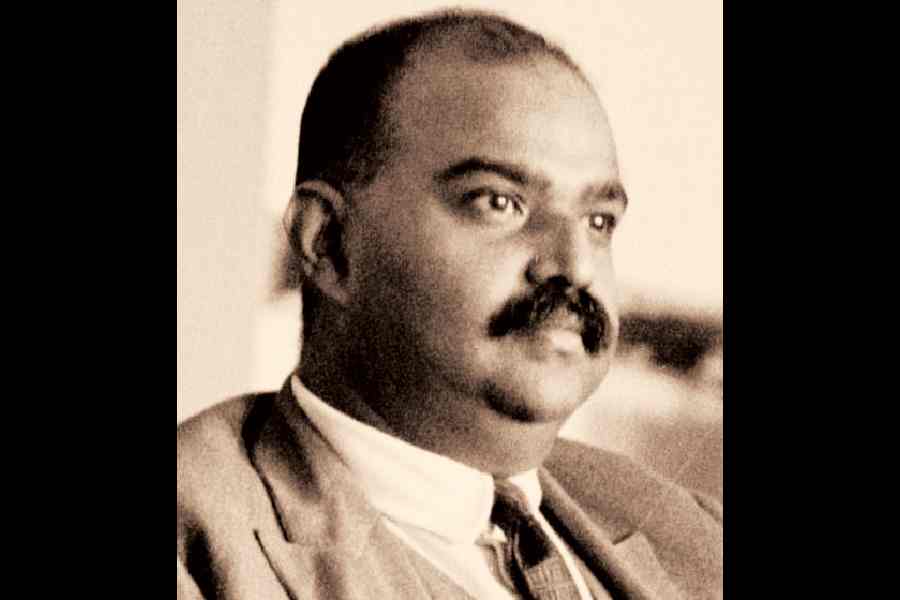
The BJP's rise in Bengal has marked a symbolic full circle, linking Kashmir — where Jan Sangh founder Syama Prasad Mookerjee made his last stand against Article 370 and passed away in detention in 1953 — to his home state, where his political legacy has finally found mass traction.
In a historical irony, it was another Bengali, Indian Civil Service officer Albion Rajkumar Banerji, who had helped shape the Kashmir debate in opposite ways decades earlier. Banerji had resigned from the post of Prime Minister of Kashmir in 1929 in protest against Dogra autocracy and its ill-treatment of the majority Muslim population and for governing them like "dumb driven cattle".
The common thread linking Banerji and Mookerjee lay in their unintended historical impact on Kashmir. Banerji's resignation is seen as an early spark that fed into the movement for greater rights under Sheikh Mohammad Abdullah. Decades later, Mookerjee's agitation against Kashmir's special status coincided with Sheikh's dismissal, eventually culminating in the abrogation of Article 370 in 2019.
Mookerjee had fiercely opposed Article 370 and sought a complete merger of the state with the country. His slogan was: "Ek desh mein do vidhan, do pradhan aur do nishan nahin chalenge (One country can't have two Constitutions, two Prime Ministers and two flags)."
Sheikh arrested Mookerjee on May 11, 1953, at Madhavpur bridge, which connects Punjab with Jammu and Kashmir, for entering the state without a permit, which was a must for any outsider then. The Jan Sangh founder had chosen to violate this provision in protest against the special status the state enjoyed. He was taken to Srinagar and detained at Nishat. He died in custody a month later at a hospital.
Jammu was at that time witnessing an agitation by the Balraj Madhok-headed Praja Parishad, which was backed by the RSS. Mookerjee also supported the movement. The Parishad later merged with the Jan Sangh, the precursor of the BJP.
Veteran journalist Mohammad Sayeed Malik, a youngster during Mookerjee's detention and arrest, said his death precipitated the fall of Sheikh. "He (Mookerjee) died in June. Two months later, Sheikh Sahab was dismissed. Many historians have concluded his death precipitated Sheikh’s dismissal, though it was not the only factor. Nehru did not like it (the way Mookerjee was treated) but could not do anything because of Article 370," Malik told The Telegraph.
"There was a lot of bad blood between him (Sheikh) and Nehru. It became an added factor. I remember his death created a sensation. It was a big thing and one could visualise it could have consequences," Malik said, adding Mookerjee's death had no repercussion in Kashmir but its gravity was not missed.