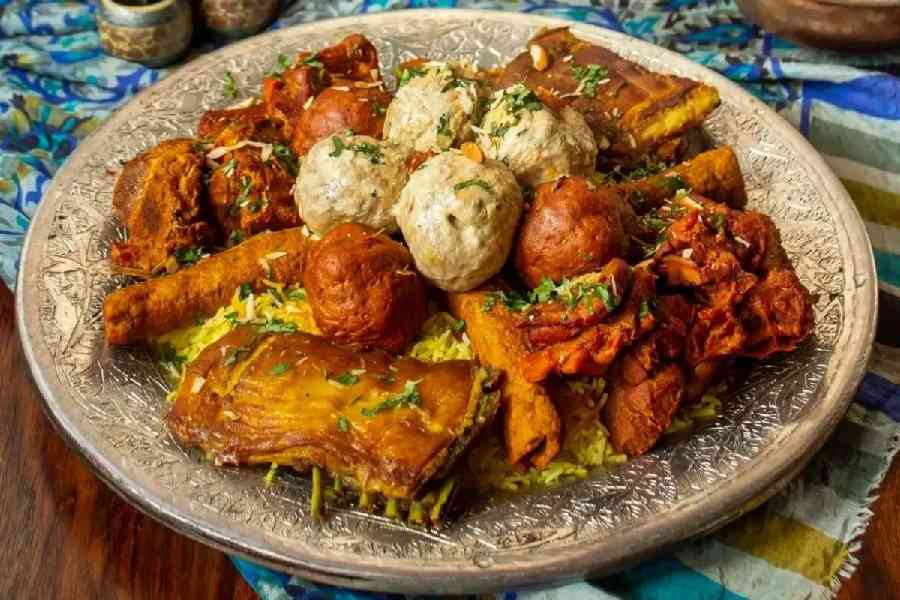
An alleged illegal levy imposed on Valley-bound livestock trucks passing through Punjab is threatening to rob Kashmiri weddings of their iconic centrepiece — wazwan.
Wazwan is a traditional multi-course meat-based meal.
Mutton dealers in the Valley have halted imports from states such as Rajasthan and Delhi and stopped sales to protest the imposition of the “illegal” levy on trucks passing through Punjab. The strike entered its ninth day on Wednesday, causing a shortage of mutton here.
The strike is threatening to cast a shadow on Kashmiri weddings, with families facing the prospect of postponing ceremonies or scaling them down. So far, however, there are no confirmed reports of cancellations as the dealers’ strike coincides with a relatively lean period in the wedding calendar.
The illegal levy is allegedly being collected by some contractor groups associated with the cattle fairs organised by the Punjab government.
Khazir Mohammad Regoo, president of the Kashmir Mutton Dealers Association, said they were not liable to pay the levy, arguing their livestock trucks originate in other states and merely transit through Punjab.
“We call it goonda tax. If we tell them we won’t pay, they raid our trucks at night. For years, we have been paying ₹10,000 per truck, but the new contractors are charging ₹15,000-₹25,000. They levy a 4 per cent tax on livestock sold in their own state. We fear that if we don’t protest, we too would be forced to shell out the same amount, which will come to ₹80,000 per truck,” Regoo told The Telegraph.
Regoo said there was an acute shortage of mutton in the Valley, but they were ensuring that marriages and Muharram-related events were not impacted.
“We are tapping local supplies wherever needed. If the strike prolongs, nothing is guaranteed. We are requesting families to consider postponing marriages, but families who have already distributed the invitation cards are in for trouble,” he said.
Another mutton dealer said they had chosen a relatively lean period for the strike to avoid a crisis.
“The traditional peak marriage season in Kashmir is from March to May or from September to November. We also have fewer weddings during Muharram. That distinction, however, is fading as weddings grow in number every year. Still, July will not have many weddings, and we hope the issue will be resolved by then,” he said.
The dealers said they had sent a delegation to meet Punjab chief minister Bhagwant Mann, but he had not granted them an audience so far.
On Sunday, chief minister Omar Abdullah wrote to Mann seeking his intervention in the matter. “Livestock-laden vehicles bound for Jammu and Kashmir are allegedly being stopped by certain contractor groups operating in connection with cattle fairs and subjected to unauthorised fee collection despite carrying all valid permits and requisite documentation,” the letter said.
“Such interruptions cause avoidable delays, financial losses and hardship to transporters, besides adversely affecting animal welfare,” it added.
Abdullah wrote that any unauthorised levy was “inconsistent with the spirit of cooperation that has traditionally characterised relations between us and has understandably caused concern among the trading community”.
Kashmiri weddings are incomplete without wazwan. Around five quintals of mutton are consumed at an average wedding. Mutton costs ₹700 a kg.
Regoo urged the Centre to allow trains to ferry livestock, saying it would reduce their costs and remove unnecessary hassles.
He said his association imported 50 trucks of livestock, worth more than ₹10 crore, daily.