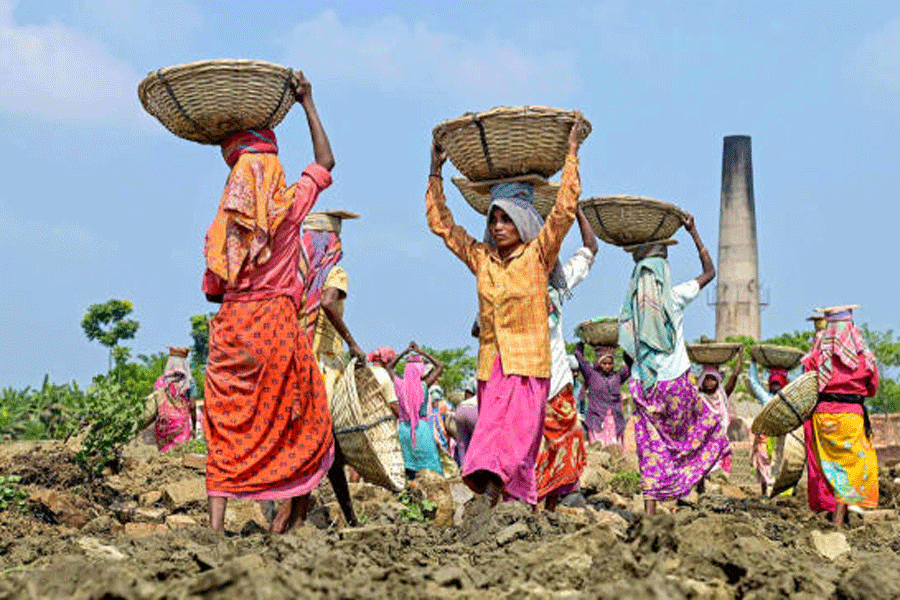
A civil society organisation has proposed to several states to start their own job schemes as the recently enacted VB-G RAM G Act has yet to be enforced and the existing employment programme MGNREGA faces challenges.
The Mazdoor Kisan Shakti Sangathan (MKSS) has suggested that states, particularly the Opposition-ruled governments, start their own job schemes and seek central assistance under Section 30 of the Viksit Bharat-Guarantee for Rozgar and Ajeevika Mission Gramin (VB-G RAM G Act).
While the MKSS has repeatedly stated that the "unilateral" imposition of 40 per cent state contribution to the Centre's "arbitrarily decided" allocation plan under the VB-G RAM G law will severely damage its demand-based guarantee, it has proposed to the state governments that if they would indeed shoulder such a large portion of the burden, they might as well consider starting their own job guarantee schemes and seek central assistance under Section 30 of the VB-G RAM G Act.
Section 30 allows states to enact laws to provide unskilled manual work to rural households, consistent with the provisions of the VB-G RAM G law, and seek central assistance of 60 per cent of the total spending under the scheme. However, the guaranteed 125 days of employment a year and other conditions like wage rates and unemployment allowances should not be less than what is guaranteed under the VB-G RAM G Act.
Nikhil Dey of the MKSS said that the VB-G RAM G law had several anti-worker provisions, such as engaging contractors, suspending work for 60 days in a year, fixing allocations for states by the Centre, deciding the areas where the central job scheme would be implemented and taking up large construction-driven infrastructure projects.
"The state government can enact their own laws without the anti-worker provisions which are in the VB-G RAM G Act. The central government is legally bound to provide 60 per cent expenses under such job schemes run by states. The MKSS has suggested to several state governments to consider the proposal to enact laws on starting their own job schemes," Dey said.
He added that the MKSS had approached the governments of Karnataka, Telangana and Himachal Pradesh.