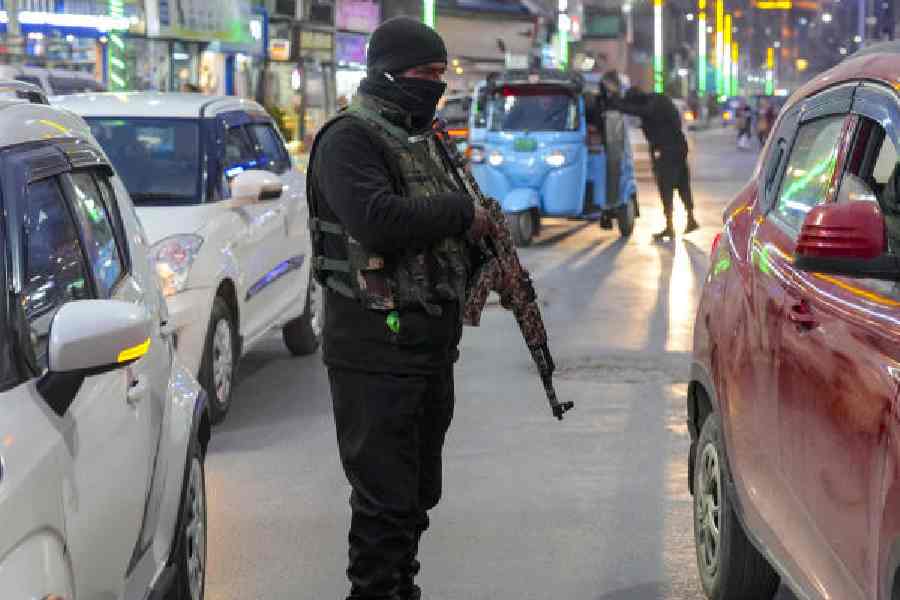
Tensions flared in a Jammu locality on Wednesday after a Right-wing group allegedly tried to impose restrictions on shopkeepers selling meat.
Police had to intervene to prevent a clash between the two sides.
The confrontation has come amid rising tensions in the region that began with the protests against Muslim admissions to a medical college run by Mata Vaishno Devi University, resulting in its closure.
Many politicians have since called for the Union Territory to be split up.
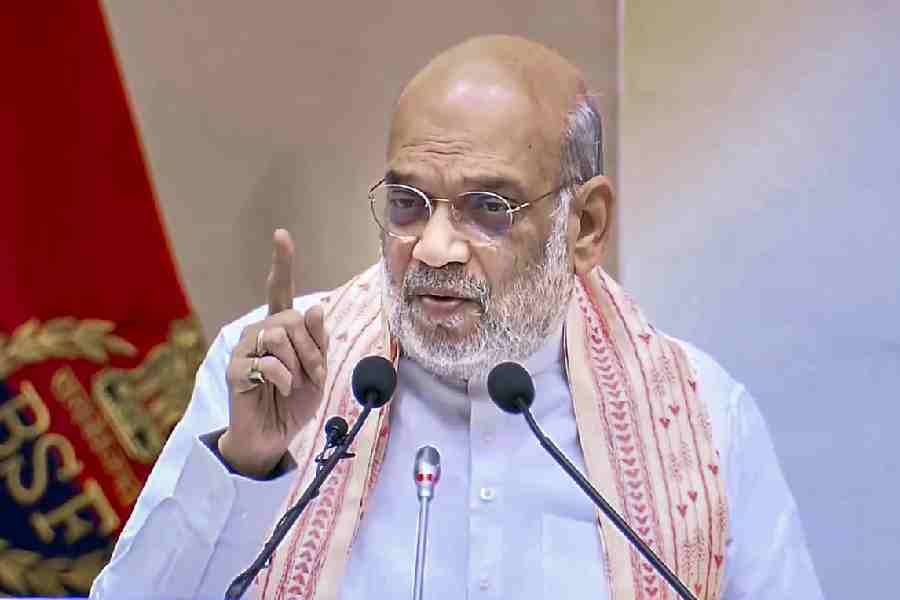
Shiv Sena leader Manish Saini and his supporters on Wednesday visited Gujjar Nagar, a Muslim-majority locality in Jammu city, and asked vendors to conceal the meat behind a black screen.
The intervention triggered protests by locals, who questioned his credentials to enforce such restrictions.
An agitated protester claimed that some of Saini’s supporters had asked them to shut their shops. He said the Shiv Sena leader had turned into a law enforcer.
Saini, however, told reporters that he was “politely spreading awareness” among vendors so they follow the rules and regulations related to the sale of meat.
An elderly resident accused the Right-wing group of attempting to turn Jammu and Kashmir into another Uttar Pradesh.
“Tomorrow they will want to shut mosques, we will not allow it,” another protester said.
The incident reflects how the growing political divide in Jammu and Kashmir is percolating to the grassroots.
While the confrontation is being framed as a regional divide by Jammu Dogras, but the standoff reflects a deeper religious schism — Jammu’s Hindu heartland versus Muslims of Kashmir, Pir Panjal and the Chenab Valley.
But the problem with Jammu is that the aggressive demand for the closure of the medical college and for setting up a National Law University in the region has exposed its own faultlines, with residents of its Muslim-majority Pir Panjal and Chenab Valley seeking the varsity in their own backyard.
Former director-general of police Shesh Pal Vaid, himself a Dogra, on Wednesday criticised Kashmiri leaders who he said were trying to “polarise its (Jammu’s) people on religious lines for narrow political interests”, suggesting all parts of Jammu province were one unit.
Several Muslim politicians from Pir Panjal and the Chenab Valley have fiercely opposed the call for the creation of a Jammu state, suggesting the divisions within.
Former Srinagar mayor Junaid Azim Mattu, who is from Kashmir, on Wednesday framed the confrontation as a Kashmiris-versus-the-rest divide by calling for a “greater Kashmir” based on ethnic lines.
“A fervent, humble appeal to all leaders from Kashmir Valley to Chenab Valley to voice their support for statehood to the Greater Kashmir, Kashmiri-speaking area. History won’t forgive us if we are apologetic about the dignity of the ethnic Kashmiri we claim to represent,” he said on X.
Mattu appeared to exclude Pir Panjal, which has a Muslim majority but is dominated by Paharis and Gujjars, who are mostly Muslims. Kashmiris, on the other hand, are the biggest ethnic group in the Chenab Valley.
Peoples Conference president Sajad Lone, who is an MLA from Handwara, iterated his demand for a separate Jammu state but did not specify his stand on the Chenab Valley and Pir Panjal.
“I pray to God that separation becomes possible. It would be true liberation,” Lone said.