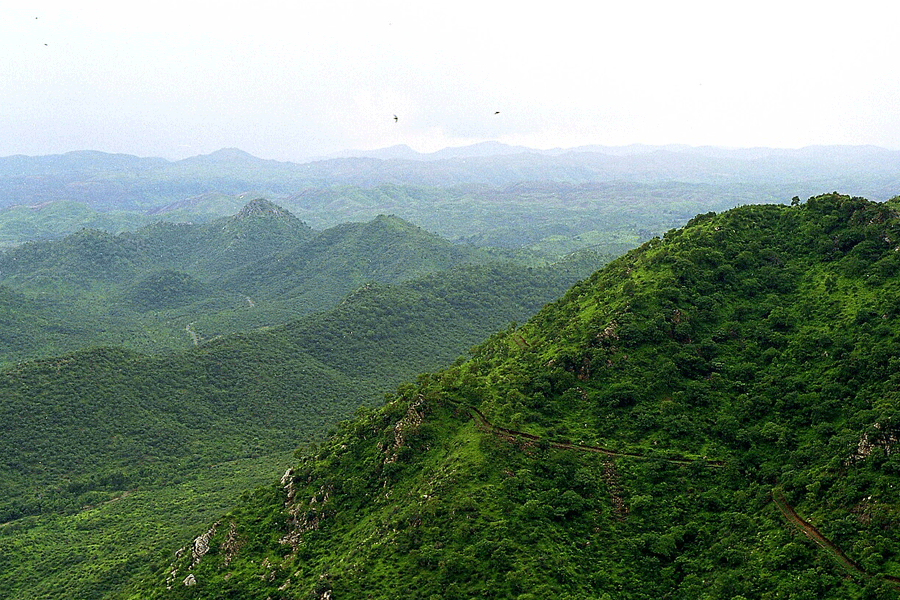
The Aravalli Hills, a 700-km range that has long shielded northern India from desert winds and supported groundwater recharge, may lose much of its protection after the Supreme Court accepted a new government definition narrowing what qualifies as “Aravalli”.
Experts say the change — which classifies only hills taller than 100 metres as part of the range — could strip safeguards from large swathes of the ecologically fragile system, exposing Delhi and neighbouring regions to harsher weather, dust storms and water stress.
"Calling only hills above 100 metres 'Aravalli' erases the landscape that keeps North India breathing and feeds our wells,” said Harjeet Singh, founding director of the Satat Sampada Climate Foundation. “On paper, it's 'sustainable mining' and 'development', but on the ground it is dynamite (with) roads and pits cutting through leopard corridors, village commons and Delhi-NCR's last green shield."
He warned that shrinking the definition “means 90 per cent of this 700-km spine can be legally wiped away”, risking the loss of a crucial recharge zone and triggering “harsher dust storms, plummeting groundwater and a lethal spike in air pollution”.
Environmentalist Vimlendu Jha said the ruling “exposes not just Delhi but the entire region that covers the Aravalli hills to contamination and pollution”.
Under the approved definition, an “Aravalli Hill” is any landform in designated districts with an elevation of at least 100 metres above its local relief, and an “
While the Supreme Court directed the authorities to identify permissible areas for "mining and ecologically sensitive, conservation-critical and restoration priority areas within the Aravalli landscape where mining shall be strictly prohibited or permitted only under exceptional and scientifically justified circumstances," Jha said that the decision risks the disappearance of the Aravalli by 90 per cent.
"The top court permitting any form of mining or other 'developmental' activities effectively means that up to 90 per cent of the Aravalli hills could vanish. In the context of rising air pollution, this decision, while the Supreme Court simultaneously speaks of taking long-term measures, ends up exploiting the very natural safeguards that should be protected," Vimlendu Jha told PTI, adding that "it is an ecological treasure." The Aravallis, India's oldest mountain range, are the source of important rivers such as the Chambal, Sabarmati and the Luni. Its forests, grasslands and wetlands support endangered plant and animal species.
However, deforestation, mining, livestock grazing and human encroachment are worsening desertification, damaging aquifers, drying up lakes and reducing the range's ability to sustain wildlife.
In March 2023, the government launched the Aravalli Green Wall initiative to tackle these issues. The project aims to establish a five-kilometre-wide green belt buffer, covering 6.45 million hectares across Gujarat, Rajasthan, Haryana and Delhi.
Noting that the fundamental drivers of wind-blown dust that are overwhelming the NCR and other states are not truly being addressed, Executive Director of the Centre for Science and Environment, Anumita Roy Chowdhury, stated that the role of the Aravallis, the forests, and the green belt becomes crucial, "because this natural barrier is essential for protecting air quality." "It not only shields us from desert dust but also provides the green cover needed to trap pollution and absorb toxic emissions from the air," Chowdhury told PTI.
The national capital continues to struggle with toxic air, as the air quality on Friday remained in the 'very poor' category once again.
Thirty stations across the city reported 'very poor' levels, with Bawana recording the highest AQI at 373. The city recorded an AQI of 279 on Sunday, which slipped back to 304 on Monday. It rose further to 372 on Tuesday, edging towards the 'severe' mark, and stood at 342 on Wednesday. It again turned 'very poor' on Thursday at 304.
Terming the Aravalli hills as one of the last armours against dust, Environmentalist Bharati Charturvedi stated that the new government definition is going to have a very severe effect on the health of the children, the elderly, outdoor workers, people living in inadequate quality housing, as well as various other vulnerable populations.
"This decision needs serious reconsideration because, in fact, it will render Delhi completely unliveable. No amount of plantations within the city can substitute for the Aravallis,” Chaturvedi told PTI.
The issue of pollution and the top Court’s decision on the Aravalli have also been echoing within the Parliament and amongst political leaders.
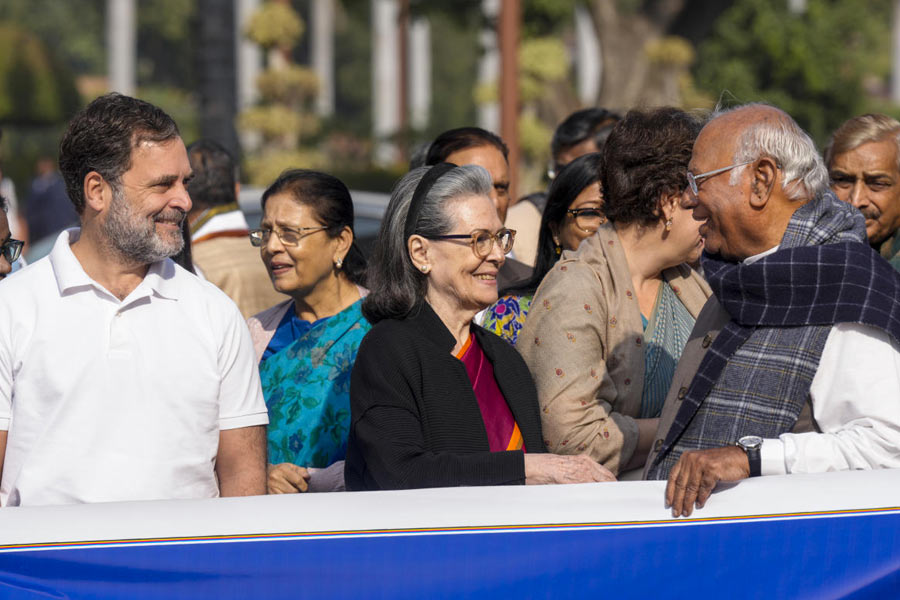
Congress parliamentary party chairperson Sonia Gandhi on Wednesday claimed that since coming to power, the Modi government has displayed a particularly “venal streak of cynicism” in relation to environmental protection, while alleging that it has now “nearly signed a death warrant” for Aravalli hills.
She demanded that the government must withdraw the amendments it “bulldozed” through Parliament in the Forest (Conservation) Act, 1980 as well as the Forest Conservation Rules (2022).