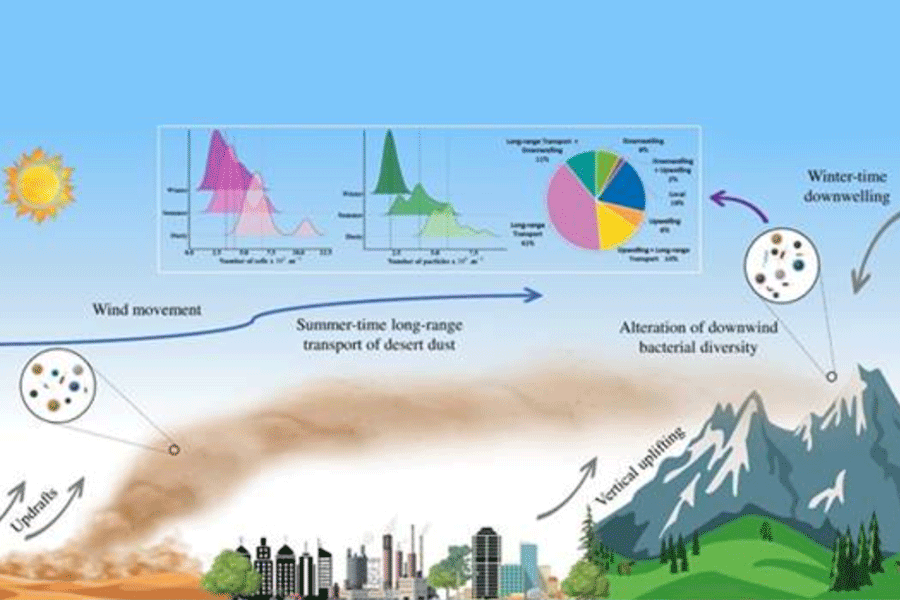
Airborne bacteria from the deserts of western India are travelling hundreds of kilometres on dust-laden winds and settling over the Eastern Himalayas, altering the region’s atmospheric microbiology and potentially increasing risks of respiratory, skin and gastrointestinal diseases, a new study has found.
The research shows that elevated desert dust plumes can act as long-range carriers of microbial pathogens, challenging the long-held belief that Himalayan hill-top air is uniformly beneficial for human health.
High-altitude regions are already marked by harsh climatic conditions, including extreme cold and hypoxia, which heighten health vulnerability among local populations.
Yet scientific evidence linking airborne microbial exposure to disease outcomes in the Himalayas has remained limited. The microbiological dimension of dust transport across regions has also been poorly understood — a gap that prompted researchers to undertake the study.
Over more than two years of continuous monitoring, scientists from the Bose Institute, an autonomous institute under the Department of Science and Technology (DST), tracked dust storms originating in the arid zones of western India.
The findings revealed that intense dust events can cross the densely populated and polluted Indo-Gangetic Plain before finally reaching Himalayan hilltops.
Along with mineral dust, the storms carry airborne bacteria, including disease-causing pathogens capable of affecting human health. The study found that these microbes do not travel alone.
Vertical uplift of air from the Himalayan foothills injects locally sourced pathogens into the high-altitude atmosphere. These then mix with bacteria arriving through long-range dust transport, collectively reshaping the microbial community suspended over the mountains.
The altered bacterial composition has been linked not only to respiratory and skin diseases but also to gastrointestinal infections, underscoring how distant environmental processes can influence health outcomes in fragile ecosystems.
Published in the journal Science of the Total Environment, the study quantitatively demonstrates how horizontal dust transport and vertical uplift of polluted air jointly disturb atmospheric bacterial communities over the Himalayas.
Researchers describe it as the first study to establish this connection at such scale.
The findings carry direct public health implications, particularly as climate variability and desertification intensify dust activity across the subcontinent.
Researchers say the work provides critical insights that could help strengthen national health action plans and support the development of early-warning health forecast systems, aligning with the broader vision of Viksit Bharat @ 2047.
The study adds to growing evidence that air pollution and climate-linked processes do not recognise geographic boundaries — even those as formidable as the Himalayas.