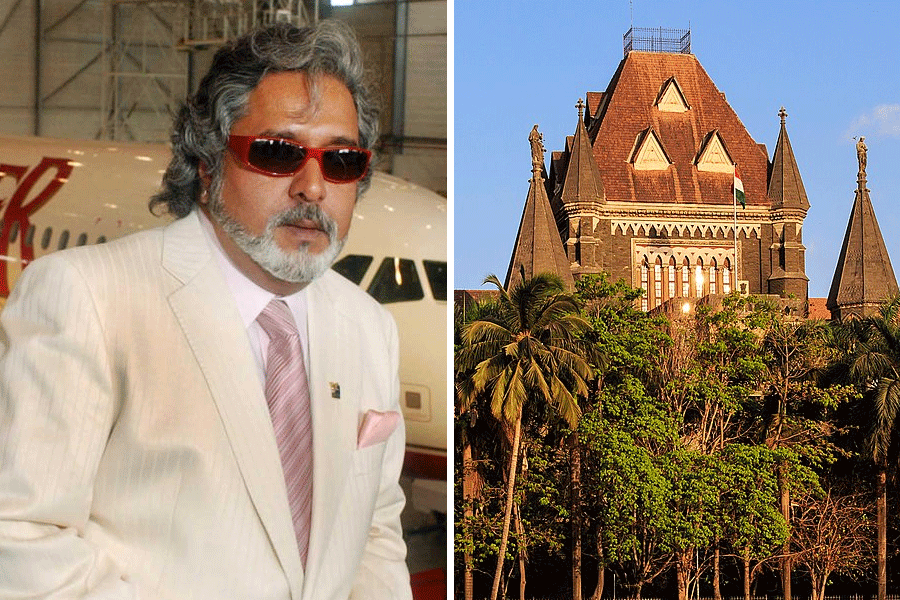
Fugitive businessman Vijay Mallya on Wednesday informed the Bombay High Court that he is unable to specify when he will return to India, citing legal restrictions that prevent him from leaving the United Kingdom.
In a statement submitted through his counsel Amit Desai, Mallya said his passport had been revoked and he therefore could not provide a definite timeline for his return. The submission came after a bench of Chief Justice Shree Chandrashekhar and Justice Gautam Ankhad last week made it clear that it would not hear his plea challenging the order declaring him a fugitive economic offender unless he returns to India.
The court had asked the former liquor baron to clarify whether he intended to come back to the country.
Mallya, who has been based in the UK since 2016, has filed two petitions before the high court — one contesting the order declaring him a fugitive economic offender and another challenging the constitutional validity of the Fugitive Economic Offenders Act.
The 70-year-old businessman is accused of defaulting on multiple loan repayments amounting to several thousand crores and is also facing money laundering charges. He was declared a Fugitive Economic Offender in January 2019 by a special court dealing with cases under the Prevention of Money Laundering Act (PMLA). Mallya left India in March 2016.
In his statement to the high court, Mallya said he is unable to provide a definite return date as his Indian passport was revoked by the government in 2016 and because courts in England and Wales have issued orders barring him from leaving the country.
"Mallya is not permitted to leave or attempt to leave England and Wales or apply for or be in possession of any international travel document. In any event, the petitioner is unable to precisely state when he will return to India," Desai read out the statement in the court.
The senior counsel argued that Mallya’s physical presence in India was not necessary for the high court to hear his challenge to the fugitive tag and the provisions of the Act.
"If he (Mallya) were to appear in India, then all these proceedings would be rendered irrelevant as the statute says that once the offender appears in the concerned court of law, then all these orders would be set aside," Desai told the court.
The bench directed the Union government to file its response to Mallya’s statement and listed the matter for further hearing next month.