The Union government is continuously attacking the poor and undermining their statutory right to employment, the Congress’ Delhi unit said on Friday during a protest against the removal of the MGNREGA scheme.
The protest was held as part of the party’s nationwide campaign opposing the replacement of the Mahatma Gandhi National Rural Employment Guarantee Act with the newly introduced VB-G RAM G scheme.
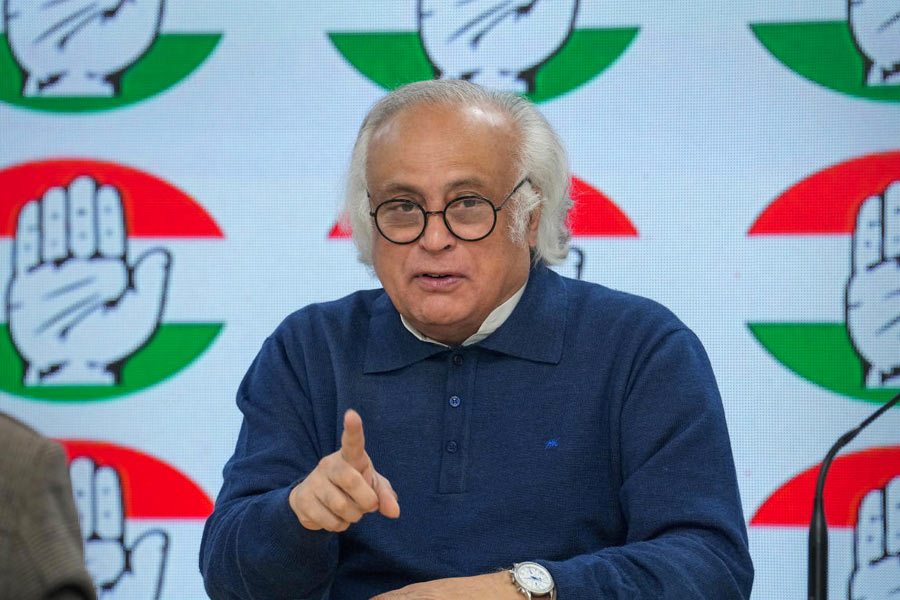
Congress general secretary Jairam Ramesh, who attended the “MGNREGA Bachao Sangram Yatra” event, said the landmark legislation had given millions of families a legal right to employment, which was now being steadily weakened.
MGNREGA, enacted during the UPA government’s tenure, guarantees 100 days of wage employment to rural households.
Ramesh said the Centre was “eroding” the law’s core provisions and diluting its intent through policy changes.
“The VB-G RAM G scheme dilutes the UPA-era MGNREGA’s original spirit,” he said.
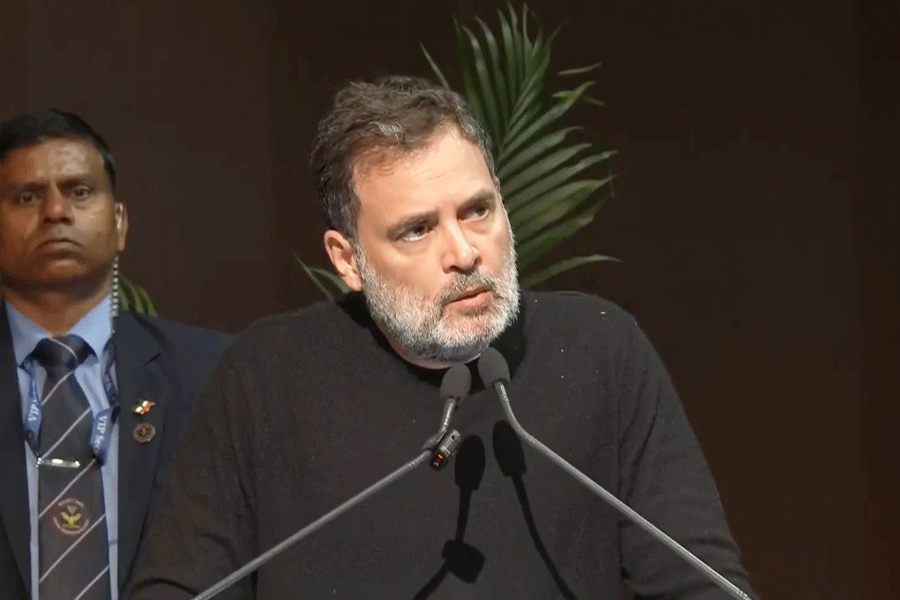
Addressing the gathering at the All India Congress Committee office on Akbar Road, Delhi Pradesh Congress Committee (DPCC) president Dharmendra Yadav said the government’s actions reflected a sustained assault on welfare protections.
“This government is continuously attacking the poor. People who were once assured employment are now seeing that guarantees being taken away. The systems that were meant to support them are being gradually dismantled,” Yadav said.
The Congress has launched a 45-day nationwide “MGNREGA Bachao Sangram Yatra” demanding the repeal of the VB-G RAM G Act and restoration of the original MGNREGA framework.
Party leaders said the campaign would include protests, public meetings and outreach programmes across states to highlight the impact of the changes on rural livelihoods.
The Centre has maintained that its new scheme aims to improve efficiency and delivery, though opposition parties argue it weakens the legal guarantee of employment that formed the backbone of rural social security.
"We must carry this movement forward because this is not a small fight. It is a long battle. For this long struggle, we will have to remain disciplined, but we will also have to work towards forcing this government to bow," he said.
Protesters raised slogans of "MGNREGA chor gaddi chhod" at the protest.
Rajya Sabha MP Jairam Ramesh highlighted the origins and significance of MGNREGA, saying the law was introduced on February 2, 2006, starting from a village in Anantapur, with major contributions from former prime minister Manmohan Singh, then National Advisory Council chairperson Sonia Gandhi, and senior party leader Rahul Gandhi.
Ramesh said the law was not merely a welfare scheme but a legal right to employment that benefited millions of rural families each year, especially landless households, Dalits, tribals, marginalised communities and women.
He added that the law strengthened grassroots democracy by empowering panchayats and pioneered direct wage payments into bank accounts of rural workers.
The protest followed a major overhaul of the landmark rural jobs law in Parliament late last year.
The Union government's Viksit Bharat'Guarantee for Rozgar and Ajeevika Mission (Gramin) Act, 2025 (VB-G RAM G), was passed by both houses amid opposition uproar and received presidential assent in December 2025, effectively replacing MGNREGA after two decades.
Under the new law, the statutory guarantee of employment was increased on paper from 100 to 125 days per rural household each year, and changes were made in funding patterns, planning mechanisms and implementation structures.
Critics, including opposition parties and several state assemblies, have argued the replacement dilutes the rights-based nature of MGNREGA, increases centralisation of power, and saddles states with greater financial responsibilities, potentially weakening the original legal entitlement to work.