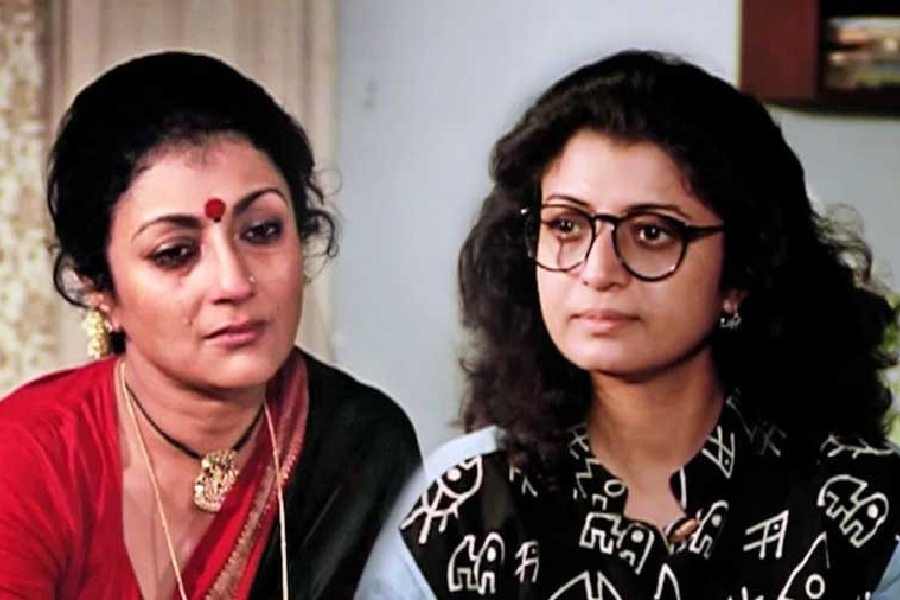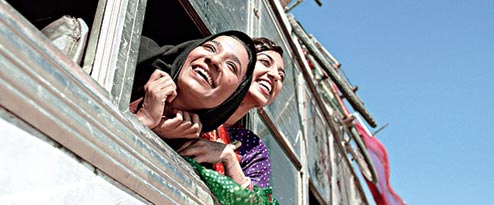

In the last one year, LeenaYadav has travelled the world (24 film festivals, to be precise) with Parched, a film about three women — played by Radhika Apte, Tannishtha Chatterjee and Surveen Chawla — who take bold steps to change the trajectory of their lives. Since it premiered in the Special Presentation section of the 2015 Toronto International Film Festival, Parched has won multiple awards, including the Stockholm Impact Award at the Stockholm Film Festival. “The award was presented by (Chinese contemporary artist and activist) Ai Weiwei. Meeting him has been one of the high points of last year,” says Leena.
Parched marks Leena’s return to the big screen after almost five years. She made her directorial debut in 2005 with Shabd, starring Sanjay Dutt and Aishwarya Rai Bachchan. Her last film was the big-budget thriller Teen Patti, that starred Sir Ben Kingsley and Amitabh Bachchan. Here, Leena tells t2 about indie and commercial films, sex and nudity....
Parched premiered at the Toronto Film Festival almost a year ago. Has it been a frustrating wait for the film’s India release?
Absolutely not! It’s been a fulfilling journey for me. I have travelled the world with the film and rediscovered it through the eyes of audiences in different countries. I am happy to be releasing it here.
What inspired Parched?
Conversations with Tannishtha (Chatterjee) triggered the film. She had been shooting in Gujarati villages for Road, Movie (a 2009 film also starring Abhay Deol). She shared with me conversations that she had had with women there. These conversations were predominately about sex. I thought it was very interesting because we tend to think that we, the cities, are so much more progressive. But it seems like women in villages speak more freely about sex. I wanted to make a film where women freely talk about sex, men, relationships and their lives. You see films like these with men… the bromance films... but there haven’t been many with women. I spoke to a lot of women from many villages and I realised that the gist of our conversations was very universal. The settings and people might change but at the core, the problems and the emotions remain the same.
Problems like?
Sexuality, violence, oppression… the biggest thing that came up was conditioning. How the cycle of gender equations has continued without us questioning them. Like the whole mother-in-law phenomenon. Someone has to break the cycle. Otherwise, we’ll keep telling ourselves that I lived with a terrible mother-in-law, so I’ll be horrible to my daughter-in-law.... More than gender, Parched is about basic humanity.
In your previous films, you worked with some of the biggest names around, but with this one you decided to go indie...
I don’t really see stars as stars. For me, they are just actors. According to me, I am working with a humongous star cast in Parched as well. In the West, anyone who has seen the film thinks that these three girls are the biggest stars in India! I have never written films to cast stars. I don’t even get the difference between indie and commercial films. A friend said to me, ‘We make indie films to be able to work with stars. You’ve worked with stars... why are you making indie films now?!’ (Laughs) I didn’t have an answer.
I am sure the experience must have been different!
For sure. Especially in the Indian context, stars come with a lot of baggage. I am not blaming them for it. An actor’s personal image becomes bigger than anything he plays. So, no matter what character you write, you end up catering to that personal image. That is a huge limitation. This is changing with young actors like Alia Bhatt.

The film has a fair bit of nudity. Was that an issue when you were casting?
It was, because it is such a personal choice. I told the actors about it even before we discussed the script. I asked them if that was a challenge that they wanted to take up. There were quite a few actors who weren’t comfortable with nudity, so they couldn’t be a part of the film. We are the country of Kama Sutra but we live in denial now. I don’t know when flowers started kissing each other! (Laughs) We really need to start talking about sex as a society. All the sexual repression is where sexual violence stems from.
A large part of your technical crew was from abroad. How did that come about?
Many decisions came from us not having a choice. Since no one was ready to finance this film, my husband (Aseem Bajaj), who is a cinematographer, said he’d produce it. But that meant that he couldn’t shoot my film. He got me someone who is a master. We had met Russell Carpenter (Oscar-winning cinematographer of films like Titanic, Charlie’s Angels and more recently, Jobs and Ant-Man) a few years ago, and his partner Donna Conrad. She was one of the people I had sent the script to. Russell liked it so much he wanted to shoot it!
Working with Kevin Trent (Oscar-nominated editor of films like Nebraska, The Descendants and Sideways) was such an educational experience. Sound design was done by Paul Ottosson (multiple Oscar winner for Zero Dark Thirty and The Hurt Locker). Parched was the first foreign film for all of them. My biggest learning from working with them was that emotions trump language when it comes to communication.
Ajay Devgn has been an integral part of your film...
Yes. Ajay gave us the seed money. Aseem has had a long association with Ajay. He realised what a tough journey we had ahead of us. After that, he’s left us to do our thing. Having said that, he has always been available when we needed any advice or support.
Karishma Upadhyay
We really need to start talking about sex because....
Tell t2@abp.in