For nearly four years, Honey Trehan's Punjab ’95 was stuck for release over a prolonged battle over the cuts demanded by the censor board. It has finally arrived on streaming as Satluj, title changed, its spirit untouched. The distinction matters because Satluj doesn’t merely revisit one of Punjab’s darkest chapters but also asks uncomfortable questions about state power, accountability and the price of silence. These questions that feel every bit relevant in 2026 as they were in 1995.
Based on the life of human rights activist Jaswant Singh Khalra (Diljit Dosanjh), Satluj reconstructs the period when Punjab was emerging from the shadow of militancy. Khalra uncovered evidence of thousands of alleged illegal cremations and enforced disappearances carried out in the name of counter-insurgency. His investigation eventually led to his own abduction and murder. The film fictionalises some names but leaves little doubt about the real events that inspired it.
Honey Trehan approaches this history not as a conventional biopic but as a slow-burning political thriller. The opening sequence tells you exactly what kind of film you're about to watch. A group of policemen joke, drink and tease one another during a night patrol. Within minutes, the atmosphere shifts from fun banter to violence.
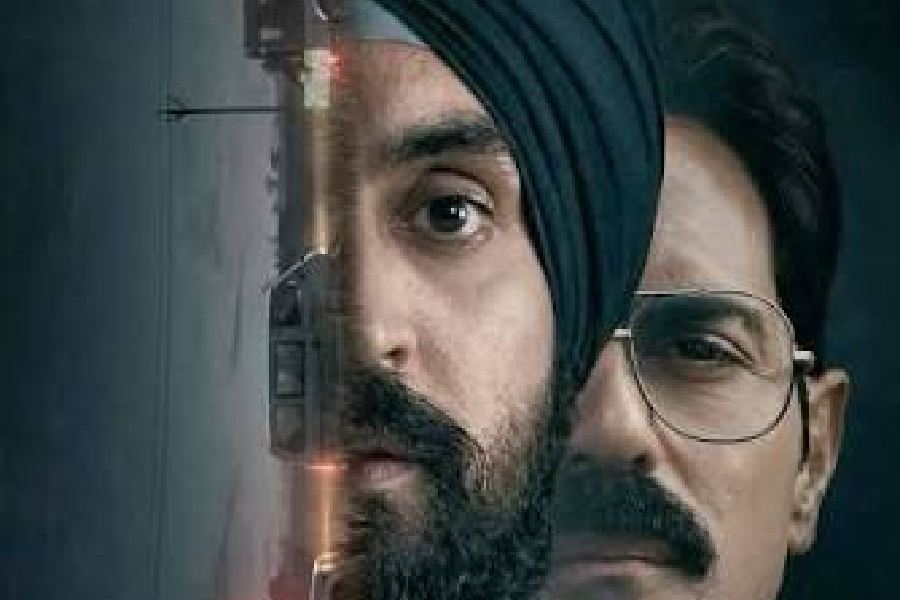
Diljit Dosanjh delivers perhaps the most restrained performance of his career as Jaswant. He begins as an ordinary bank employee searching for a missing acquaintance. One unanswered question leads to another until he stumbles upon records of unidentified bodies at crematoriums. From that moment onwards, his journey becomes less about solving a mystery and more about confronting an entire machinery built on fear and impunity.
Dosanjh’s Jaswant chooses to act despite knowing the consequences. And that resolve gives the performance emotional weight.
The supporting cast strengthens the narrative as well. Geetika Vidya Ohlyan adds emotional resilience to the fight as Paramjit, Jaswant's wife, who recognises the dangers before anyone else but refuses to ask her husband to abandon his principles.
Saurabh Sachdeva is heartbreaking as Satnam, the conflicted policeman caught between conscience and survival. His dinner-table confrontation with Suvinder Vicky's terrifying SSP Sugga ranks among the film's finest scenes, capturing how authoritarianism often invades the intimacy of everyday life.
Vicky, meanwhile, is chilling without resorting to theatrics. Sugga doesn't see himself as a villain. He believes absolute power is justified if it produces results, making him all the more frightening. Kanwaljit Singh's Bitta embodies institutional arrogance with equal conviction. Arjun Rampal adds gravitas as the CBI officer investigating Jaswant's disappearance.
K.U. Mohanan’s cinematography finds beauty in Punjab’s landscapes even as darkness engulfs its institutions. Sreekar Prasad’s editing maintains tension despite the film's formidable 163-minute runtime.
Yet its length is also part of its purpose. Trehan refuses to reduce systemic abuse to isolated incidents or a handful of villains. Instead, he patiently shows how institutions can normalise extraordinary violence when accountability disappears. Missing persons become statistics. Cremation registers become paperwork. Human beings become administrative inconveniences. The horror lies precisely in that bureaucratic routine.
What elevates Satluj beyond historical reconstruction is its refusal to simplify the conversation. The film acknowledges Punjab’s trauma during the militancy years without using terrorism as an excuse to legitimise every abuse committed in response. The film argues that democracies aren’t tested when they protect rights during peaceful times; they are tested when fear tempts them to abandon those very principles.
That message lands with particular force in 2026. Across the world, debates over national security, surveillance, misinformation, and expanding state powers have become increasingly polarised. Ditto in India. Every government, regardless of ideology, invokes exceptional circumstances to justify extraordinary measures. Public discourse too often slips into binaries: either absolute support for authority or blanket distrust of institutions.
Satluj offers a more difficult proposition. It reminds us that asking questions isn't anti-national. Demanding accountability isn’t sympathy for criminals. Human rights aren’t obstacles to security but safeguards against power becoming unanswerable. The film’s most enduring lesson isn’t about one government or one political party. It is about how democracies gradually weaken when citizens become comfortable with injustice committed in someone else's name.