|
The recent sinking of a pirate ship off the Gulf of Aden by INS Tabar of the Indian Navy has been in the news recently, and why not? It is not every day that one gets to see a real-life standoff with pirates on the high seas, even on one’s TV screen. One thought that the explosion which put paid to the pirate mother ship was particularly reminiscent of Capt. Francis Haddock blowing up the Unicorn in Red Rackham’s Treasure.
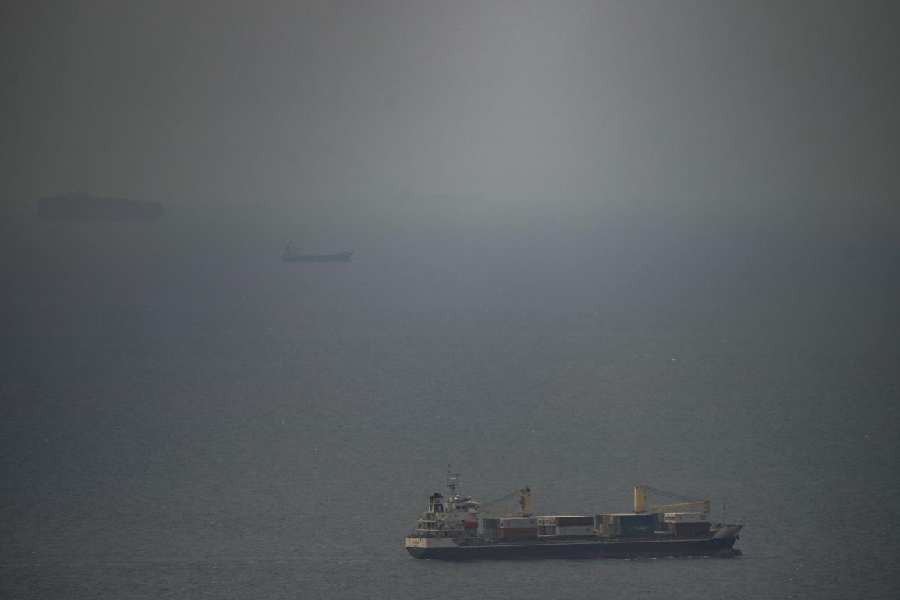
The sinking also reminded me of the one opportunity which came my way of a possible brush with pirates. This happened 16 years ago, when I was just out of university and working in my first job with an English-language newspaper in Calcutta. My uncle, who was then the master of a container ship, tipped me the news that another vessel of the line would soon be setting sail towards the pirate-infested waters of the Straits of Malacca, en route to Singapore. On board would be three journalists from a European television company who were making a documentary on the Malacca pirates. I wasted no time telling the features editor that I wanted to do an article on the three men in a boat.
At that time, the ‘piracy corridor’ which passes through the northern tip of Sumatra, the Singapore and Malacca Straits, and the Phillip Channel was considered to be the most dangerous stretch of waters in the world, closely followed by the South China Sea. The master of the ship which I was visiting had twice been the victim of small-term seizures: on one occasion, his safe was robbed and its key stolen, so he had to find a locksmith in Singapore. On another, his hands were tied and a sword held menacingly at his throat, and he was only able to buy his freedom by offering the pirates his cabin TV.
The TV crew on board (one of whom was an ex-bodyguard to Sylvester Stallone) did not expect to encounter a real piracy but hoped to film the precautions taken by ships passing through the danger zone. These consisted of keeping the drawbridge above the stern raised above deck level so that the pirates could not simply walk on board. Then, high-pressure hot-water pipes were kept in readiness, riot-police style. The third and fourth measures — having powerful arc-lights and firearms — were illegal as far as international maritime standards are concerned. I heard several horrifying stories of murderous pirate attacks, which are too distressing to relate here.
At the end of the day, the TV crew asked me if I wanted to accompany them to the Straits of Malacca. I looked with wild surmise at my uncle, who gave me an approving wink. But then I thought of deadlines, night shifts, my chief-sub-editor, and instantly developed cold feet. Piracy, for me, was obviously best seen on a silver screen.
The author teaches English at Jadavpur University