
Convince her to get married! That was the single-point agenda for the couple who had brought their 27-year-old daughter to see me. This situation is not uncommon in clinical practice for mental health professionals. One of the adaptations I have had to make after returning to work in India is to accept the role bestowed on me not only as a psychiatrist who deals with mental illness, but also as one who doubles as a trusted adviser in family matters — a sort of family friend-cum-guruji who can be trusted to give judicious advice as I am trained to deal with mental maladies.
And for an Indian parent, what can be a bigger malady than their child appearing non-committal or flat out refusing to get married?!
Over the past eight-10 years, there has been a steady stream and, perhaps, an increase in the number of such consultations. In the social sphere, we are beginning to become more aware of young people refusing to commit to marriage or long-term relationships.
The society views such creatures, especially women, with great suspicion and often with derision. “These young people just want to have fun and do not understand the meaning of commitment”, or “Who will look after them when they are old?” are common concerns expressed by parents and elders around them.
IS SHE LESBIAN?
One parent called me later to voice her worst fear. “Is she lesbian?” was the question which was keeping her awake at night, she confided in me, hoping for reassurance, when there was none which I could offer.
So, are millennials wary of commitment and, hence, this angst and despair among their parents? All generalisations are flawed to some degree and so will be mine, but my observations after getting to know this group through conversations bring forth an interesting narrative.
Millennials have grown up and are exposed to an online and socially networked world, which is in marked contrast to the generation of their parents. This means that they are, as a group, more aware of the options and choices available to them, be it in work, hobby, leisure, life and love.
The traditional script of marriage offering greater freedom and sexual exploration no longer holds true for them. Accepting relationships which do not resonate with their sensibilities simply because of social pressures is no longer a given. This generation has the option of exploring more choices.
The girl who was brought to me asked me point-blank, “Is marriage not overrated?”
GEN ‘UNCONSTRAINED’
I scanned my knowledge base in my head… the answer to this question is not to be found in the textbooks of psychiatry or the scholarly journal articles I read. But in my mind, I referred to the work done by Bella DePaulo, social psychologist. For years, DePaulo has been contesting the commonly held belief — a myth, in her view and according to her research — that marriage offers unique happiness and well-being benefits. She believes that if there were not so much intense social pressure to get married, many more people would be single, and many of them might be happier as a result
In 2016, Gallup published a 150-page report titled How Millennials Want to Work and Live. The lengthy report described many attributes of this generation. One of the words used to describe them was “unconstrained”.
Millennials are pushing for change in the world and they do not accept “that’s the way it has always been done” as a viable answer.
Millennials are waiting longer to get married, and they are less likely than other generations to feel pride in their communities or to identify with particular religious affiliations or traditional political parties.
None of this implies that millennials do not want to get married or find groups with which they can relate. But it does suggest that millennials view certain institutions differently than their predecessors do, and those views have shaped their decisions to engage — or to not engage — with those institutions.
‘FIX’ THE RESTLESS YOUNG MIND
In my experience, there are two key differences in expectation from marriages now. The expectation of friendship, camaraderie and bonhomie is a lot more from long-term relationships in the present generation compared to earlier, and marriage is no longer seen as the only option for sexual exploration.
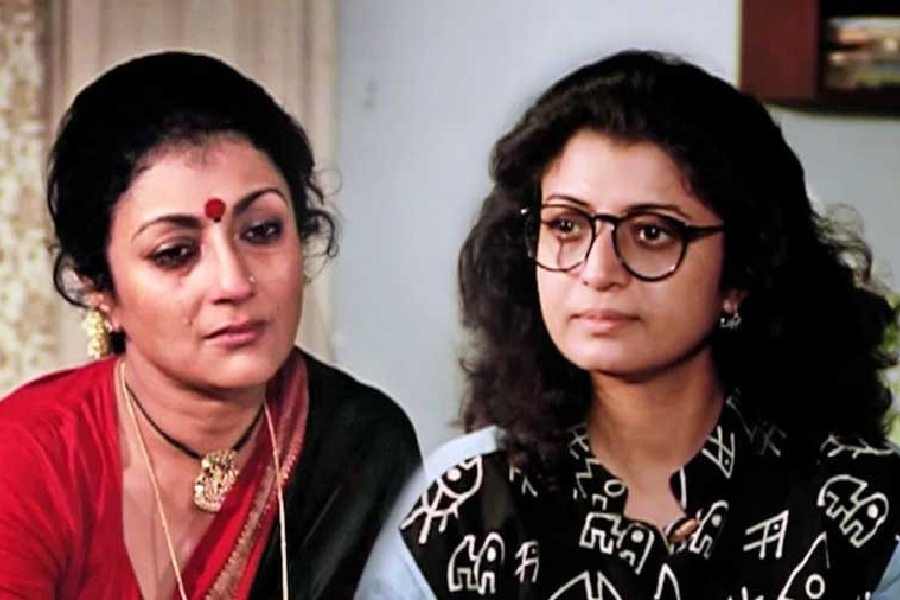
However, the more options we see, the more we fear we will choose the wrong one. This often undermines the confidence for many to plunge into commitments, so ably portrayed by Konkona Sensharma in the film Life In A... Metro.
The focus now is on choice and independence. Inter-dependence of a relationship comes with a cost and many young people are not willing to modify their world through commitment and marriage unless it feels absolutely right to do so. Traditional Indian marriages usually do not inspire confidence in young people and are not a great template for most to accept as an idealised goal. Goals and expectations from life have shifted to exploring one’s worth in the world rather than the traditional domesticated course, which was once considered to be the norm for the previous generations.
This conflict in goals and world views between two generations brings parents and their children to our doors hoping we can “fix” the restless young mind. One of the wonders of our (Indian) society is that children almost never grow up in their parents’ eyes. I tend to agree with the young in this ideological conflict, much to the disappointment of the parents, who, after all, pay my consultation fees!
There is no guaranteed path to happiness and fulfilment for any of us — whether we are married, single, divorced and even for those whose relationship status is best described as “it’s complicated”.
Our relationship status is an important determinant for happiness, but so is choice and willingness to engage in relationships. To assume that singlehood is necessarily miserable is naive, dangerous and archaic.
WHO ARE MILLENNIALS?
Those who were born from the early 1980s to the early 2000s are referred to as millennials or the millennial generation. They are typically the children of baby boomers (1940s to 1964). Apart from age, millennials are typically characterised by their increased use and familiarity with communications, media, and digital technologies.
Dr Jai Ranjan Ram is a senior consultant psychiatrist and co-founder of Mental Health Foundation (www.mhfkolkata.com). Find him on Facebook @Jai R Ram
TO ASSUME THAT SINGLEHOOD IS NECESSARILY MISERABLE IS NAIVE, DANGEROUS AND ARCHAIC