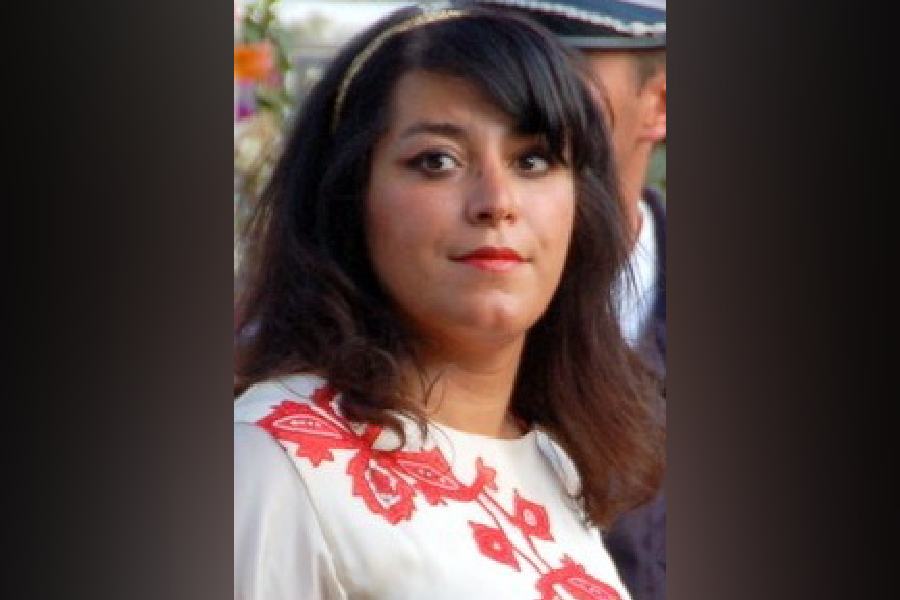
t2 caught up with Sudha Menon for a few questions on her second book.
Devi, Diva or She-Devil: The Smart Career Woman’s Survival Guide is your second book telling the stories of women. How is it different from your first, Leading Ladies: Women Who Inspire India?
Leading Ladies was about very accomplished women. I was juggling motherhood and a career and I used to wonder how they did it. I wanted to find out what they had to do to achieve success. I learnt then that anything was possible if you worked hard. But now, as I age, I want to find out more. This book is about the labels women are given. ‘Devi’ is the domestic goddess who keeps a perfect house with lavender-scented cushions and gourmet food. ‘Diva’ is the woman who has it all. ‘She-Devil’ is the boss at the workplace who’s a bully and hard-to- please — women are always being labelled.
What did you discover about the devi, the diva and the she-devil?
That they’re all women frantically paddling under the surface to keep things going. Women put up a facade saying everything is possible. I wanted to talk about the challenges of achieving those dreams. Now women are saying that we don’t need to do it all and we don’t have to be absolutely perfect. And most of them have said that the husbands and fathers are often the enablers.
Who are some of the women who feature in the book?
Lillete Dubey, Farah Khan, Leena Nair, the chief HR officer at Unilever, and a host of ordinary women battling the odds in the workforce.
Can you relate some anecdotes?
Let’s start with Mary Kom, who talked to me about the guilt she felt leaving her children at home during tournaments. She was conflicted but at each stage it was her husband and father-in-law who insisted it was her duty to bring laurels for her country. Society wrote her off so many times — people told her she was a woman so she couldn’t be a boxer, then they told her no one will marry a female boxer, then she was told she would not have kids, then she was told her kids would ruin her career. She proved them wrong at every step.
As for Farah Khan, in spite of being a famous film-maker, no matter where she may be in the world, she has to call the house several times a day to make sure the kids are getting their meals, doing homework, going to school!
What lessons did you learn while writing this book?
Time management is very important, prioritise your life, accept that you can’t do everything with the same efficiency, so focus on really important ones. Outsource without guilt — you don’t have to bake the best cake for your child, get someone else to do that. Derive strength from your female friends.
Do you think the lot of women has changed since your youth?
It’s changing very slowly. My daughter is a pastry chef. I tell her often that she’s in such a position of privilege because she’s been able to make the kind of choices a lot of women are not privy to. I grew up in a very middle-class family. We had very little in terms of material comfort but my parents gave us the luxury of choice. My mother would have loved her children to join a bank or a government job because it ensured security, but when I told her I want to be a journalist, she didn’t hesitate a moment and told me, ‘If that’s what you want to do, you should do it.’ So few women get the choice to do what they want with their lives.
Some women who have inspired you?
Maya Angelou, Jhumpa Lahiri, Arundhati Roy.
Do you have any advice for today’s young woman?
It’s important to go out and have fun sometimes. Make friends wherever you go. Women at the workplace are only focused on getting the work done. I used to be a workaholic at work and then rush back home to bring up the kids. Your career is not the end-all-and-be-all of life.
Ramona Sen