 |
Touted as a landmark coming-of-age drama shot with the same group of actors over a 12-year period from 2002-’13, Boyhood is at once epic and intimate, through the exhilaration of childhood, the seismic shifts of a modern family and the very passage of time. A chat with director Richard Linklater.
How did you settle on Ellar Coltrane for the lead role?
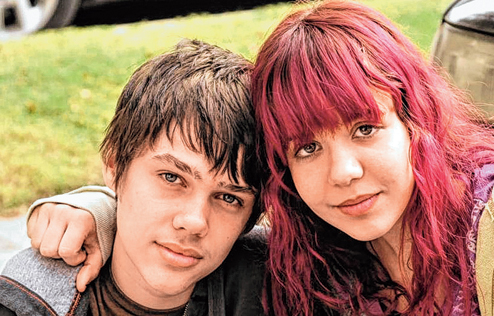
I always told him that the film was going to go where he went. It would merge with him. [Mason] is not him at the beginning at all. He wasn’t like that, and he wouldn’t dress like that. He’s a lot cooler than that kid at the beginning, in a way. We kind of had to normal him up a little bit. Ellar was pretty advanced. So was Lorelei. They didn’t really like the wardrobe the first few years of the movie. They said, ‘I would never wear this!’ We were trying to explain, ‘Because you guys are both weird...you both are not very normal,’ whatever that means. And so I always knew at some point that [their characters were] going to fuse with the real person. I think that’s Ellar up on the mountain at the end. That’s him.
Was the character of Mason a fusion of sorts between yourself and Ellar?
Yeah, I think so. It’s very personal, but it’s filtered through all of us if you think about it. The adults, too: Patricia, Ethan, and myself, we’re collaborating with our parents and who they were, and ourselves as kids, ourselves as parents at this moment, and kind of figuring that out, so there’s this kind of triangulation at all times. We’re filtering our ideas through these kids who are in the moment as kids growing up. There’s hardly anything in this movie that wasn’t real to some degree, that didn’t happen to myself, or one of my collaborators. Pretty close to everything is based in somebody’s reality or memory or something, pretty much across the board. That’s a good place to start.
How did you balance the fact that these actors are growing old with the development of the characters in the movie?
It was meant to feel like a document of time, and it was a collaboration very much with the real world, and what was going on at any given time. It does blur the line in the mind. Someone said if you didn’t see Patricia and Ethan and didn’t know them from other movies, you might almost swear it was real. Some guy in New York the other night, as I was leaving, he said, ‘How did you pick this family?’ (Laughs) I’m like, ‘They’re actors’. He thought I’d done something like that TV show, An American Family, picked a family and followed them all of these years. I’m like, ‘Are you crazy?’ Anyway, Boyhood does get blurry, and I wanted it to work that way in the viewer’s head.
How did your process of filmmaking change from the Before series to Boyhood?
It’s kind of humbling to consider, but I didn’t evolve. As far as this movie goes, I didn’t want to evolve. I wanted it to feel like one movie. Any developments I had as a filmmaker are reflected in the other films. ‘Oh, the filmmaking improves as you go along’.... I’ve gotten that backhanded compliment somewhere along the way. I hope not. I didn’t start when I was 20. I had done a lot of films before I had started this, and I had a visual plan for the whole movie, and there was a tonal thing I was hoping to maintain. Consistent throughout. For it to work, it had to just feel real, and any changes are just observational.
What challenges did you face behind the camera? Especially with the crew who you had to keep together for eight years!
Logistically, things were just off the charts. Crazy. It’s insane making 12 films and each one had its own problems. So at the end of the day, for a low-budget indie film we spent two years in pre-production. We spent about two years editing, if you really add up all of the editing-room time, because every year we would have the luxury to edit what we just shot, attach it to whatever we did before, and then edit the whole thing again. We had a cast and crew of over 450 people who came through in various capacities for various times.
How did you settle on how you wanted to handle the passing of time?
That was the most delicate element. I think I felt my way through that. I had the ability to edit years later things that I thought were not quite what I wanted, but I’d use that year to work through the bad ideas, the things that were obvious, or being too clever. I always had to hang on to the perspective of the kids growing up, and how the audience would perceive it. I wanted it to be taken in a certain way and not be clever about it.