THROW OUT THE RULE BOOK— BUT SIP ON FRATELLI WINES

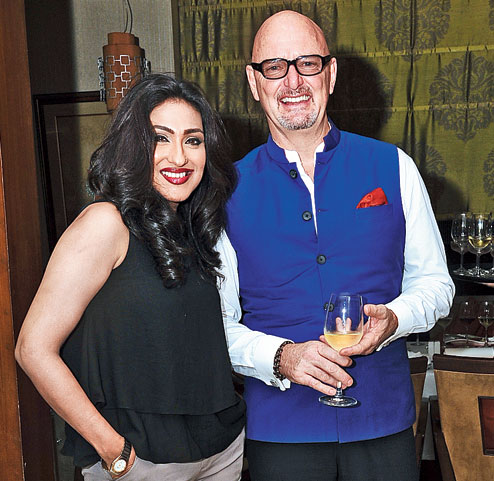
Hotel Hindusthan International recently hosted a tasting session of Fratelli Wines, with a paired sit-down dinner. All eyes were on Rituparna Praktan Sengupta who’s “always been a teetotaller”, but dropped by in the spirit of things. Which wine would she pick if she was to sip one? “Ah, that’s a loaded question,” she laughed out loud. “I’ve always heard that red wines are really nice and good for the heart. But I tell them I already have a good heart so I don’t need to worry!” she smiled. Craig Wedge, the brand director of Fratelli Wines, kept her company.

(L-R) Sette, Shiraz Rose, Prosecco, Sauvignon Blanc and Chardonnay — the Fratelli heroes that shepherded the evening.

The Hungarian Lamb Goulash and Herb Rice was paired with two red wines — the Fratelli Sette (left) and the Casa Sola Chianti Classico. The intent was to make guests understand how the Indian Fratelli compares to an international wine.

“We’re happy to host this tasting session along with Fratelli Wines. Craig is a world-renowned wine sommelier, and his presentation was excellent,” said HHI general manager Rodney Kaypee.

“The tasting was well-conducted . It was a welcome change to see an excellent Chardonnay being made in India,” said Subhasis Ganguly, president of the Kolkata Wine Commune.


CRAIG’S HATKE PAIRINGS...


Spicy Chaat: German Riesling is very good with Indian food because it has good acidity. As is Chenin Blanc.
Paneer Tikka and Lucknowi Kebab: Again, red or whites. Most wines go with these tikkas and kebabs. So you could do a Torrontes from Argentina.
Khichdi: Beer! (Laughs) With this you need a wine with perhaps more substance to it. Chardonnay is more a versatile grape variety, so that!
Biryani: Biryanis everywhere are so different so you need something that is fairly broad spectrum. Again a Chardonnay works here too. A Merlot perhaps, and a light Shiraz would be good too!
Gulab Jamuns: You need something as sweet to counter it as well. Late-picked wines — like a late-picked Riesling — which have a very different sugar content.

girlfriends and say ‘let’s go out and sit down and have a glass of wine’
Oh! I’m on record!” laughed Craig Wedge, the brand director of Fratelli Wines, as we caught him on the sidelines of a wine dinner at HHI. “Everything you say can and will be held against you,” we assured him.
How do you decide on the ideal food and wine pairing?
I’ve been in this wine business a long time and there used to be a rule way back — white wine with fish, red wine with meat and you never cross the wines. Obviously with the world becoming a global village, ideologies have changed and wines are crossed. So there is no such thing as the ideal pairing, just suggestions. The first rule today is to throw out the rule book.
Wouldn’t the tasting differ from palate to palate?
It does. If you tell me ‘I don’t like this’, I will ask you why and learn from that as well. But we go by the general consensus. Tonight, for instance, we’re starting with a Prosecco, which along with sparkling wine, for me, is the best way to start because it cleanses the palate and gets rid of all the detritus of the day and gets you ready for the night.
What must a novice keep in mind before pairing food with wine?
Bring in table manners (laughs)! And enjoy, look, see and learn. I don’t really like the whole concept of wine education. My job mainly is to open the door to people on a journey and perhaps set them on a different direction. And they enjoy it. It’s about drinking and eating, trial and error.
Fratelli is an Indian wine. Is it different because of factors like the climate and soil, in comparison to, say, an Italian wine?
Is Sangiovese in Italy different from that in India and Australia? Yes, but they share commonalities. There is what we call characteristics of a grape that is identifiable regardless of where a particular wine comes from. But regionality, climate, wine making — all add variations to that wine.
You’ve experienced the Indian wine market first-hand for almost a decade. Have there been changes?
When I first started out, what was being bottled wasn’t pretty. In Europe, wine is linked with food and food is linked with conviviality and communality. In India, food is becoming organic, domestic farms are growing more things and there’s better quality imported food coming. Restaurants are getting better in using Indian concepts and bringing in the international. Our biggest job becomes to let the Indian public know how wine should be consumed — taking the thanda pani off the table and putting the thanda Fratelli Chenin Blanc in its place.
The wine business is changing. The biggest influence for us is women and what they’re drinking. I laugh about it — boys will always like their hard liquor but girls are the ones who will bring their
girlfriends and say ‘let’s go out and sit down and have a glass of wine’. For them it is social, and wine is the social aspect of alcohol. Whisky can be drunk by oneself.
What’s the difference between commercially produced wines and those prepared by families?
For me the ideology of family-owned is that for generations the same family has worked the soil with their blood, sweat and tears. The romance is still there with them. For them it’s not about the volume or the dollars. It’s more about the creation of something that is special.
The flip side to that are MNCs who are all paisa-paisa-paisa. Does quality dip or wane in those regards? I don’t think so, but it’s a whole different ideology to making the wine. So the wine is different from the start.
Text: Riddhima Khanna
Pictures: Chanchal Ghosh
SOMMELIER KEITH W. EDGAR SPIED THE MONSOON SIPS ON THE SHELVES OF SPENCER’S

Monsoons have descended and I’m thirsty. There’s finally a freshness to the air and now we just need a lovely glass of wine with good acidity to go with the rains. I understand that the word acidity generally has a negative connotation but acidity can actually be a good thing, especially in a summer beverage. The level of acid gives the wine the crisp, refreshing, mouth-watering component we want at this time of year. Here are five such wines we spied on the shelves of Spencer’s.
Durvillea by Astrolabe Sauvignon Blanc
From: Marlborough, New Zealand
Classic Marlborough is home to some of this varietal’s most delicious wines. This cool climate Sauvignon Blanc has lovely fresh acidity, aromas of lime zest and gooseberry with flavours of ripe stone fruit and guava.
Vermentino Della Costa from Principe Corsini
From: Coastal region of Tuscany, Italy
Vermentino is a perfect example of a crisp and refreshing pleasure. This is an excellent wine for a casual afternoon break or as an accompaniment to light grilled fish or a mixed vegetable salad. It has a light straw yellow colour with aromas of grapefruit, pineapple and the scent of a sea breeze. Expect a luxurious fruity palate with a rich minerality and balanced acidity with a finish of citrus, mandarin and a sweet touch of almond.

Cardinal Prosecco Extra Dry
From: Veneto, Italy
If you want refreshment with a bit of celebration, sparkling wine is a great option. Most sparkling wines are high in acidity giving us that fresh, crisp experience. Expect aromas of lime zest and pear following through with fresh fruity flavours of green apple and ripe white fruit.
Le Rose D’Anjou from Adet Seward
From: Loire, France
If you are still thirsty, get in the pink with some crisp refreshing rose. This one is pale pink with raspberry and strawberry on the nose, very rich and luscious in the mouth with lemon and strawberry and a light sweetness.
Durvillea by Astrolabe Pinot Noir
From: Marlborough, New Zealand
For those times when you still desire a red wine, you can turn to a cool climate Pinot Noir served slightly chilled. The combination of a lower tannin feel and a nice level of acidity make it the perfect monsoon choice, when a white just won’t do. This has a bright garnet colour, hints of redcurrant and cherry in the bouquet along with a lovely earthiness. Expect flavours of red plum and forest fruits and subtle tannins.
Pro tip: At home, I always keep my red wines in the refrigerator between pours and keep my whites in the freezer. But please, for the love of good wine, never forget wine in the freezer, as there is no way of serving it once it becomes wine-cubes. And do check the Spencer’s app to see if you live in the delivery area. If yes, a downpour will not have you sitting thirsty at home any more.