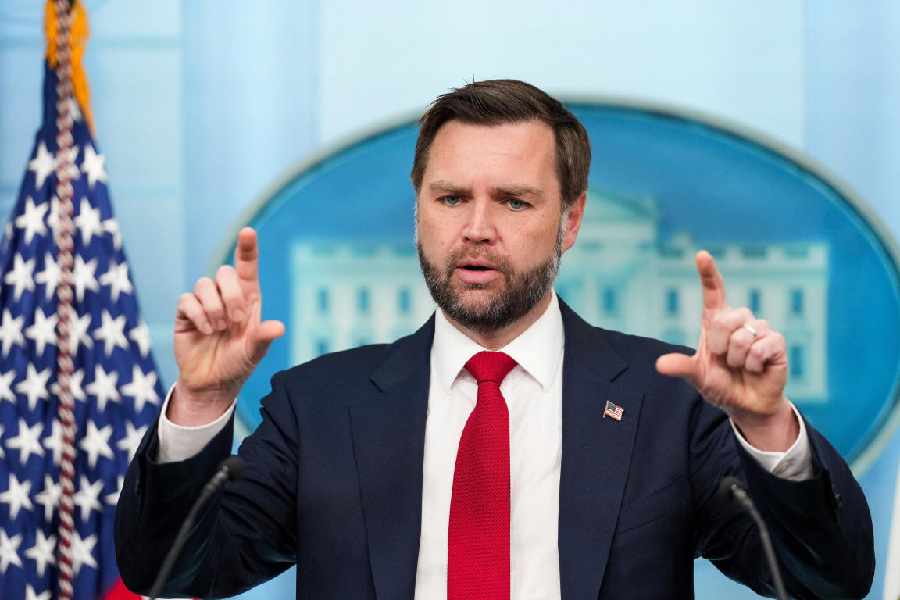
US Vice President JD Vance sharply criticised Israel for what he described as a "weird panic" and "freakout" over the agreement struck between the US and Iran, saying Tel Aviv would have to respect a peace process that was ultimately "good for them". He also signalled Washington's impatience with Israeli military actions in Lebanon, saying attacks in Beirut that kill civilians were "not acceptable".
The remarks, made in an interview with The New York Times released on Thursday, came as the Trump administration sought to push back against mounting criticism of the deal from Israeli officials and their allies.
Israeli politicians across the political spectrum, including some of Prime Minister Benjamin Netanyahu's closest allies, have attacked the agreement, arguing that it fails to address Iran's nuclear and ballistic missile programmes while constraining Israel's military operations against the Iran-backed Hezbollah movement in Lebanon.
"There is this weird panic almost in the Israeli system that I've picked up on where they assume that everything that is contemplated that is good for Iran will happen — but that will happen without the Iranians changing any behavior," Vance said.
"That's not how the deal is written."
Vance stressed that the United States would not remove sanctions on Iran if Tehran continued funding groups designated by Washington as terrorist organisations, an apparent reference to Hezbollah. At the same time, he said Iran would not be expected to surrender its right to self-defence, though the US would insist that Tehran not possess missiles capable of broadly threatening the wider world.
'America has earned the trust of that region'
Vance suggested that much of the Israeli backlash stemmed from a lack of faith in its closest ally.
"I find this whole freakout in Israel a little bit odd because I think that it comes from a place of mistrust, and I think that America has earned the trust of that region of the world," he said.
"We've done a very good job by that particular country and that particular government," Vance added. "And I think that the idea that we've made a terrible deal is not supported by the facts, but just doesn't make any sense if you consider the broad length of the relationship."
President Donald Trump also sought to downplay Israeli concerns during his closing remarks at the Group of Seven summit in France on Wednesday. In his latest public rebuke of the Netanyahu government, Trump said the Israeli prime minister could use a "softer touch" in the fight against Hezbollah in Lebanon.
Trump and Iranian leaders approved a memorandum of understanding this week that postpones the most contentious issues to a later phase of negotiations, with no guarantee they will ultimately be resolved.
Taking direct aim at some of the agreement's most vocal critics — far-right Israeli ministers Itamar Ben-Gvir and Bezalel Smotrich — Vance said: "I guess my response to them would be: What is your exact proposal? You're a country of 9 million people. You can't just kill your way out of solving every single national security problem that you have."
Ben-Gvir hit back in a post on X, writing: "This is the proposal, @JDVance: To deal with the Nazis of the 21st century, just as the United States dealt with the Nazis of the 20th century."
Deal timeline begins
Vance said the 60-day implementation window laid out in the memorandum of understanding approved by Trump and Iranian leaders officially begins on Thursday.
"I would say the 60-day period officially started today," Vance said.