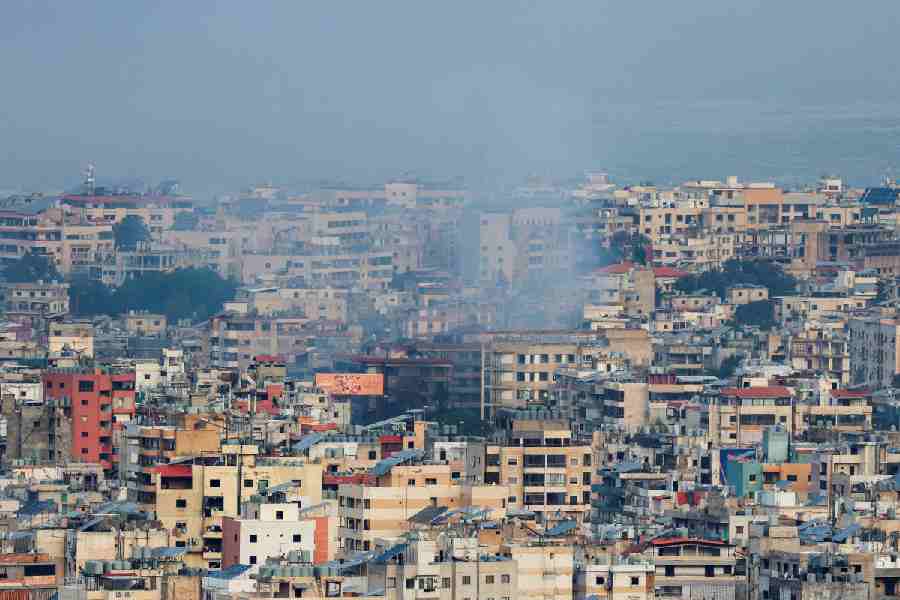
The Iran war has effectively halted oil tanker movement in the key Strait of Hormuz. But it's also disrupting the wider global supply chain beyond oil, affecting everything from pharmaceuticals from India, semiconductors from Asia and oil-derived products like fertilisers that come from the Middle East.
Cargo ships are stuck in the Gulf or making a much longer detour around the southern tip of Africa. Planes carrying air cargo out of the Middle East are grounded. And the longer the war drags on, the more likely it is that there will be shortages and price increases on a wide range of goods.
"This is really causing some major impacts within the global supply chain," said Patrick Penfield, professor of supply chain practice at Syracuse University. "As this conflict keeps progressing, you'll start to see some shortages, you'll see some major price increases."
Stalled at sea
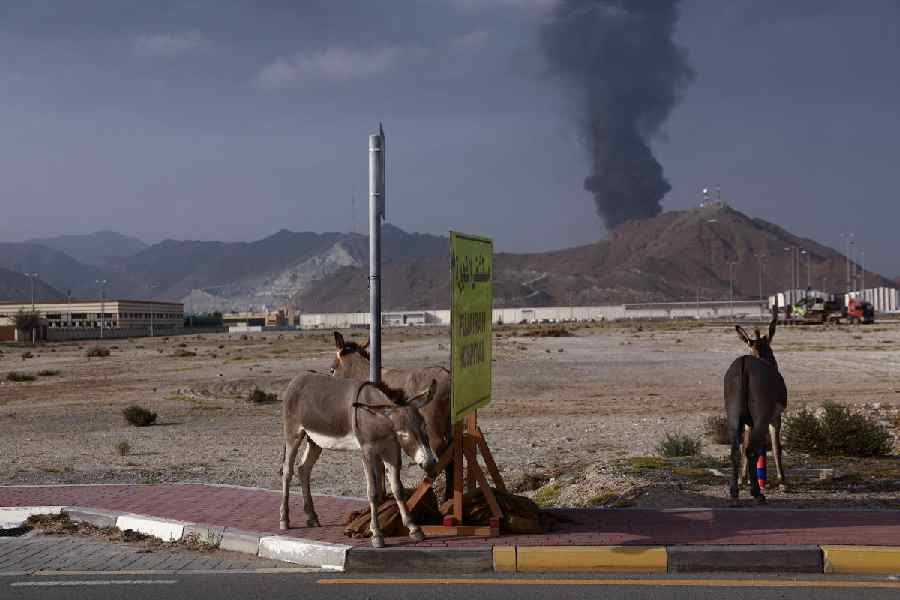
Clarksons Research, which tracks shipping data, estimates that about 3,200 ships, or about 4 per cent of global ship tonnage, are idle inside the Persian Gulf, but that includes about 1,231 that likely only operate within the Gulf. About 500 ships, or 1 per cent of global tonnage, are currently "waiting" outside the Gulf in ports off the coast of the United Arab Emirates and Oman, according to the firm.
"The supply chain is kind of like a long train with many cars, and each car represents, let's say, a port in the world. Well, if one car gets derailed, it can very often have a domino effect on many other cars behind it or in front of it," he said. "So, although we only have a small number of ports affected by this military action, it can really have a big effect on the total supply chain."
On Tuesday, President Donald Trump pitched a plan aimed at getting oil and trade moving again through the Strait.
Trump said on social media he ordered the US International Development Finance Corp. to provide political risk insurance for tankers carrying oil and other goods through the Persian Gulf "at a very reasonable price."
Political risk insurance is a type of coverage intended to protect firms against financial losses caused by unstable political conditions, government actions, or violence. Marine insurers had been cancelling or raising rates for insurance in the region.
He said that, if necessary, the US Navy would escort oil tankers through the Strait of Hormuz.
Computer chips, pharmaceuticals and other goods face delays
A wide range of products is shipped through the Middle East region. Along with about 20 per cent of the world's oil that comes from the region, products made with natural gas, such as petrochemical feedstock - used to make plastic and rubber - and nitrogen fertiliser come from the Middle East. Pharmaceuticals exported from India and semiconductors and batteries exported from Asia to the rest of the world are all shipped through the region and could face delays.
Limited routes, higher costs
In addition to constraints on the Strait of Hormuz, the instability has put a damper on transit in the Red Sea and the Suez Canal, which had just begun to see more transit after years of instability due to Houthi attacks on ships in the region.
Air cargo under pressure
Air cargo has also been constrained. Closed airspace and airports in countries including the UAE, Qatar, Bahrain, Kuwait, Iraq, and Iran have stranded tens of thousands of people and cargo.
Each of the three major Middle Eastern airlines - Emirates, Qatar Airways and Etihad Airways - operates fleets of cargo aircraft, and the airlines also transport goods in the belly of their passenger planes.
The amount of goods that travel through the air typically accounts for less than 1 per cent of all freight moving globally, but the products that do travel by air tend to be perishable or high-value goods like pharmaceuticals, electronics and produce that together account for about 35 per cent of the world trade value, Boeing estimated in its World Air Cargo Forecast.
The longer these airports in the Middle East remain closed, the greater the potential disruption to the economy if these sensitive shipments don't arrive or have to be rerouted around the conflict.
Flights through these Middle Eastern airport hubs are a key route for passengers and cargo from India. Henry Harteveldt, an airline industry analyst with Atmosphere Research Group, said it's going to be hard to get to India now.
Air cargo costs are expected to rise due to reduced capacity, increased demand, and surcharges.
Maersk said in an operational update on Tuesday that it expects air freight rates to rise due to capacity constraints.
An industry that runs on disruption'
Despite the supply chain upheaval, however, Michael Goldman, general manager of North America of CARU Containers, said the industry will adjust. Over the past few years, it has faced other major disruptions like COVID supply shortages and other recent Mideast conflicts and has become more nimble.
"The specific situation that's happening is pretty unprecedented, so it's very unique from that perspective," he said. "(But) for the last few years the industry just kind of runs on disruption. So in terms of our industry having disruption, that is nothing new. That's more of the same."